End of a viable Palestinian state: Israeli finance minister Bezalel Smotrich announces the new development plan. AP Photo/Ohad Zwigenberg
.
The Israeli government has approved a plan for construction of a massive new settlement bloc in the controversial E1 area in the occupied West Bank.
In reviving a project first proposed in 1994, which will comprise about 3,500 new dwellings in a line across the West Bank, finance minister Bezalel Smotrich laid bare the intentions of his government. He declared that “approval of construction plans in E1 buries the idea of a Palestinian state, and continues the many steps we are taking on the ground as part of the de facto sovereignty plan”.
You can listen to more articles from The Conversation, narrated by Noa, here.
E1 (“East 1”) refers to 12 square kilometres of unsettled land east of Jerusalem. It sits inside the boundaries of the third most populous Israeli settlement in the West Bank, Ma’ale Adumim.
In 1975, Israel expropriated 30 sq km of land on which seven Palestinian villages had once stood. Here they built Ma’ale Adumim, one of three Israeli settlement blocs that form an “outer ring” around the Israeli-defined municipal boundaries of Jerusalem.
Israeli authorities refer to these blocs as “facts on the ground”. They were initiated in the West Bank by the Israeli government after the 1967 War to ensure that Israeli population centres were protected from potential attacks.
Today, almost 40,000 Israelis live in Ma’ale Adumim – largely secular Israelis and diaspora Jews who have moved to Israel. Far from the makeshift Israeli outposts that are scattered across the rural West Bank, Ma’ale Adumim was designated a city by Israel in 2015. It is considered by the majority of Israeli Jews to be a permanently protected settlement bloc, which will be retained through land swaps in any final agreement with Palestinians.
The E1 development plan would involve a significant expansion of the existing settlement. All settlement building in East Jerusalem and the West Bank is deemed illegal under international law, but the E1 plans are particularly controversial.
At the heart of the controversy is the viability of a Palestinian state. Israeli construction in E1 would cut the West Bank into two separate parts, rendering it impossible to establish a contiguous Palestinian state with East Jerusalem as its capital.
In addition, according to an objection lodged by the Israeli pressure group Peace Now, Israeli construction in E1 would negatively affect the economic development of a future Palestinian state.
Its objection argues the E1 area is essential for expansion of an urban metropolis necessary for economic growth, and is the only land in East Jerusalem suitable for further development in the Palestinian part of the city. It states that E1 should therefore be left for Palestinian rather than Israeli development.
Political threat
The plan to develop E1 was first proposed in 1994 by Israel’s then-prime minister, Yitzhak Rabin, to make sure Ma’ale Adumim was part of a “united Jerusalem”. This was subsequently reaffirmed by Shimon Peres during his prime ministership in 1996, as part of proposed territorial swaps in the framework of a permanent peace agreement.
In 2005, those plans were frozen after the US administration under George W. Bush told Israel that settlement in E1 would “contravene American policy”.
The proposed E1 development, linking up with the settlement of Ma’ale Adumim, would make a Palestinian state based on contiguous land in the West Bank impossible. Honest Reporting, CC BY-SA
The plan was reignited by Israel’s current prime minister, Benjamin Netanyahu, in 2012, in retaliation for the United Nations’ extension of non-member status to Palestine. But it was then put on hold for eight years due to international pressure.
In 2020, a week ahead of the third national elections held in Israel in a single year, Netanyahu pledged to revive the E1 project, with the hope of securing votes and to court the ultra-nationalist parties into a potential coalition. In 2022, Netanyahu renewed the E1 construction plans, weeks before then-US president Joe Biden was due to visit Israel.
Opposition and support
Each time the plans have been proposed, the decision to advance construction has been met with both internal and international condemnation. On June 9 2023, the planning hearing was “indefinitely” postponed following a call between Netanyahu and Biden’s secretary of state, Antony Blinken.
In response to the most recent announcement to reinstate the plans, the European Union put out a statement expressing concern. It urged Israel “to desist from taking this decision forward, noting its far-reaching implications and the need to consider action to protect the viability of the two-state solution”.
However, Donald Trump now appears to be breaking with the position of previous US administrations. It was recently reported in the Jerusalem Post that the Trump administration supports the reactivation of the development plans. A spokesperson for the US State Department said “a stable West Bank keeps Israel secure and is in line with this administration’s goal to achieve peace in the region”.
Israel’s latest attempt to initiate construction in E1 shows that, while the plans have consistently been delayed, they have never been abandoned. The question is why did Smotrich, with the apparent approval of Netanyahu, make this announcement now?
The answer is most likely that, with the international focus firmly on the continued assault on Gaza, the Israeli government believes it has the breathing space to press ahead with its commitment to building settlements across the West Bank.
Alongside the proposed Israeli takeover of Gaza City, the promise by Smotrich that 2025 would be Israel’s “Year of Sovereignty” – and with it the end of a future Palestinian state – appears to be coming ever closer.
New York City is built with millions of metric tons of concrete and other cement-based materials, which gradually absorb and store carbon dioxide from the air over the lifetimes of buildings and infrastructure.
Credits: Photo: AdobeStock
The world’s most common construction material has a secret. Cement, the “glue” that holds concrete together, gradually “breathes in” and stores millions of tons of carbon dioxide (CO2) from the air over the lifetimes of buildings and infrastructure.
A new study from the MIT Concrete Sustainability Hub quantifies this process, carbon uptake, at a national scale for the first time. Using a novel approach, the research team found that the cement in U.S. buildings and infrastructure sequesters over 6.5 million metric tons of CO2 annually. This corresponds to roughly 13 percent of the process emissions — the CO2 released by the underlying chemical reaction — in U.S. cement manufacturing. In Mexico, the same building stock sequesters about 5 million tons a year.
But how did the team come up with those numbers?
Scientists have known how carbon uptake works for decades. CO2 enters concrete or mortar — the mixture that glues together blocks, brick, and stones — through tiny pores, reacts with the calcium-rich products in cement, and becomes locked into a stable mineral called calcium carbonate, or limestone.
The chemistry is well-known, but calculating the magnitude of this at scale is not. A concrete highway in Dallas sequesters CO2 differently than Mexico City apartments made from concrete masonry units (CMUs), also called concrete blocks or, colloquially, cinder blocks. And a foundation slab buried under the snow in Fairbanks, Alaska, “breathes in” CO2 at a different pace entirely.
As Hessam AzariJafari, lead author and research scientist in the MIT Department of Civil and Environmental Engineering, explains, “Carbon uptake is very sensitive to context. Four major factors drive it: the type of cement used, the product we make with it — concrete, CMUs, or mortar — the geometry of the structure, and the climate and conditions it’s exposed to. Even within the same structure, uptake can vary five-fold between different elements.”
As no two structures sequester CO2 in the same way, estimating uptake nationwide would normally require simulating an array of cement-based elements: slabs, walls, beams, columns, pavements, and more. On top of that, each of those has its own age, geometry, mixture, and exposure condition to account for.
Seeing that this approach would be like trying to count every grain of sand on a beach, the team took a different route. They developed hundreds of archetypes, typical designs that could stand in for different buildings and pieces of infrastructure. It’s a bit like measuring the beach instead by mapping out its shape, depth, and shoreline to estimate how much sand usually sits in a given spot.
With these archetypes in hand, the team modeled how each one sequesters CO2 in different environments and how common each is across every state in the United States and Mexico. In this way, they could estimate not just how much CO2 structures sequester, but why those numbers differ.
Two factors stood out. The first was the “construction trend,” or how the amount of new construction had changed over the previous five years. Because it reflects how quickly cement products are being added to the building stock, it shapes how much cement each state consumes and, therefore, how much of that cement is actively carbonating. The second was the ratio of mortar to concrete, since porous mortars sequester CO2 an order of magnitude faster than denser concrete.
In states where mortar use was higher, the fraction of CO2 uptake relative to process emissions was noticeably greater. “We observed something unique about Mexico: Despite using half the cement that the U.S. does, the country has three-quarters of the uptake,” notes AzariJafari. “This is because Mexico makes more use of mortars and lower-strength concrete, and bagged cement mixed on-site. These practices are why their uptake sequesters about a quarter of their cement manufacturing emissions.”
While care must be taken for structural elements that use steel reinforcement, as uptake can accelerate corrosion, it’s possible to enhance the uptake of many elements without negative impacts.
Randolph Kirchain, director of the MIT Concrete Sustainability Hub, principal research scientist in the MIT Materials Research Laboratory, and the senior author of this study, explains: “For instance, increasing the amount of surface area exposed to air accelerates uptake and can be achieved by foregoing painting or tiling, or choosing designs like waffle slabs with a higher surface area-to-volume ratio. Additionally, avoiding unnecessarily stronger, less-porous concrete mixtures than required would speed up uptake while using less cement.”
“There is a real opportunity to refine how carbon uptake from cement is represented in national inventories,” AzariJafari comments. “The buildings around us and the concrete beneath our feet are constantly ‘breathing in’ millions of tons of CO2. Nevertheless, some of the simplified values in widely used reporting frameworks can lead to higher estimates than what we observe empirically. Integrating updated science into international inventories and guidelines such as the Intergovernmental Panel on Climate Change (IPCC) would help ensure that reported numbers reflect the material and temporal realities of the sector.”
By offering the first rigorous, bottom-up estimation of carbon uptake at a national scale, the team’s work provides a more representative picture of cement’s environmental impact. As we work to decarbonize the built environment, understanding what our structures are already doing in the background may be just as important as the innovations we pursue moving forward. The approach developed by MIT researchers could be extended to other countries by combining global building-stock databases with national cement-production statistics. It could also inform the design of structures that safely maximize uptake.
The findings were published Dec. 15 in the Proceedings of the National Academy of Sciences. Joining AzariJafari and Kirchain on the paper are MIT researchers Elizabeth Moore of the Department of Materials Science and Engineering and the MIT Climate Project and former postdocs Ipek Bensu Manav SM ’21, PhD ’24 and Motahareh Rahimi, along with Bruno Huet and Christophe Levy from the Holcim Innovation Center in France.
We need a new system of registration which focuses on the competence of all built environment professionals if we are to ensure buildings are safe and of high quality, Chris Williamson explains
Chris Williamson is co-founder of Weston Williamson + Partners and president of the RIBA
The system makes little sense, so it has been encouraging to see that my announcement last week has, broadly, been well received by architects. But one of the most common questions I’ve been asked is: what’s next?
It is time for a new system that focuses on competence – not just competence of architects, but competence of built environment professionals who drive quality homes and places every day. A system that outlines defined activities, reserved for suitably competent professionals, should be implemented. The RIBA defines these activities as submitting full planning applications, building control applications and final compliance certificates.
These are three key touchpoints throughout the lifecycle of a project. Ensuring that those who undertake this work are competent can only help to drive quality and safety. As I said, this is not just about architects. Planners, engineers and surveyors may also wish to undertake this work – but whoever does so must be competent and able to prove it.
To achieve this there is a vital first step – repealing the Architects Act 1997, the current legislation which regulates the use of the title “architects” in the UK. This may seem radical, but we need to acknowledge that the status quo is not working.
In its place, we need a new piece of legislation for the built environment. This could be modelled on the Legal Services Act, which restricts certain legal activities to various groupings of qualified professionals. The new legislation would set out exactly which suitably competent professionals are able to undertake the reserved matters set out above. If applied to all significant building works, this would provide a high-level of accountability across the sector.
You then need a method to prove who is suitably competent. The built environment professional bodies have already been doing this for decades – through education standards and continued professional development (CPD) – for example. But, to ensure we are all working at the same high level, we suggest creating a built environment council. Such a council would oversee the construction industry chartered professional bodies, whose members are the suitably competent professionals, such as the RIBA.
Each built environment professional body would have to show that it has robust processes in place to ensure that its individual members are competent. These individuals are the chartered members who are then able to undertake the reserved matters set out in the new legislation. This moves the regulation from the individual to the oversight of the relevant professional body.
This new system would be a significant change from where we are today, but it is a change that we need. I stood for president on a platform of driving, improving and celebrating life-long learning. This, and proving competence are inextricably linked.
From meeting our net zero obligations to delivering 1.5 million homes and the next generation of new towns, the built environment is central to the government’s ambitions. I don’t want to see homes built that no one wants to live in because they are low-quality or cause health issues due to overheating or damp.
Quality and safety is at the heart of what chartered built environment professionals do. Now we need a system which supports this.
Global challenges, such as the housing crisis and climate change, have led to the unprecedented design of large-scale, master-planned, high-tech cities over the past two decades. New futuristic cities, built across many parts of the world, particularly in Asia, the Middle East, Africa, and Latin America, are attempts to create a relatively self-sufficient urban space geographically distinct from existing cities. Unlike extensions of existing urban centers, these purpose-built cities are autonomous entities that develop their own identities while offering a range of opportunities that make them attractive to the private sector.
For developing economies, futuristic cities present a chance to stimulate growth, gain global visibility, and even redefine national identities. Computer-generated visualizations used in their design depict utopian visions of smart “eco-cities” that promise a more modern and prosperous future.
In this article, we examine 10 futuristic cities planned for construction around the world in the coming years:
Designed by Danish architect Bjarke Ingels for Marc Lore, Telosa, a city designed for a population of five million, is being designed with a new urban concept in the United States. Built from scratch on a 150,000-acre vacant lot in the Andes desert, this city will set a global standard for urban living in the United States, expanding human potential and becoming a model for future generations.
The first phase of the project, expected to be completed by 2030, will serve 50,000 residents, with the full development projected to host five million people by 2050. Positioned as a purpose-built city, Telosa offers a long-term vision that combines ecological resilience, technological systems, and an alternative governance model, creating a potential prototype for future urban development. Its urban design emphasizes accessibility and public space, placing schools, workplaces, and essential services according to the principles of the 15-minute city model. Mobility relies on bicycles, scooters, autonomous electric vehicles, and a Sky Tram network.
By combining renewable energy production, drought-resistant water systems, and environmentally friendly architecture, Telosa aims to create a framework for sustainable and equitable urban living. Located at the heart of the futuristic city, a wooden skyscraper called Equtism Tower is a landmark and a symbol of the city’s proposed economic model. Featuring aeroponic farms, photovoltaic roofs, and water-storage systems, the tower embodies the principle of Equitism, which ensures that land ownership and urban growth are structured to benefit all residents.
Proposed by BIG in collaboration with Ramboll and Hijjas, the BiodiverCity master plan for the Penang South Islands is envisioned as a sustainable destination where cultural, ecological, and economic growth are secured, and where people live in harmony with nature in one of the most biodiverse regions on the planet. Encompassing 1,821 hectares, this master plan aims to connect three artificial islands with an autonomous transportation network. Each island, modeled after a lotus leaf, will comprise mixed-use neighborhoods, 4.6 kilometers of public beaches, 242 hectares of parks, and a 25-kilometer coastline.
Each island district is planned to accommodate between 15,000 and 18,000 residents, while much of BiodiverCity’s construction will use a combination of bamboo, Malaysian timber, and “green concrete” made with recycled materials. Relying on local water resources, renewable energy, and waste management, BiodiverCity will be connected by an autonomous water, air, and land transportation network, creating a car-free environment. A network of ecological corridors, called buffers, ranging from 50 to 100 meters, will be located around the buildings and neighborhoods, serving as nature reserves and parks to support biodiversity.
In the master plan, the first island, called The Channels, will include Civic Heart, an area hosting government and research institutions, as well as the Culture Coast, a district inspired by the state capital, George Town. A 200-hectare digital park located at the heart of the island will invite locals and visitors to explore the world of technology, robotics, and virtual reality. BiodiveCity’s second island, Mongrovers, will house Bamboo Beacon, a facility for conferences and large events. The final island, Laguna, described by BIG as a miniature archipelago, comprises eight smaller islands arranged around a central marina.
Designed by BIG for Toyota as the “mobility of the future,” the smart city Woven City is located on the former 70-hectare site of Toyota Motor East Japan’s Higashi-Fuji Plant in Susono City, Shizuoka Prefecture, near the foothills of Mount Fuji. Designed as a living laboratory to test and develop mobility, autonomy, connectivity, hydrogen-powered infrastructure, and industrial collaboration, this futuristic city is a 175-acre cluster. The project aims to create a close-knit human community within a defined environment and proposes a connected city that establishes a new balance between vehicles, alternative mobility modes, people, and nature, envisioning a carbon-neutral society.
Toyota Woven City is shaped around three core concepts: a living laboratory, a people-centric and continuously evolving city, and a woven city. This intersection of social infrastructure, mobility, and people offers innovators, residents, and visitors a unique opportunity to seamlessly interact with new technologies throughout daily life in an environment that mimics a real city.
Powered by solar energy, geothermal energy, and hydrogen fuel-cell technology, the city establishes a flexible street network dedicated to various mobility speeds to ensure safer, pedestrian-friendly connections. The traditional road system is disrupted, dividing public space into three entities: a main street for faster autonomous vehicles, a recreational promenade for micromobility types, and finally, a linear park dedicated to people and nature.
Designed with a 150-meter-wide woven grid plan, the 3×3 city blocks of Woven City each encircle a courtyard accessible solely through the promenade or linear park. Expected to house 2,000 people, the city’s mostly timber-built houses feature rooftop solar panels, while apartments are designed to provide residents with access to impressive terraces.
Constructed on a 700 km² site approximately 45 kilometers east of Cairo, Egypt’s New Capital was designed by SOM to suit the region’s cultural and climatic conditions. Designed to address the country’s growing population density, traffic congestion, and environmental challenges, this futuristic city’s master plan will support a growing economy while also creating a sustainable city.
Designed to accommodate a population of seven million, the New Administrative Capital will ease Cairo’s rising population pressure by organizing the new urban district into commercial, administrative, cultural, and innovation zones. The city offers 100 unique residential housing opportunities, ranging from medium to high density, shaped by climate conditions. Passive cooling will be provided by natural ventilation, and local plant species will be used in the landscaping.
The new city, characterized by its compact urban form, replicates some of Cairo’s existing development patterns. Surrounded by a central public space housing shops, schools, religious buildings, and other functions, each neighborhood not only enhances accessibility but also reflects the neighborhood’s identity, drawing inspiration from the area’s traditional settlement patterns. Complementing Egypt’s national vision for a new renaissance, the New Administrative Capital represents a rare opportunity for citizens to express their aspirations for a better quality of life for all.
Designed by Foster + Partners, the city of Amaravati is planned as the new capital of the Indian state of Andhra Pradesh. This futuristic city, located on the banks of the Krishna River and spanning 217 kilometers, is strategically positioned to benefit from abundant freshwater resources and is poised to become one of the world’s most sustainable cities.
The Amaravati master plan includes the design of two major buildings: the Legislative Assembly and the High Court complex, along with several secretariat buildings that will house the state administrative offices. The government complex, measuring 5.5 x 1 kilometers, is located at the heart of the city and is defined by a strong urban grid that structures the city. A clearly defined green spine, with at least 60% of the area covered by greenery or water, forms the foundation of the master plan’s environmental strategy.
Designed to the highest sustainability standards using the latest technologies currently being developed in India, the city’s transportation strategy includes electric vehicles, water taxis, and dedicated bicycle paths, as well as shaded streets and squares to encourage people to walk around the city.
South of the riverfront lies a mixed-use neighborhood centered around 13 urban plazas, symbolizing the 13 districts of Andhra Pradesh. A democratic and cultural landmark, the Legislative Assembly building is located at the center of the green spine and is surrounded by the secretariat and cultural institutions. Based on Vaastu principles, the square-plan building has a public entrance from the north, while the ministerial entrance is from the east. Designed as a courtyard-like space, this center serves as a meeting space for the public and elected representatives. Protected by a 250-meter-high conical roof and a projecting eave, the building’s spiral ramp leads to the cultural museum and viewing gallery.
Situated off the central axis, the High Court complex features a stepped roof inspired by India’s ancient stupas. The roof’s deep overhangs not only provide shade but also naturally ventilate the building. Inspired by traditional temple layouts, the plan consists of alternating concentric rooms and circulation zones. The most public areas, the administrative offices and lower courts, are located on the outer edges of the building, while the interior spaces are reserved for the Chief Justice’s court and private chambers.
Focusing on innovation and environmental quality, Mexico’s first Smart Forest City was commissioned by Grupo Karim, and its master plan was designed by Stefano Boeri Architects. This futuristic city, an urban ecosystem where nature and the city intertwine as a single organism, is designed to pioneer ecologically efficient developments. Located on a 557-hectare site near Cancun, Smart Forest City offers accommodation for up to 130,000 people.
Based on an open and international urban design concept inspired by technological innovation and environmental quality, the Smart Forest City will feature 362 hectares of cultivated land and 120,000 plants from 350 different species selected by landscape architect Laura Gatti. A high-tech innovation center, part of Forest City, is a space where university departments, institutions, laboratories, and companies can address important global challenges such as environmental sustainability and the future of the planet.
Smart Forest City is designed as a self-sufficient settlement for energy production, supported by a ring of photovoltaic panels and a water system connected to the sea through an underground channel. This setup encourages the development of a circular economy centered on water use. Water is collected at the city’s entrance by a large pier and a desalination tower, and distributed through a system of navigation channels to residential areas and surrounding agricultural lands. Designed as a pioneer in mobility, Smart Forest City is all-electric or semi-automatic, requiring residents and visitors to abandon all internal combustion engine vehicles within the city limits.
Designed according to the principles of Uncertain Urban Planning, the city allows remarkable flexibility in the distribution of architectural and building types. A botanical garden within a contemporary city, Cancun’s Smart Forest City is rooted in traditional local heritage and a connection to both the natural and sacred worlds. The path to detoxified and immaterial goods and services is comprised of the four Rs: reduction, repair, reuse, and recycling. By pursuing radically more eco-efficient solutions, beginning with reducing overall energy demand and waste generation, the Smart Forest City addresses these development needs by improving lifestyles and behaviors, particularly through the education and economic empowerment of women.
Designed by Partisans in anticipation of the arrival of high-speed mass transit connecting it to downtown Toronto, The Orbit is a vision for a state-of-the-art central neighborhood in the town of Innisfil, Canada. By combining autonomous vehicles and drone ports, the project aims to transform a Canadian town into a smart community, while preserving the existing agricultural and lush green environment, and incorporating a range of new technologies into a city of the future. The city, which integrates a fiber optic network—wires that quickly transmit information using optical technology—will connect development areas such as sidewalks, streets, and buildings.
Representing the next stage of growth for Innisfil, The Orbit spans 450 acres and extends the garden-city tradition by embracing the town’s agricultural roots alongside 21st-century urbanism and architectural thinking. The Orbit boasts over 40 million square meters of built-up area. Home to 150,000 residents, the project will create a dynamic hub of activity for visitors and residents.
Eliminating the need to leave the area, the master plan will include a full range of community amenities and spaces within walking distance, including a school with a daycare center, office space designed for local entrepreneurs and traditional and non-traditional industries, year-round sports and recreation options, arts and cultural spaces, and more. The project’s health and wellness campus will be connected to larger hospitals in the area through technology.
Designed as a benchmark for vibrant communities, the Maldives Floating City is the first “island city” located in a 200-hectare warm-water lagoon just 10 minutes by boat from Male. This project, the world’s first true floating island city, is inspired by traditional Maldivian maritime culture. Consisting of thousands of residences floating on a functional grid, the Maldives Floating City will accommodate 20,000 people.
Embracing sustainability and livability in equal measure, the Floating City is rooted in the local culture of a seafaring nation that celebrates the strong bond between Maldivians and the ocean. The project stands out with its boat-based community, where canals function as logistics and transit routes, and land-based transportation is limited to walking and cycling on natural white-sand pathways. MFC features a nature-based network of roads and waterways efficiently organized like real brain coral formations. Designed with the concept of “next-generation sea-level rise-resilient urban development,” combining green technology, security, and commercial viability, the city transforms the Maldives into a climate innovator.
Responding to dynamic demand, weather, and climate change, the smart grid utilizes innovative sustainable development technologies and proposes ecological practices to protect, preserve, and enhance the marine ecosystem. Constructed at a local shipyard, the units are mounted on a large underwater concrete hull anchored to the seabed on telescopic steel legs. The underwater coral reefs, along with a network of interconnected floating structures, will act as natural wave breakers, providing comfort and safety for residents.
Designed by OMA for the capital of China’s Sichuan province, Chengdu Future City is a car-free master plan that focuses on the region’s existing geography and topography. The city, shaped by the question, “How can a master plan for the innovation industry be innovative in itself?”, defines the urban typologies and their organization within the existing topography, greenery, and water systems program on the site, resulting in a new type of master plan that combines urban and rural qualities in China.
Inspired by the Lin Pan villages of Chengdu, the 4.6-square-kilometer master plan consists of six clusters, each defined by its program and highlighting a specific architectural typology and its relationship to topography and local water systems. The Living Cluster, featuring commercial programs on the ground level and residential developments above, is centered around a reservoir that evokes the site’s water elements.
The University Cluster, featuring hill-like landscaped terraces, will feature a biofiltration system where the buildings’ extensive rooftops will become rain gardens, filtering water and collecting it in underground storage tanks and ponds. The University Cluster is connected to the Laboratory Cluster, located in the wetland, by walkways and bicycle paths. Featuring research gardens, the Laboratory Cluster also includes rooftop agricultural systems equipped with facilities for innovative experiments.
The Market Cluster, an elevated grid structure with commercial and public facilities on the ground floor and residential developments and offices above, is characterized by its use of hydroelectricity. The Public Cluster, a raised circular volume to which all train and transportation facilities will be connected, will be a Transportation-Oriented Development (TOD) with public spaces and support for research, exhibition, and production programs. Situated atop a riverfront hill, the Government Cluster comprises five office buildings encircling a central block.
All clusters will be free of vehicular traffic and scaled so that every destination is reachable within ten minutes. They will be connected to the train station and surrounding urban areas through an intelligent mobility network designed for autonomous vehicles.
10. The Line
The line
Location: Saudi Arabia
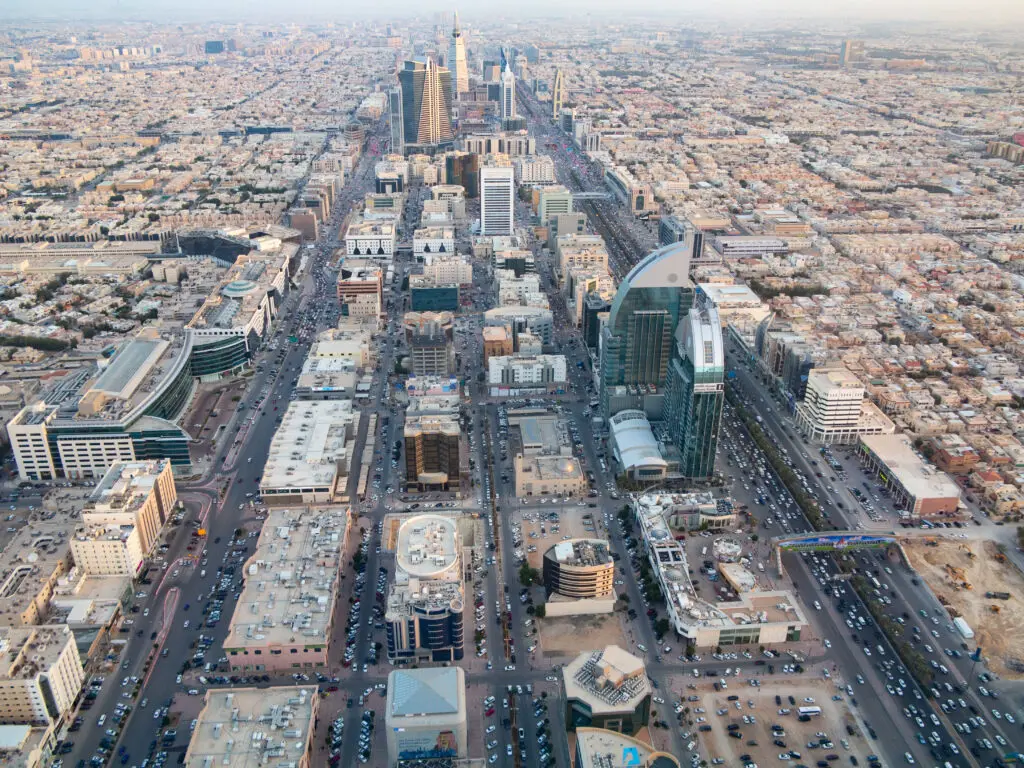
As one of the most ambitious architectural and urban projects of the 21st century, The Line, designed within the NEOM (New Future) development, serves as a model for preserving nature and enhancing human life. Planned to be built along a 170-kilometer stretch in northwest Saudi Arabia, the megastructure with mirrored facades will be 500 meters high and 200 meters wide.
A dramatic alternative to traditional cities that radiate from a central point, The Line addresses the challenges humanity faces in today’s urban life and illuminates alternative lifestyles. Comprised of two wall-like structures with open space between them, the city will be the 12th-tallest building in the world upon completion and by far the longest structure. The project, expected to house 9 million people, will include housing, shopping, and recreational areas, schools, and parks. Designed with the principles of Zero Gravity Urbanism, The Line will layer various functions.
Featuring a mirrored exterior façade that defines its unique character and enables even its minimal footprint to blend into the natural surroundings, The Line’s interior is designed to offer extraordinary experiences and immersive moments. A transportation system will run the length of the megastructure, connecting the two ends of the city in 20 minutes.
Three-dimensional maps, such as this one of a district in Singapore, could help researchers to keep track of urban planning, disaster risk assessment and climate change.Credit: Zhu et al./ESSD
Scientists have produced the most detailed 3D map of almost all buildings in the world. The map, called GlobalBuildingAtlas, combines satellite imagery and machine learning to generate 3D models for 97% of buildings on Earth.
The data set, published in the open-access journal Earth System Science Data on 1 December1, covers 2.75 billion buildings, each mapped with footprints and heights at a spatial resolution of 3 metres by 3 metres.
The 3D map opens new possibilities for disaster risk assessment, climate modelling and urban planning, according to study co-author Xiaoxiang Zhu, an Earth observation data scientist at the Technical University of Munich in Germany. It could also help to improve how researchers monitor United Nations (UN) Sustainable Development Goals for cities and communities, Zhu adds.
Billions of buildings
Conventionally, creating detailed 3D maps at a global scale has been difficult, say Zhu, because it usually requires either laser scanning or high‑resolution stereo imagery. The team’s solution was to combine deep learning with laser-scanning techniques to predict building heights. The tool was trained on reference data obtained using light detection and ranging (LiDAR) from 168 cities, mostly in Europe, North America and Oceania.
The researchers created the 3D maps from approximately 800,000 satellite scenes captured in 2019, using the deep-learning tool to predict building heights, volumes and areas.
The study found that Asia accounts for nearly half of all mapped buildings in the world — approximately 1.22 billion structures. Asia also dominates the total building volume at 1.27 trillion cubic metres, reflecting rapid urbanization and dense metropolitan clusters in China, India and southeast Asia.
Africa has the second largest number of buildings, at 540 million, but their combined volume is only 117 billion cubic metres, underscoring the prevalence of small, low-rise structures.
City-scale analyses illustrate how building volume correlates with population density and economic development. In Europe, Finland has six times more building volume per capita than does Greece. The study also highlighted that Niger’s per-capita building volume is 27 times below the world average.
These patterns suggest that conventional 2D measures of urban growth, such as built-up areas, might obscure crucial differences between infrastructure and living conditions.
Dorina Pojani, an urban planning researcher at the University of Queensland in Brisbane, Australia, says that the data set would be extremely valuable for her research, because she has previously relied on static, 2D data.
“Since this can be regularly updated it will be very valuable over the next five to ten years, as the data set will reveal how urban areas develop over time,” Pojani says.
She says that the data set presents fresh opportunities to study corruption, allowing researchers to “link buildings or projects to specific developers, firms or politically connected actors, and ask whether certain networks of people are disproportionately represented in high-value or strategically located projects”.
Pojani says her previous research has linked informal settlements with election outcomes2. Political parties often ignore “such settlements when there is an election coming up”, she adds. With a more dynamic data set, Pojani says her work could involve more high-quality evidence.
Liton Kamruzzaman, a transport and urban planner at Monash University in Melbourne, Australia, says that the data set has a lot of potential to help track urbanization around the world.
“There are many parts in the world that do not have any information about how their cities and buildings are growing. This data set is great for everyone irrespective of where they are living,” he adds.
We use cookies on our website to give you the most relevant experience by remembering your preferences and repeat visits. By clicking “Accept”, you consent to the use of ALL the cookies.
This website uses cookies to improve your experience while you navigate through the website. Out of these cookies, the cookies that are categorized as necessary are stored on your browser as they are essential for the working of basic functionalities of the website. We also use third-party cookies that help us analyze and understand how you use this website. These cookies will be stored in your browser only with your consent. You also have the option to opt-out of these cookies. But opting out of some of these cookies may have an effect on your browsing experience.
Necessary cookies are absolutely essential for the website to function properly. This category only includes cookies that ensures basic functionalities and security features of the website. These cookies do not store any personal information.
Any cookies that may not be particularly necessary for the website to function and is used specifically to collect user personal data via analytics, ads, other embedded contents are termed as non-necessary cookies. It is mandatory to procure user consent prior to running these cookies on your website.
You must be logged in to post a comment.