We must completely change the way we build

We must completely change the way we build

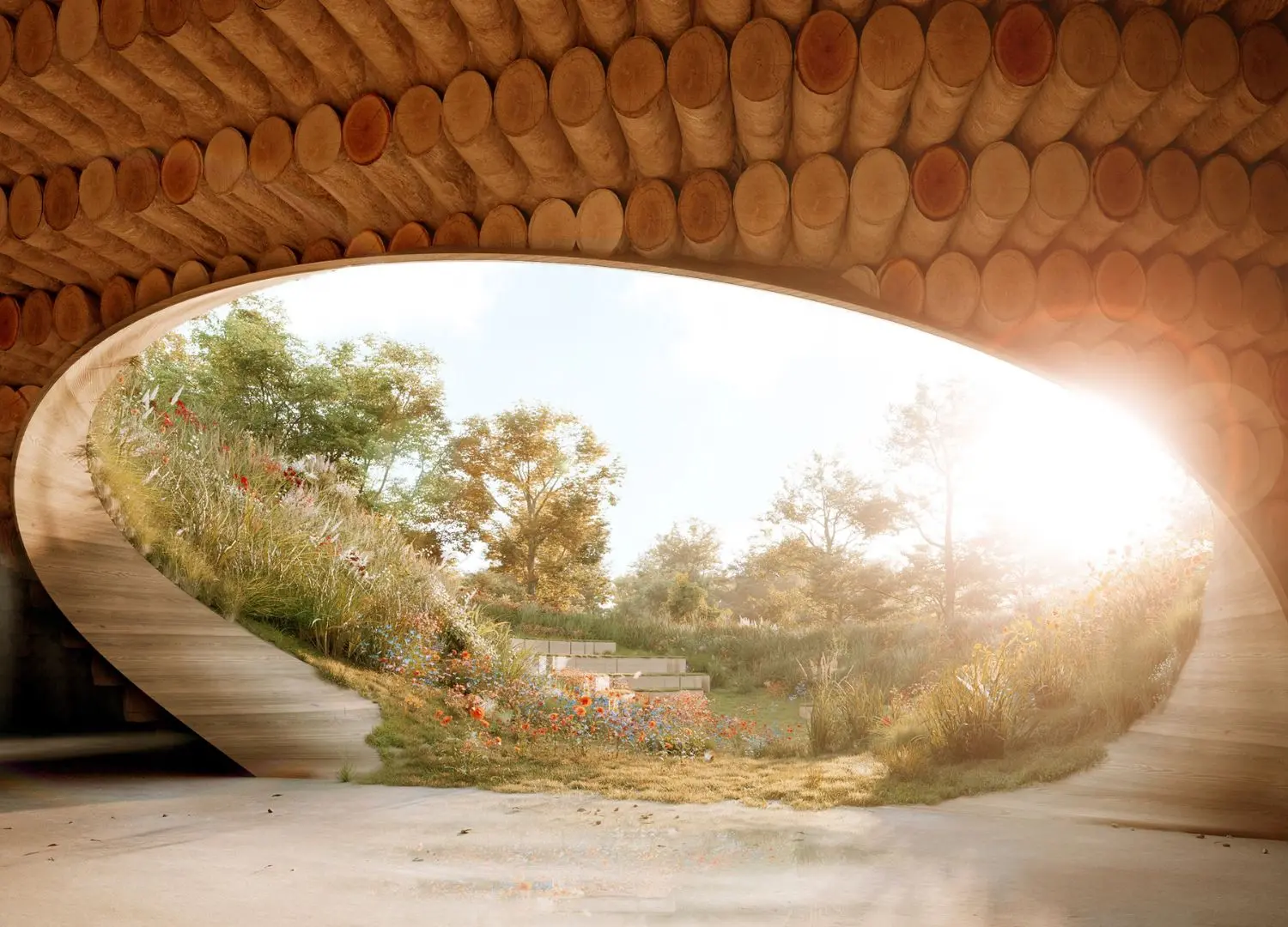
The Sawa residential building in Rotterdam, the Netherlands, is made from wood – Hollandse Hoogte/Shutterstock

.

We must completely change the way we build homes to stay below 2°C

.

By Michael Le Page in New Scientist

14 January 2026

.

Construction generates between 10 and 20 per cent of the world’s greenhouse gas emissions, but cities can slash their climate impact by designing buildings in a more efficient way

.


Cities must reduce greenhouse gas emissions from the construction of buildings and infrastructure by more than 90 per cent in the next two to four decades if the world is to avoid warming of more than 2°C. That means radical changes are needed in the design of buildings, or what they are built from, or both.

“Canada wants to triple its rate of housing construction. The US has a housing deficit, Australia has a housing deficit, [and so does] basically every country you go to right now,” says Shoshanna Saxe at the University of Toronto, Canada. “How do we build so much more while also demanding that we pollute so much less?”

Yet this is achievable, Saxe thinks. “We’re already building buildings that meet these targets; we just have to build more of the good and less of the bad,” she says. “We’ve had these skills and this knowledge for decades; we just have to use it.”

Globally, construction generates between 10 and 20 per cent of all greenhouse gas emissions, with much of that due to the production of cement. To get these emissions down, countries and cities need to know their current construction emissions and then plan how to reduce them in line with global targets.

But when Saxe’s team was asked to do this for the city of Toronto, the researchers were surprised to find that very few studies have attempted to estimate construction emissions on a city level.

“So we decided to come up with a way of getting a rough estimate of how much cities are emitting when they build buildings and infrastructure, and then also how much they could emit in the future to stay within climate limits,” says team member Keagan Rankin, also at the University of Toronto.

Rankin did this for 1033 cities by combining an existing model used to estimate the environmental impact of products over their lifetime – known as EXIOBASE – with data on the population and growth of cities, construction investment and employment, and so on. “This is all available datasets, but he put them together in new ways that we haven’t seen anybody do,” says Saxe.

Finally, the team estimated how fast each city would need to cut construction emissions to stay in line with the remaining global carbon budget for 2°C. These numbers are crucial for planning, Saxe says, “You need to know what the budget per sector is.”

Cities will bust these budgets if they meet housing demand by building single-family homes, the analysis suggests. They need to focus on more efficient multi-unit housing.

Using different materials such as wood or recycled concrete can also help reduce emissions, but better design is even more important, says Saxe.

“It’s very popular to say we’ll just build wood buildings and that solves it,” she says. “But wood also has greenhouse gas emissions. It is only zero emissions if you make all kinds of really optimistic assumptions, including the rate of forestry growth.”

“It’s actually much more effective to design your buildings well so there’s not a lot of wasted space, and wasted structure,” says Saxe.

Rankin says that cities are well positioned to take action. “Cities are very willing to implement climate action, and when it comes to construction, they have a lot of control,” he says. “It’s just, like we found with Toronto, a lot of cities don’t have the resources to go and determine a budget.”

“Without reducing emissions from the construction sector, we cannot meet the Paris Agreement, even if we reduce other emissions to zero,” says Prajal Pradhan at the University of Groningen in the Netherlands. “In my view, it is helpful to view emissions from a city budget perspective.”

It is also important to design buildings to be low-emission over their entire lifetime, not just during construction, says Susan Roaf at Heriot Watt University in the UK, such as by allowing natural ventilation. “We cannot go on developing cities as they have been growing, riddled with super-polluting ‘zombie buildings’,” she says.

Cutting construction emissions also involves prioritising what is built, Saxe says. For instance, Canada is still constructing a huge amount of oil and gas infrastructure. “We could build new housing for 10 million people [without increasing emissions] if we dialled back how much construction we were putting into oil and gas,” she says.

Journal reference: Nature Cities DOI: 10.1038/s44284-025-00379-8

*


*

Hope and optimism in architecture at the 2026 Wallpaper* Design Awards

Hope and optimism in architecture at the 2026 Wallpaper* Design Awards

Front view of a multi-story residential building facade in Hazaribagh, India. By Shantum Singh via Pexels

.

We celebrate hope and optimism in architecture at the 2026 Wallpaper* Design Awards

Seeking the positive and the spirit-lifting, we commend this year’s architectural innovators and change makers

.

.

.
photo-collage for theme of hope and optimism in architecture wallpaper* design awards 2026Our three Architects of the Year are Je Ahn (top left), Marina Tabassum (bottom, centre) and Lina Gotmeh (top right). Three houses get the nod for Best Use of Material: Rammed Earth House by Tuckey Design Studio (bottom left), Sombra de Santa Fe by DUST Architects (top, centre) and Bin Nouh’s Courtyard House by Shahira Fahmy
(Image credit: Mixed credit)

.

Architecture is an inherently optimistic profession – a quality instilled in me through training and flagged to me in many an interview over the years. Architects set out to change the world, often consciously and purposefully, quite literally shaping the environment around us. It helps to remember this essential positivity at a time when it is easy to get caught up in global events that weigh heavily on our minds.

view of Rammed Earth House by Tuckey Design Studio with tactile walls and earth tones

Rammed Earth House by Tuckey Design Studio wins a Best Use of Material 2026 award alongside two other exceptional homes using earth building techniques – (Image credit: Jim Stephenson)


We celebrate hope and optimism in architecture

At Wallpaper*, we are always keen to champion innovations, ideas and designs that bring hope and optimism, including architectural wonders that put a smile on our faces. There have been quite a few of those over the past year. The 2025 Venice Architecture Biennale had its critics, but it also showcased the architecture world’s hunger for change. Meanwhile, Sarah Housley’s new book Designing Hope discussed specific scenarios that nod to a better outlook for us all.

views of Sombra de Santa Fe, new mexico house, with dark, minimalist geometric volumes and clean walls and long nature views

Sombra de Santa Fe, a New Mexico house by DUST Architects, was one of the three homes sharing our Best Use of Material 2026 award – (Image credit: Joe Fletcher)

Also in 2025, Finland was named the world’s happiest country for the eighth year in a row; its ambitious sustainability strategies surely play a role here (policy makers, take note). Elsewhere, ingenious initiatives, such as Retrofit House – a live showcase of sustainable homebuilding techniques, by Civic Square, Dark Matter Labs and Material Cultures – landed to give power to ordinary people.

views of mud brick house with warm hues in desert building style, Bin Nouh's Courtyard House by Shahira Fahmy

Bin Nouh’s Courtyard House by Shahira Fahmy in Saudi Arabia’s AlUla is another home using earth building techniques and sharing our Best Use of Material 2026 accolade – (Image credit: Nour El Refai)

Above all, it’s the plurality of architectural voices and radical solutions by the world’s creative minds that brings the most hopeful message for a sunnier future. And what better way mark what we look forward to seeing more of than our annual Wallpaper* Design Awards?

portrait of architect Je Ahn

Je Ahn, one of our three Architects of the Year 2026 (Image credit: Studio Weave)

In that spirit, a series of our 2026 awards – newly announced in the February issue of Wallpaper* and featured over the coming weeks on Wallpaper.com – celebrates one of the many ways in which we can sustainably diversify building design and construction: working with earth. Once dismissed as ‘backwards’ and unfashionable, building with earth is making a strong comeback. Readily accessible, endlessly adaptable, and honed through generational wisdom, this construction method has many iterations across the world. Polished or textured, geometric or organic, today’s earth buildings look as aspirational as the finest, conventionally built 21st-century villas.

portrait of 2025 Serpentine Pavilion architect Marina Tabassum

Marina Tabassum, one of our three Architects of the Year 2026 (Image credit: Asif Salman)


Our Best Use of Material awards category spotlights three standout residential examples that use local soil – in the UK, the US and Saudi Arabia – with decidedly contemporary outcomes that show off the age-old technique’s potential.

black and white portrait of architect Lina Ghotmeh shot by Brigitte Lacombe

Lina Ghotmeh, one of our three Architects of the Year 2026 (Image credit: Photography by Brigitte Lacombe)

Also for the Wallpaper* Design Awards 2026, we named three Architects of the Year, chosen for having commanded significant attention in 2025. Our winners are Je Ahn, who last year completed a modest yet infinitely glorious home on a British island; Lina Ghotmeh, whose studio is booming with new projects; and Marina Tabassum, who wowed us with her 2025 Serpentine Pavilion.


When we interviewed each of them, continuing in our pursuit of optimism, we asked them to name a building that made them smile. We were looking for spatial expressions of serenity – architecture that brings hope and a visceral twinkle. We also ended up talking about everything from height-specific kitchen counters and spilling wine on light-coloured floors to the revelation that architecture need not take centre stage, and we left feeling inspired. Here’s to a great year in architecture – join us as we raise our always-half-full glass.

.

Ellie Stathaki is the Architecture & Environment Director at Wallpaper*. She trained as an architect at the Aristotle University of Thessaloniki in Greece and studied architectural history at the Bartlett in London. Now an established journalist, she has been a member of the Wallpaper* team since 2006, visiting buildings across the globe and interviewing leading architects such as Tadao Ando and Rem Koolhaas. Ellie has also taken part in judging panels, moderated events, curated shows and contributed in books, such as The Contemporary House (Thames & Hudson, 2018), Glenn Sestig Architecture Diary (2020) and House London (2022).

*


*

How Jeddah Tower Surpassed 80-Floor Mark

How Jeddah Tower Surpassed 80-Floor Mark

Image above of the Jeddah Tower – Construction Week

.

World’s Tallest: How Jeddah Tower Surpassed 80-Floor Mark

.
Saudi Arabia’s Jeddah Tower surpasses 80 floors
Saudi Arabia’s Jeddah Tower surpasses 80 floors, advancing towards becoming the world’s first kilometre-high building by 2028

The skyline along Saudi Arabia’s Red Sea coast is experiencing significant transformation as the Jeddah Tower officially moves past the 80-floor mark.

The important milestone, confirmed on 6 January, 2026, signals that the world’s first “kilometre-high” structure is no longer a distant concept, but a rapidly advancing reality shaped by engineering excellence and logistical coordination.

Following a seven-year pause that began in 2018, the project – formerly known as the Kingdom Tower – resumed full-scale operations in January 2025. Since then, the construction site has become a centre of industrial activity, advancing at what engineers describe as a “blistering” pace.

The Jeddah Tower serves as the centrepiece of the broader Jeddah Economic City, a 57-million-square-foot development designed to reposition the Kingdom as a premier global hub for business and luxury tourism.

Designed by Adrian Smith + Gordon Gill, the firm behind Dubai’s Burj Khalifa, the structure is engineered to reach a final height of at least 1,008 metres.

Jeddah Tower will be the world’s tallest

Overcoming unprecedented physical constraints

Achieving such verticality requires overcoming unprecedented physical constraints.

The Saudi Binladin Group (SBG) was rehired in late 2024 under a SR 7.2bn (£1.5bn/US$2bn) contract. Following their return in January 2025, SBG representatives note that resuming a “paused” megastructure presented immense technical challenges.

At the recommencement ceremony, the group emphasise their commitment to Vision 2030 goals, stating the project is now “utilising advanced ‘pumpcrete’ technology capable of delivering high-performance concrete to heights never before reached in human history.”

According to Thornton Tomasetti, the project’s structural engineers, the central core and flanking wings indicate more than 50% of the total concrete work is now complete. The current delivery schedule is notably aggressive, with crews adding a new floor approximately every three to four days.

In a technical update released on 6 January, 2026, Thornton Tomasetti confirmed the tower is on track to reach its 100th floor by February.

The companty highlights the structural core is performing exactly as modelled in wind-tunnel tests, state: “The Jeddah Tower project advanced strongly in 2025… our team is pairing innovation with advanced computational modeling to ensure the structure withstands the unique wind forces at 1,000 metres.”

The tower’s “three-petal” footprint is not merely aesthetic; it is a critical aerodynamic feature designed to shed wind vortices and reduce structural sway at extreme altitudes.

The observatory terrace

Managing complexity at unprecedented scale

Managing the sheer scale of the site falls to Turner Construction, which took over project management in March 2025. It describes the site as “one of the most complex construction environments on Earth,” requiring precise coordination between the tower’s construction and the surrounding infrastructure of Jeddah Economic City.

Perhaps the most technically demanding aspect is the vertical transport system. Finnish elevator specialists KONE are installing 59 lifts, including five double-decker units.

KONE describes the Jeddah Tower as the ultimate “proving ground” for their UltraRope technology, states that the elevators will travel at speeds exceeding 10 metres per second, using “carbon-fibre cores to eliminate the weight issues associated with traditional steel cables in supertall buildings.”

Delivery timeline and strategic importance

The completion of the Jeddah Tower, currently slated for August 2028, is a cornerstone of Saudi Arabia’s Vision 2030, serving as a symbol of the nation’s economic diversification and technical ambition.

Talal Ibrahim Al Maiman, CEO of the Jeddah Economic Company (JEC)

Talal Ibrahim Al Maiman, CEO of the Jeddah Economic Company (JEC), remarked during the 80th-floor celebrations: “Jeddah Tower will serve as a beacon of innovation and a catalyst for growth… Today’s progress represents the realization of a vision that was years in the making.”

At its final height, the Jeddah Tower will stand roughly 173 metres taller than the Burj Khalifa, claiming the crown of the world’s tallest building. It will house a luxury hotel, high-end residences and the world’s highest observation deck, featuring a cantilevered “sky terrace” overlooking the Red Sea.

While the tower is currently the Kingdom’s most prominent project, it is part of a wider vertical race; plans are already in motion for the Rise Tower in Riyadh – a £4bn (US$5.3bn) proposal aimed at reaching a staggering two kilometres in height.

For now, however, attention remains on Jeddah, as the construction sector watches the first kilometre-high landmark take shape along the Red Sea coast.

Shaping the Future of Construction in the Middle East

Shaping the Future of Construction in the Middle East


Stunning view of Dubai’s iconic skyscrapers under a clear blue sky.  By Aleksandar Pasaric via Pexels

.

Shaping the Future of Construction in the Middle East

Shaping the Future of Construction in the Middle East

GCP Construction Chemicals becomes the new Chryso. Born from the strategic alliance between Chryso and GCP, our new brand embodies the best of both companies. It symbolizes our journey and our future in the field of construction specialty chemicals. Courtesy of Chrysso Saint-Gobain.

.

Dubai is pushing forward with cutting-edge construction technologies—from fibre-reinforced concrete systems to large-format 3D printing—while regulators and industry leaders work to balance innovation with safety and long-term performance.

In a hurry? Here are the key points:

  • Dubai is rapidly adopting next-generation technologies such as Apis Cor’s 3D-printing systems, Bekaert’s Dramix steel fibres, and GCP’s STRUX macro-fibres to modernize construction.
  • These solutions promise cleaner sites, faster project delivery, reduced rebar use, and lower embodied carbon across major developments.
  • Regulators emphasize that innovation must advance alongside rigorous safety, testing, and performance verification to ensure resilient, code-compliant structures.

Dubai has rapidly positioned itself as one of the world’s most ambitious testbeds for next-generation construction technologies, advancing a built-environment agenda that prioritizes speed, safety, and sustainability at scale. Over the past two years—particularly through 2024 and 2025—the emirate has accelerated the adoption of innovations such as large-format 3D concrete printing by robotics companies like Apis Cor, advanced fibre-reinforced systems from suppliers including Bekaert with its Dramix 4D and GCP Applied Technologies’ STRUX macro-fibres, as well as self-healing admixtures and optimized digital mix-design platforms. These technologies are no longer theoretical experiments; they are being promoted for deployment across industrial flooring, infrastructure tunnels, precast modules, and residential construction. Early use cases promise cleaner construction sites, faster delivery, reduced reliance on conventional reinforcement, and lower embodied carbon in structural elements.

Yet progress requires precision. As Ihab Bassiouni of Dubai Municipality noted during a panel at The Big 5:

It’s very delicate… how to balance between both. It’s not easy,” referring to the challenge of encouraging innovation while ensuring public safety, regulatory compliance, and long-term performance.

The region’s authorities now face the task of validating emerging systems—whether steel-fiber-reinforced concrete used to replace part of the rebar in foundations, synthetic macrofibres introduced to streamline megaproject flooring, or 3D-printed structural walls produced in hours rather than days. The Middle East’s construction boom makes this balancing act especially urgent: as the sector embraces transformative technologies, regulators must ensure that safety and durability evolve just as quickly.

The Role of Standards in Enabling Safe Innovation

The session was moderated by Mohamed Amer, Managing Director – MENA, International Code Council (ICC), who opened the discussion by emphasizing the role of standards and performance-based design in enabling safe innovation. Amer highlighted the ICC’s responsibility in codes, testing, and certification, noting ongoing collaborations with ACI on low-carbon cement criteria and emerging materials.

Bassiouni emphasized that Dubai’s building code already supports innovation through performance-based provisions, allowing new technologies to be approved even when not explicitly covered in prescriptive rules.

“We give the opportunity to material producers… to create new products and get them used in concrete as an alternative to the prescribed fixed designs,” he added.

Exemplary projects: Dubai’s innovation drive is already visible on the ground — from the Dubai Municipality office printed on-site by Apis Cor in 2019, which showcased rapid, large-format 3D printing for municipal buildings; to Expo City Dubai’s 2024 deployment of Bekaert’s Dramix® 4D fibres in large floor-on-ground areas to reduce rebar, improve crack control and lower embodied carbon; and while GCP Applied Technologies’ STRUX® macro-fibres are actively marketed and supplied into the UAE market and used internationally in high-performance slabs, a publicly documented, named UAE project citing STRUX in press materials is not available at this time and we recommend vendor confirmation for a UAE-specific case.

Understanding the BSA: Building System Approval Process

Dubai Municipality, one of the main governing bodies over the city of Dubai, operates the Building System Approval (BSA) process, which enables comprehensive testing and evaluation of innovative systems through documented research, third-party assessments, and pilot projects. He noted that the authority is introducing an “in-principle approval” stage—a pre-evaluation mechanism allowing system owners to obtain early technical feedback before investing in full-scale pilots or manufacturing facilities.

However, Bassiouni underscored that regulation alone is not enough. The municipality is actively looking to incorporate a new innovative platform designed to bring regulators, academia, consultants, manufacturers, and the public together. 

“Everyone will be part of the whole process,” he said, explaining that this collaborative environment, combined with industry education and sandbox testing spaces, will speed up adoption and reduce uncertainty.

Many engineers, he observed:

“are not aware of new technologies because they are busy with their day-to-day jobs,” making education a crucial priority.

ACI’s Contribution to Concrete Knowledge and Standards

Also on the panel was Ahmad Mhanna, Director, Middle East / North Africa Region at ACI, who described how the organization’s century-long history is rooted in industry expertise and continuous evolution.

“We heavily depend on our members… to develop these standards,” Mhanna said, noting that ACI now maintains more than “35,000 pages of concrete knowledge” spanning material science, structural design, construction, repair, resilience, and sustainability.

He highlighted ACI 318—the world’s leading structural concrete design code—as an example of flexibility and innovation-readiness. When a material or system is not covered explicitly, Mhanna explained:

“It allows the use of that material or system in collaboration with the building official and the system owner.”

This pathway, often used alongside ICC acceptance criteria, allows innovations to enter the market without compromising safety.

Shifting Toward Resilience and Whole-Life Performance

Mhanna also addressed ACI’s strategic shift toward resilience and whole-life performance. A resilient structure, he noted, is one that can recover its functionality after a disruptive event—an increasingly important consideration in modern codes. He stressed that long-term operational savings and durability benefits often outweigh higher upfront material costs.

But the biggest barrier, Mhanna argued, is not technology but perception.

“Many engineers don’t have enough background… they deal with it as a new material,” he said, pointing out that solutions such as steel fiber-reinforced concrete have existed for more than 50 years and are globally validated across tunnels, slabs, precast elements, and industrial projects.

Adding the manufacturer’s perspective, Ahmad Mandalawi, Regional Structural and Specification Engineer, Bekaert, reinforced the need for industry-wide education and early involvement of system owners in design. He explained that engineers often hesitate to approve fiber-reinforced systems simply because they fall outside their traditional training or because codes do not yet feature abundant examples. Owners, he added, tend to compare materials “like-for-like” on price rather than examining lifecycle value. He urged stakeholders to focus on “the total cost of ownership,” including reduced construction timelines, labor savings, corrosion mitigation, and long-term durability.

Fiber-Reinforced Concrete in Dubai’s Landmark Projects

Mandalawi said that Dubai Metro Blue Line extension, where steel fiber reinforcement was used in segmental tunnel linings, has seen faster installation and substantial reductions in embodied carbon. He also cited the Expo City townhouses, where switching from traditional rebar to fully fiber-reinforced slabs resulted in up to 30% lower CO₂ emissions, 50% fewer steel bars, and 15–20% total cost savings, all without compromising structural performance.

All panelists have agreed that innovation does not have to come at the expense of safety. With performance-based codes, rigorous testing frameworks, and stronger collaboration between regulators, standards bodies, consultants, and manufacturers, the Middle East is well-positioned to lead a new era of sustainable, efficient, and resilient construction.

*


*

Why smart cities must become integrated urban ecosystems

Why smart cities must become integrated urban ecosystems

Buildings, illuminated, water, nature, waterfront, skyscrapers, skyline, city lights, cityscape, city view, urban, urban landscape, metropolitan, Dubai city, lights, night, reflection, night photography by Pexels via pixabay

.

Why smart cities must become integrated urban ecosystems

Built Environment and Infrastructure

Cities are now at the centre of humanity’s social, economic and environmental future.

By :

This article is part of: World Economic Forum Annual Meeting
  • Nearly half of the world’s population lives in urban areas, with nearly 4 billion people calling cities home.
  • As urban populations continue to grow, cities face challenges such as ageing infrastructure and rising demand for energy.
  • Innovation and collaboration are key to building integrated smart cities for a more sustainable and connected world.

The future of cities depends on the reinvention of how we envision, build and operate communities. We are embracing that responsibility with optimism and a firm belief that integrated smart cities can create a more sustainable and connected world.

Cities across the world are going through a period of profound transformation. According to the United Nations, approximately 45% of the global population lives in urban areas in 2025, with nearly 4 billion people calling cities home.

This represents an extraordinary shift from just decades ago. Cities are now at the centre of humanity’s social, economic and environmental future. As urban populations continue to grow, cities face mounting challenges, including ageing infrastructure, rapidly rising demand for energy, and ever-changing human expectations for digital connectivity and an increased quality of life.

As a result, smart cities have naturally become an important focal point for many sectors, but discussions still remain dominated by technology companies. While digital platforms, internet of things (IoT) devices and AI are all essential components of urban innovation, they alone cannot constitute the complex machine that is the modern city.

Smart cities rely on interplay of multiple systems

Urban environments inevitably rely on the interplay of infrastructure, energy, buildings, mobility and water management – systems that must be conceived, built and operated with precision and long-term stewardship. This is why we, at GS E&C, believe that the future of smart cities requires not only technological innovation, but also the deep engineering, construction and operational expertise that firms like ours have been refining for decades.

The construction industry is at an inflection point, as well. The traditional EPC model – design, build and hand over – no longer aligns with how modern cities function or what today’s society demands. Buildings and infrastructure now generate continuous data.

For example, housing systems interact dynamically with energy and environmental conditions, and people increasingly expect personalized services embedded throughout their daily lives. The boundary between digital and physical systems has blurred, transforming cities into networks that change and evolve in real time.

This convergence reveals a fundamental strategic direction for us. Construction firms must evolve into long-term service providers. The future of urban development lies not in isolated projects, but in integrated ecosystems that require continuous operation and innovation through reinvention.

Urgent need to reshape how urban systems impact environment

The need for this shift is underscored by an urgent global reality. According to the United Nations Environment Programme (UNEP), the construction sector consumes 34% of global energy and accounts for 37% of global carbon dioxide (CO₂) emissions.

Operational emissions from buildings alone reached nearly 9.8 billion tons of CO₂ in 2023. This means that everything in this industry, from the materials we use to the way we operate buildings and infrastructure, is imperative to addressing climate change.

Cities occupy just a small fraction of Earth’s land mass, yet their energy use and emissions will determine the trajectory of the whole planet. Firms like ours have a responsibility – and simultaneously, an extraordinary opportunity – to reshape how urban systems impact the environment.

This evolution is the foundation of our strategic transformation. We aim to shift from a project-based general contractor to a total service provider capable of integrating planning, construction, technology and long-term operation. Our goal is to create urban environments that are not only more efficient and sustainable, but also more connected and resilient.

Integrated vision redefines how smart cities work

To guide this transition, GS E&C developed Life Weaver, the company’s integrated vision for smart cities. Life Weaver is more than just a technological blueprint; it is a new philosophy for how cities should function.

It rests on five principles: harmonized flow of energy, mobility and data; innovation emerging from urban challenges; invisible technology that enhances human desires and creativity; ecological co-evolution with natural systems; and integrated experiences that dissolve the boundaries between services and spaces.

These principles redefine what a city can be – an adaptive ecosystem that is both sustainable and intuitive. Life Weaver envisions urban environments where energy circulates cleanly and efficiently, mobility networks reduce friction and services anticipate the needs of the residents. Technology becomes a seamless backdrop, empowering people without overwhelming them.

To make this vision a reality, we are working on building the capabilities required for operating smart cities. Our Zero Energy City frameworks integrate renewable power generation, energy storage systems and energy prosumers – who produce and consume their own energy – to achieve net zero.

Meanwhile, our smart home and IoT platforms create secure and connected living environments that are capable of automation and personalization. We will work to advance digital twins, data platforms and cybersecurity infrastructures to ensure that cities can be well managed as coherent, intelligent systems.

Our investment arm plays a critical role in this picture, as well. We collaborate with startups in AI, robotics, renewable energy and advanced materials to accelerate innovation. Partnerships with leading academic institutions, including Korea Advanced Institute of Science and Technology (KAIST), enable us to study, test and deploy new solutions in real environments.

Why smart cities must improve human experience

Yet, at the heart of our vision remains people. The ultimate goal of smart cities must be to improve human experience. Smart cities should reduce energy costs, enhance safety, create cleaner environments and shorten commutes. They should enable healthy lifestyles, support vulnerable populations and foster a greater sense of community. They need to be inclusive places where technology adapts to the lives of people – not the other way around.

As cities become the primary setting of global life – accounting for nearly half of the world population and over 80% of global GDP according to the International Energy Agency (IEA) – their success will define our collective future. This is why transformation towards integrated smart cities matters. It is not simply technological innovation, but rather, an imperative for society.

No single sector can accomplish this alone. Smart cities require collaboration across construction, technology, energy, mobility, academia, the public sector and governments. GS E&C is committed to leading through such partnerships and redefining what it means to build – not just for today, but for future generations as well.

The future of cities depends on the reinvention of how we envision, build and operate communities. We are embracing that responsibility with optimism and a firm belief that integrated smart cities can create a more sustainable and connected world.

*


*