Over the last decade, India’s foreign policy has undergone major changes. One of the most significant changes has been the transformation of India’s relations with the MENA (Middle East and North Africa) region. For a very long time, India’s engagement with the region centered around its energy demands and the presence of a large Indian diaspora. Of late, however, one sees a shift in the dynamic wherein both the economic and political aspects of the relationship have undergone positive transformations. India signed a Free Trade Agreement (FTA) with Oman in December 2025 and with the UAE in 2022. Both agreements indicate the growing economic co-operation between India and MENA nations and a mutual desire to further diversify the relationship. India today boasts a sustained growth of 6-7 per cent[1] and is likely to become the world’s third-largest economy by 2028,[2] thus offering the MENA nations a large market.
Political Ties
From a political standpoint, India today shares excellent relations with all key players in the region, from the UAE to Saudi Arabia and Israel. This is reflected in the frequent high-level visits by political leaders from the region and India. For instance, Indian Prime Minister (PM) Narendra Modi has visited the UAE seven times since he became the PM in 2014, indicating the strength of the bilateral relationship. Similarly, he has paid visits to Saudi Arabia, Oman, and Qatar, among others. This acceleration of ties with the Gulf countries in the last decade or so has been one of the significant changes in India’s foreign policy outreach.
India also shed its hesitancy about developing ties with Israel in recent years. For much of India’s foreign policy formulations post-1947, it seemed more inclined to the Palestinian cause. This is easy to understand when one looks at the early years of India’s independence and the sentiment that was largely based on anti-colonialism and anti-imperialism. But as the Indian story grew over the last many decades, New Delhi’s growing relationship with Israel was also an indication of a confident and growth-oriented India. India and Israel today enjoy a robust partnership, with defense being a cornerstone of this relationship; today, Israel is India’s third-largest supplier of military equipment, with Russia taking the top spot.[3] However, it is important to note that India continues to support a two-state solution to the Palestine issue.
Credit in this aspect is also due to Indian foreign policymakers who have deftly balanced India’s ties with Israel and with other states in the Middle East. For India, this engagement is also a part of its own desire to be seen as a global player and hence the acronym, “Extended Neighborhood”. By including the Gulf nations as part of its neighborhood, India has indicated that it acknowledges the enormous benefits that both India and the MENA region can have from each other. Also, for many decades post-1947, India was more keenly invested in South Asia or its immediate neighbors, such as Nepal, Bangladesh and Bhutan, among others. Now with a growing economy and an increasingly large diaspora based in the Gulf, India’s priorities have shifted beyond the immediate neighborhood to the extended region.
Economics Ties
With the MENA region, India’s core strength lies in the economic field and the potential it offers for future growth and development. The GCC, comprising Saudi Arabia, the UAE, Qatar, Kuwait, Oman, and Bahrain, is India’s largest trading partner bloc, with bilateral trade reaching almost US$179 billion in 2024-25.[4] Further, as of 2024, GCC exports to India accounted for US$90 billion—representing 71% of the bloc’s total exports.[5]
During the visit of the UAE President H.H. Sheikh Mohamed bin Zayed Al Nahyan to India in January 2026, it was decided that India and the UAE will target doubling bilateral trade to US$200 billion within the next six years.[6] However, many people familiar with the matter point out that there is sometimes a mismatch between the desire by many Gulf countries to invest in India and India’s inability to provide them with the correct options to do so. This has led to slower investment in India by many of the Gulf countries, including Saudi Arabia. One course correction, then, would be for India to provide more concrete investment opportunities for nations in the Gulf where they feel encouraged to invest.
Japan offers an interesting example in this scenario. It has invested heavily in India, particularly in the North-East (NE) region of the country. It has also set an ambitious target of US$68 billion as its investment plans in India over the next decade, and ranks among the top five FDI investors in India currently. Japan has primarily focused on the infrastructure sector in the NE and has invested around US$2 billion in the region, building roads and highways.[7] For Japan, the NE region of India is an important part of its Free and Open Indo-Pacific vision, which aims to bring countries together so that trade routes in the Indo-Pacific remain open for all. Japan already has a major presence in Myanmar and Bangladesh, and by becoming a major investment player in the NE region, Japan is able to protect its strategic interest in the Indo-Pacific.
So, for Indian policymakers, the challenge is to identify such regions and projects where the MENA countries can invest but also tie into their core geopolitical interests. The large Indian diaspora that lives in the MENA region also sends remittances back home, which make for a significant chunk of the capital inflow. According to a Reserve Bank of India (RBI) report, remittances from the UAE alone amounted to US$15.40 billion in the financial year 2020-21, representing 18% of India’s total inward remittances. In 2023-24, the UAE became the second largest source of India’s remittances, increasing its share from 18% to 19.2%.[8]
Saudi Arabia is another country that has promised to invest heavily in India. Saudi Arabia wants to expand its investments in fast-growing economies as part of its Vision 2030 diversification strategy, and India is keen to attract this capital. Both nations also formed a high-level task force in 2024 to expedite Riyadh’s plan to invest US$100 billion in India.[9] The idea is to promote investment in areas like energy, infrastructure and pharmaceuticals. India is also negotiating a bilateral investment treaty with Saudi Arabia.
Of late, India has also strengthened its economic ties with Oman. The FTA signed in December 2025 has been a milestone in that direction, under which Oman will provide India duty-free access to 98% of its tariff lines, which covers 99% of what India exports to Oman.[10] For India, Oman also has strategic significance since it occupies a critical position along the Strait of Hormuz, a key transit route for global energy shipments. India-Oman bilateral trade today exceeds US$10 billion annually.
With Qatar, India is actively pursuing an FTA, and expectations are that it will be finalized by mid-2026. Qatar plays a pivotal role in India’s energy security, accounting for 40% of the country’s total natural gas imports. Another landmark agreement was signed in February 2024 between Qatar Energy and Petronet LNG Limited. Under this, Qatar will supply 7.5 million metric tonnes per annum of liquefied natural gas (LNG) to India from 2028 for 20 years.[11] So, in all, India and the MENA region today are already connected by strong economic ties. The next step would be to enhance this economic relationship.
With Iran, India has strong historical ties and longstanding trade links in agriculture, pharmaceuticals, tea and other commodities. According to international trade data, India’s exports to Iran were roughly US$1.24 billion in 2024.[12] However, trade has been constrained by sanctions and financing limitations, particularly around energy and banking channels. From a strategic viewpoint, the Chabahar port project remains central to India’s connectivity strategy, offering access to Afghanistan and Central Asia via a route that bypasses Pakistan. However, India’s Union Budget 2026-27 has made no allocation for the Chabahar port, which indicates a freeze in India’s activities in the port. Chabahar had received 4 billion INR (Indian Rupees) allocation in the previous fiscal.[13] Going ahead, India’s approach will likely balance strategic connectivity interests with sensitivity to broader geopolitical pressures.
India-Türkiye relations have been under geopolitical tensions of late, and that has found its way into the economic aspect also not warming up to its full potential. Türkiye is a moderate but diversified trade partner for India, with economic exchanges spanning motor vehicles, chemicals, textiles and machinery. Precise recent bilateral figures vary by source, but Türkiye typically ranks among India’s medium-sized trade partners. Both countries share an interest in defense manufacturing, tourism, and digital services. This bilateral relationship offers scope to deepen ties through expanded industrial cooperation and supply-chain linkages, but all that will depend on how the strategic part of the relationship unfolds going ahead.
In 2023-24, India-Jordan bilateral trade was valued at US$2.875 billion, with Indian exports to Jordan amounting to US$1.465 billion.[14] Key exports from India include fertilisers, pharmaceuticals, textiles and food products. It is also important to note here that Jordan’s market also serves as a gateway for re-exports to neighboring Levant markets.
There are ample opportunities for both India and Jordan to further cooperate in sectors such as healthcare services, renewable energy, education and skills development partnerships. Also, Jordan’s trade agreements with Western markets make it an attractive partner for Indian firms seeking broader access to the region.
As Syria undertakes plans to rebuild the country after decades of war, India has made a reach out, indicating that it wants to be a partner in the reconstruction of Syria.[15] Also, a stable Syria will ensure secure trade routes and energy corridors critical to India’s economy as New Delhi steps up its economic ties in the MENA region. But there remains much work to be done in the India-Syria ties and taking the economic relationship forward.
Talks have been ongoing since 2004[16] between India and the GCC countries to sign an FTA. In 2004, a Framework Agreement was signed between India and the GCC, which intended for further negotiations to take place, eventually leading to an FTA. Two rounds in 2006 and 2008 did take place, but since then, the momentum has slowed down.
India’s Commerce Minister Piyush Goyal, in a recent statement, was, however, optimistic about an India-GCC FTA.[17] On 5 February 2026, India and the GCC signed the terms of reference between the two parties, providing a fresh impetus to the FTA.[18] India, in the last few years, has shown a great desire to sign FTAs with a number of countries, and in January 2026, the ‘mother of all deals’, i.e., the India-EU FTA, was also inked. This is also significant, keeping in mind the changing world order and questions being raised over the future of institutions like the World Trade Organization (WTO). But indications are that the India-GCC FTA is something India is keen on, and one can expect a further round of negotiations later this year.
Strategic Initiatives
Adding to the economic heft of the India-MENA ties are two important strategic initiatives, IMEC and I2U2. India today, as one of the world’s fastest-growing economies, offers a huge market for Foreign Direct Investments (FDI). Strategic initiatives like the India-Middle East-Europe Economic Corridor (IMEC), which was announced in New Delhi on the sidelines of the G20 Summit in September 2023, indicate how India, the Middle East, and Europe today want to work together for greater connectivity and trade.
The critique here is that the project has been slow to take off. The terrorist attacks by Hamas on Israel in 2023, followed by some reluctance on the part of Saudi Arabia, and Europe’s preoccupation with adjusting to a fast-changing world, have all played a role in IMEC slowing down. It is understood from people familiar with the details that both India and the UAE have already completed substantial work with regard to the IMEC. However, it remains a challenge for India and MENA to get IMEC back on a priority level where work can begin in earnest.
Another strategic initiative has been the I2U2 grouping comprising India, Israel, the UAE and the United States. Right from its inception in 2022, the I2U2 thrust was economic rather than geopolitical. This grouping sought to integrate the Middle East with India and the United States in a rather ambitious approach. The war in Gaza has again slowed down the grouping and its activities.
The main areas of focus for the I2U2 grouping include food security, renewable energy, healthcare, water management, transportation, and emerging technologies. The UAE, as part of the I2U2 grouping, has made a commitment of US$2 billion to construct food parks in India.[19] The idea is that while India provides the land, the United States logistics, and Israel brings its agricultural technology to the table. This is an excellent example of the kind of economic possibilities that are possible within the grouping.
Future Areas of Co-operation
Nuclear energy, space and building infrastructure in other places like Africa are some of the areas of future co-operation between India and MENA. For instance, building railway networks in various African countries is something India and the MENA countries can jointly look at. India enjoys tremendous goodwill in the continent, and so do countries like the UAE. Again, both countries have excellent know-how of building railway infrastructure. The combined strengths of India and the UAE can then make this a great economic partnership, which will also benefit the African countries greatly.
Looking ahead, the move will be to diversify and invest in technologies of the future, like artificial intelligence (AI), which can be used in various fields, like healthcare, etc. As the world shifts toward a digital economy, another area of co-operation opens up. India has already digitized its economy, with people using less cash in their daily transactions and relying more on Apps like PayTm, etc. The downside of a growing digital economy is also growing concerns of data theft and online scams. Again, there is potential for work in these areas. Defense is another sector where India and the Gulf states can work together. Joint defense production is again an area of future collaboration.
In October 2025, a transformative journey took place as a high-level delegation from across Africa, including representatives from Kenya and Ghana, arrived in India with a single, urgent mission: to unlock the future of sustainable cooling. Supported by the Mission Efficiency framework and partners like SEforALL, Daikin India, BEE and EESL, this South-South exchange was more than just a site visit; it was ablueprint for how emerging economies can collaborate to solve the climate crisis while driving prosperity.
The context for this visit is a cooling imperative that Africa cannot ignore. As the continent faces rapid urbanization and rising temperatures, the demand for cooling is expected to skyrocket. Currently, only 13% of African households have access to air conditioning, yet cooling could consume up to 60% of peak energy loads by 2040. The solutions explored during this three-day tour offered a triple win: the potential to reduce emissions by 68% by 2050, create hundreds of thousands of green jobs and significantly improve food security and healthcare.
The delegation’s journey began at the Daikin facility in Neemrana, where they witnessed firsthand the power of integrated manufacturing. From the production of low-GWP refrigerants like R-32 to the implementation of circular economy practices, the site showcased how industry can balance growth with environmental stewardship. A highlight of the visit was the Center of Excellence, where the focus on technician training and female participation sparked conversations about how Africa can replicate these models to empower its youth and women in the green economy.
Moving beyond the factory floor, the exchange delved into the complex world of policy frameworks and market implementation. Through roundtables with India’s Bureau of Energy Efficiency (BEE) and Energy Efficiency Services Limited (EESL), delegates explored the ‘India journey’ — from the National Cooling Action Plan to innovative financing models like UJALA. These sessions unpicked the mechanics of bulk procurement and Energy Service Company (ESCO) contracts, providing the African leaders with a toolkit to build bankable, scalable projects back home.
Perhaps the most resonant outcome of the exchange was the shared vision for human-centric development. Participants recognized that the cooling sector isn’t just about machines; it is about the thousands of jobs created across the value chain, from installation to maintenance. By establishing localized ‘Centers of Excellence’ and harmonizing regional standards, African nations can ensure that the transition to sustainable cooling is inclusive, creating a resilient workforce that can sustain long-term economic growth.
As the visit concluded, the path forward became clear: the future of climate resilience lies in South-South collaboration. By sharing technology, harmonizing policies and mobilizing blended finance, India and Africa are not just fulfilling global pledges — they are building a shared foundation for prosperity. The partnerships sparked this October promise to accelerate a cooling transformation that will save energy, boost food security, and improve the quality of life for millions across the African continent.
Updated: 10-02-2026 12:24 IST | Created: 10-02-2026 12:24 IST
.
.
Credit: ChatGPT
.
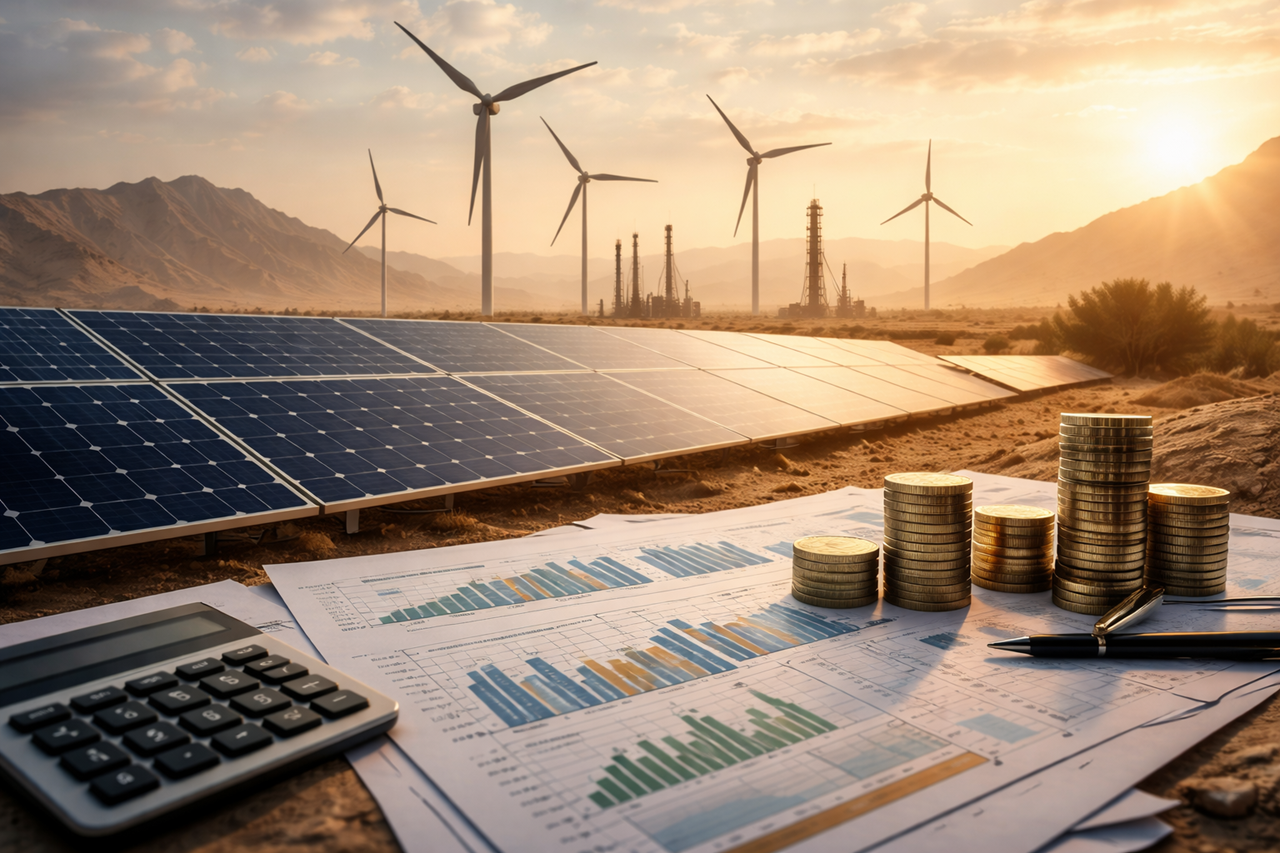
Rising inflation and economic instability are the critical obstacles to renewable energy growth across the Middle East and North Africa (MENA), according to new academic research. While the region has invested heavily in solar and wind capacity, long-term deployment remains vulnerable to shifting macroeconomic conditions. The study finds that economic fundamentals now play a decisive role in determining whether renewable energy projects advance or stall.
Inflation and volatility undermine long-term energy investment
Inflation acts as a persistent brake on renewable energy deployment across the MENA region. Renewable energy projects are capital-intensive by nature, with long payback periods and returns that depend heavily on stable financial conditions. When inflation rises, the real value of future revenues falls, financing costs increase, and investor confidence weakens. The study finds that higher inflation rates are associated with a statistically significant decline in the share of renewable electricity in total power generation, both in the short term and over the long run.
This link matters deeply for MENA economies, where inflationary episodes have often coincided with global commodity price shocks, currency pressures, and domestic fiscal stress. In such environments, renewable energy investments become less attractive relative to short-term spending priorities or conventional energy projects backed by existing infrastructure. The research shows that inflation does not merely slow renewable growth temporarily, but systematically erodes the conditions needed for sustained deployment.
Economic volatility aggravates this problem. The study demonstrates that higher levels of macroeconomic instability significantly reduce renewable energy security across the region. Volatility increases uncertainty around future demand, regulatory frameworks, exchange rates, and financing conditions, all of which are critical for projects that require long planning horizons. In volatile economies, investors tend to delay or cancel irreversible investments, and renewable energy projects are often among the first to be postponed.
This finding is particularly relevant in the MENA context, where economic cycles are closely tied to fluctuations in oil and gas revenues. When hydrocarbon prices fall, fiscal balances weaken and uncertainty rises, even as diversification into renewable energy becomes more urgent. The study shows that this contradiction creates a structural challenge: the same economic instability that makes renewable energy diversification necessary also undermines the conditions required to carry it out.
Importantly, the negative effects of inflation and volatility are not limited to long-term trends. The research finds that short-term shocks in both variables have immediate adverse impacts on renewable energy deployment. While these effects are smaller in magnitude than long-run impacts, they demonstrate how sensitive renewable energy investment decisions are to changing macroeconomic signals.
Fiscal policy plays a decisive enabling role
The study finds that government spending directed toward energy infrastructure, renewable subsidies, and capital investment has a statistically significant and durable positive effect on renewable energy security. Unlike inflation and volatility, which discourage private investment, targeted fiscal action can reduce risk, lower costs, and crowd in private capital.
The research notes that not all public spending is equally effective. What matters is fiscal policy that directly supports renewable energy development, such as investment in grid infrastructure, financial incentives for renewable projects, and public participation in early-stage market development. These measures help overcome market failures that often prevent private investors from entering renewable sectors in emerging or transitional economies.
The positive impact of fiscal policy holds in both the short run and the long run. In the short term, increased government spending can stimulate immediate activity by improving project bankability and signaling policy commitment. Over time, sustained fiscal support helps build institutional capacity, reduce financing costs, and accelerate learning effects that make renewable energy more competitive.
The study also highlights important regional differences. While fiscal policy has a positive effect across the MENA region as a whole, its effectiveness varies between hydrocarbon-exporting and hydrocarbon-importing countries. In non-oil economies, fiscal support tends to have a stronger marginal impact on renewable deployment, reflecting greater reliance on public intervention to attract private investment. In oil-rich countries, fiscal policy remains important but must compete with entrenched fossil fuel interests and revenue structures.
According to the research, fiscal policy cannot operate in isolation. Expansionary spending loses much of its effectiveness in environments marked by high inflation or persistent economic volatility. Without macroeconomic stability, even well-designed fiscal incentives struggle to deliver lasting results. This finding reinforces the study’s central message that renewable energy policy and macroeconomic policy are deeply interconnected.
Energy transition depends on economic stability, not resources alone
Renewable energy security is measured not by installed capacity or policy targets, but by the actual share of renewable electricity integrated into national power systems. This focus captures whether renewable energy has moved beyond pilot projects and announcements into reliable, system-level deployment.
The research finds strong evidence of a stable long-run relationship between renewable energy security and macroeconomic conditions across MENA countries. Deviations from this equilibrium do occur during economic shocks, but the system shows a meaningful capacity to adjust. Approximately 42 percent of any short-term deviation from the long-run path is corrected within a year, indicating a moderate but significant adjustment speed. This suggests that while macroeconomic shocks disrupt renewable deployment, the underlying relationship between stability and energy transition remains intact.
The study’s findings challenge the assumption that renewable energy deployment in MENA is primarily constrained by institutional inertia or political resistance. Instead, they point to economic fundamentals as a critical bottleneck. Countries with abundant renewable resources but unstable macroeconomic environments struggle to convert potential into actual energy security. Conversely, those that maintain price stability and predictable fiscal frameworks are better positioned to sustain renewable growth, even amid global uncertainty.
The research links energy transition to key economic policy objectives. Monetary policy aimed at price stability becomes not just a macroeconomic goal but an energy security tool. Fiscal discipline and counter-cyclical spending emerge as mechanisms to protect long-term energy investments from short-term economic shocks.
The study also highlights the risks of stop-and-go policy approaches. Inconsistent fiscal commitment, particularly during downturns, can derail renewable momentum and increase long-term costs. The findings suggest that insulating renewable energy investment from political and economic cycles may be essential for achieving durable energy transitions in the region.
Solar power has a dark side: panels are still built to be thrown away, and we risk creating a mountain of waste that locks away valuable minerals.
The world already faces up to 250 million tonnes of solar waste by 2050, as panels installed during the solar boom of the 2000s and 2010s reach the end of their service life.
These panels were not designed to be repaired, refurbished, or disassembled. Indeed, current recycling processes mainly extract glass and aluminium, while the materials that carry the highest economic and strategic value such as silver, copper and high-grade silicon are generally lost in the process.
The industry now faces a narrow window to rethink. Without a shift in design, the energy transition could end up shifting environmental pressures rather than reducing them. Building low-carbon technology is essential, but low-carbon does not inherently mean sustainable.
A booming industry designed for the dump
The average lifespan of solar modules is about 25 to 30 years. This means a massive wave of installations from the early 2000s is now reaching the end of its life cycle. Countries with mature solar markets like Germany, Australia, Japan and the US are already seeing a sharp increase in the number of panels being taken out of service.
The challenge lies not only in the scale of the waste but also in the very design of the panels. To survive decades of weather, solar panels are built by stacking layers of glass, cells and plastic, then bonding them together so tightly with strong adhesives that they become a single, inseparable unit.
You can think of a solar panel like an industrial-strength sandwich. VectorMine / shutterstock
But this durability has a downside. Because the layers are so tightly bonded, they are exceptionally difficult to peel apart, effectively preventing us from fixing the panels when they break or recovering materials when they are thrown away (those materials could generate US$15 billion (£11 billion) in economic value by 2050).
The limits of recycling
In any case, recycling should be a last resort because it destroys much of the embedded value. That’s because current processes are crude, mostly shredding panels to recover cheap aluminium and glass while losing high value metals.
For instance, while silver represents only 0.14% of a solar panel’s mass, it accounts for over 40% of its material value and about 10% of its total cost. Yet it is rarely recovered when recycling. During standard recycling, solar panels are crushed. The silver is pulverised into microscopic particles that become mixed with glass, silicon and plastic residues, making it too difficult and expensive to separate.
That’s why strategies that aim to extend the life of solar panels – such as repair and reuse – are vastly superior to recycling. They preserve the value of these products, and avoid the massive energy cost of industrial shredding. They keep valuable materials in circulation and reduce the need to extract new raw materials. They can even generate new revenue for owners. But this circular vision is only viable if solar panels are designed to be taken apart and repaired.
Designing panels for a circular future
Moving towards such an approach means redesigning panels so they can be repaired, upgraded and ultimately disassembled without damaging or destroying the components inside. The idea of designing for disassembly, common in other sectors, is increasingly essential for solar too.
Instead of permanent adhesives and fully laminated layers, panels can be built using modular designs and reversible connections. Components such as frames, junction boxes and connectors should be removable, while mechanical fixings or smart adhesives that release only at high temperatures can allow glass and cells to be separated more easily.
Standardising components and improving documentation would further support repairers, refurbishers and recyclers throughout a panel’s life cycle. In short, the next generation of solar panels must be designed to last longer, be repairable, and use fewer critical materials — not simply to maximise short-term energy output.
Digital tools can help
If you want to repair or recycle a panel years from now, you’ll need to know what materials it contains, what adhesives were used and how it was assembled. Digital tools can help here by storing information, essentially acting like a car’s logbook or a patient’s medical record.
One promising example is the EU’s new Digital Product Passport. These passports will include guidance on repair options, disassembly, hazardous substances, lifecycle history and end-of-life handling. They will be introduced progressively for priority product groups from 2027, with further expansion to many other products, expected towards around 2030.
The Digital Product Passport acts as a static “ingredients list” for a solar panel. It shows what a panel is made of and how it should be handled. Digital twins, by contrast, function more like a real-time monitoring system.
Continuously updated with performance data, they can signal when a panel is under-performing, has become too dusty, or needs repairing. Used together, these tools can help technicians identify which parts can be be repaired or reused and ensure solar panels are safely dismantled at the end of their life.
However, even the best digital twin isn’t much use if the panel itself is glued shut and designed for the dump. Without panels that are built to be repaired or taken apart, digitalisation will offer only marginal benefits.
Digital tools also have their own environmental footprint, from sensors to data storage, which makes it even more important that they support genuinely repairable designs rather than compensate for poor ones. We must rethink how we design solar panels right now, before today’s solar boom locks in tomorrow’s waste problem.
These numbers are not world shaking, but this development is. Egypt has enormous industrial potential. It has as many as 2.5 million workers in various sectors of the textile industry and 33 million over all, and the country’s literacy rate is now on the order of 75%. Literate workers are valuable because they are able to read and follow instructions.
If Egypt becomes a hub for producing solar cells, panels and arrays, it could be an engine for economic growth and also for the production of inexpensive energy in the country, which also acts as a fillip to economic growth.
Green Building Africa reports that “The $210 million Atum Solar project is being developed in the TEDA industrial zone in Sokhna and will have an annual production capacity of 2 GW of solar cells and 2 GW of solar modules.” The investors include JA Solar, a Chinese solar panel manufacturer, as well as concerns in the UAE, Bahrain and Egypt itself. The UAE and Bahrain have substantial investment capital lying about from oil sales, but small domestic populations and lack what economists call absorptive capacity. Egypt is a promising investment field for them as a fellow Arab country with a big workforce.
The plant will create over 800 direct jobs, and likely many more indirect ones.
The solar cells will be exported to the United States. Note that this facility is a way for JA Solar to sidestep the stiff US tariffs on Chinese solar cells, since the units will come from Egypt. The panels will be sold inside Egypt and also to other African countries.
The energy consultancy Ember reported last summer that there are now the first signs of large-scale African adoption of solar panels.
Egypt is, of course, creating large solar farms for electricity generation, and so will have a use for these domestically produced panels. By the start of 2024, the Egyptians had installed 1.8 gigawatts of solar, most of it at the Benban Solar Park some 400 miles south of Cairo in the Aswan Governorate. It now, at the beginning of 2026, has about 2.8 gigawatts of solar capacity, with plans for a rapid build out the rest of this year. Cairo is hoping for 12 gigawatts of sustainables by the end of 2026.
As Chinese labor costs have risen, Chinese companies have been moving to other countries for some manufacturing purposes, benefiting from their cheaper labor costs. It is even government policy, with the slogan “Go out!” attached to it. Since China is the preeminent leader in greentech, it is natural that some of the expansion of Chinese investments in factories abroad would be in sustainables.
One advantage for Chinese firms of investing in a facility abroad is that they can often lower their tariff costs. For instance, the African Union has low tariffs for member states, so a factory that is partially Chinese-owned established in an African country can export cheaply throughout the continent. That role seems to be envisioned for the panels produced at the Atum plant, while the solar cells (the basic component of the panels) will be sent to the US.
If Egyptians manage their affairs well, they could become the Vietnam of the Middle East with regard to solar panel production. Vietnam now produces 18 gigawatts of solar panels annually and is the fourth-largest panel exporter, having 12% of the world market, up from almost nothing a decade ago.
We use cookies on our website to give you the most relevant experience by remembering your preferences and repeat visits. By clicking “Accept”, you consent to the use of ALL the cookies.
This website uses cookies to improve your experience while you navigate through the website. Out of these cookies, the cookies that are categorized as necessary are stored on your browser as they are essential for the working of basic functionalities of the website. We also use third-party cookies that help us analyze and understand how you use this website. These cookies will be stored in your browser only with your consent. You also have the option to opt-out of these cookies. But opting out of some of these cookies may have an effect on your browsing experience.
Necessary cookies are absolutely essential for the website to function properly. This category only includes cookies that ensures basic functionalities and security features of the website. These cookies do not store any personal information.
Any cookies that may not be particularly necessary for the website to function and is used specifically to collect user personal data via analytics, ads, other embedded contents are termed as non-necessary cookies. It is mandatory to procure user consent prior to running these cookies on your website.