
Facade of a building with numerous air conditioners installed on apartment windows. by dh tang via pexels
.
New Cooling Strategy Helps MENA Countries Balance Rising Heat and Climate Targets
.
A new framework developed by UNEP and partner organisations helps Middle East and North Africa countries create National Cooling Action Plans to meet rising cooling demand while cutting energy use and emissions. The approach promotes efficient technologies, better building design, renewable energy and stronger cold chains to expand cooling access and improve climate resilience.
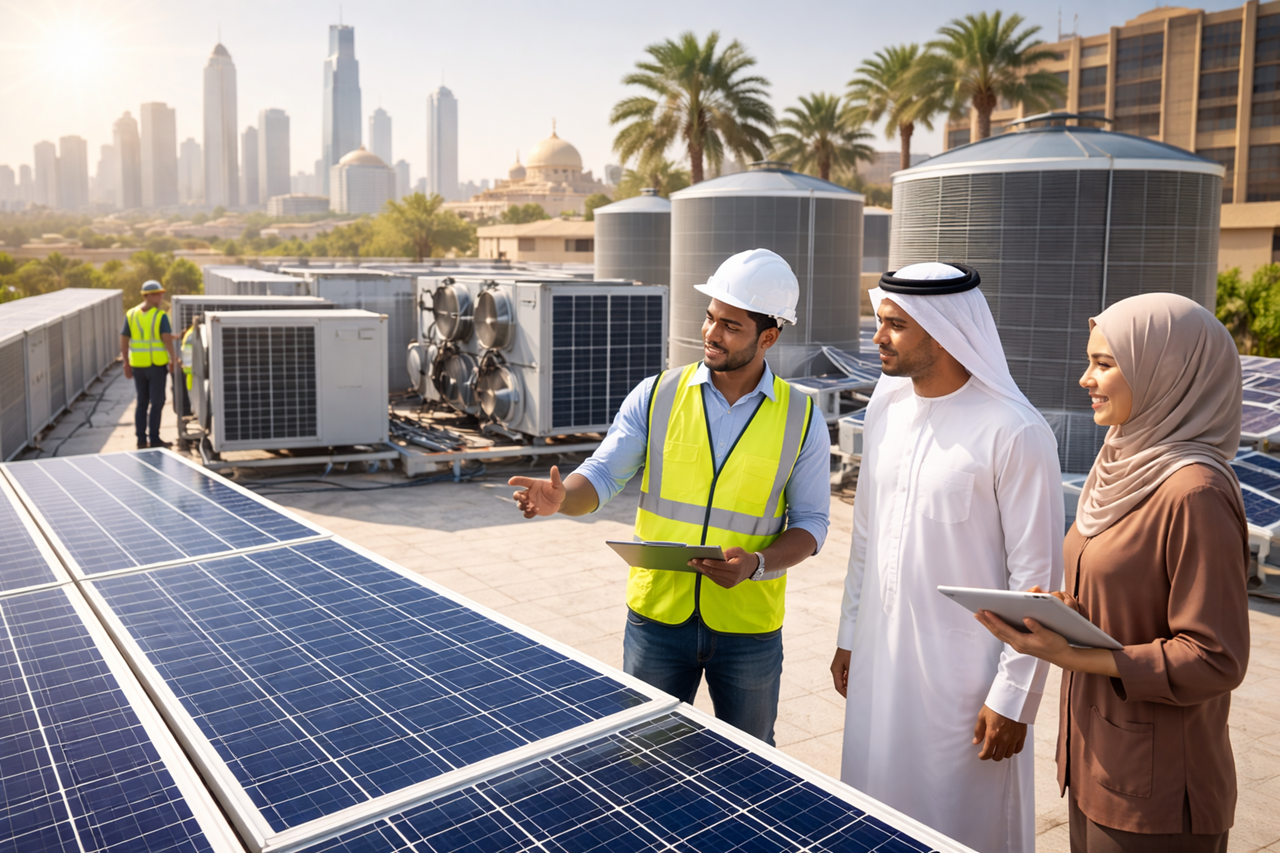
As temperatures rise across the Middle East and North Africa (MENA), governments and international organisations are exploring new ways to meet growing cooling demand without worsening climate change. A new framework for National Cooling Action Plans has been developed through collaboration between the United Nations Environment Programme (UNEP) Cool Coalition, the Regional Center for Renewable Energy and Energy Efficiency (RCREEE), the Climate and Clean Air Coalition, Sustainable Energy for All (SEforALL), the United Nations Development Programme (UNDP), the African Development Bank Group and the Cool Up programme. Researchers from institutions including the American University in Cairo worked alongside technical experts from UNEP and RCREEE to design the methodology, which helps countries plan sustainable cooling systems that support both development and climate goals.
Why Cooling Is Becoming a Critical Issue
Cooling has become a major challenge across the region. Many MENA countries face extremely high temperatures during the summer, often exceeding 50°C in some areas. These conditions increase demand for air conditioning in homes, offices, hospitals and public buildings. Cooling is also essential for preserving food, transporting agricultural products and safely storing medicines and vaccines.
However, access to cooling is uneven. Many low-income households and rural communities still lack reliable electricity or affordable cooling equipment. This leaves vulnerable populations exposed to heat-related health risks and reduces productivity for people working in hot environments. At the same time, cooling demand is expected to grow rapidly as populations increase, cities expand and climate change intensifies heatwaves.
If this demand continues to rely on traditional air conditioning systems powered by fossil fuels, electricity consumption and greenhouse gas emissions could rise sharply. Many cooling systems currently in use also depend on refrigerants that contribute significantly to climate change.
A Strategy to Expand Cooling Without Increasing Emissions
To address these challenges, the new framework promotes National Cooling Action Plans as a key policy tool. These plans help governments coordinate policies across sectors such as energy, construction, agriculture, healthcare and industry. The goal is to expand access to cooling while improving efficiency and reducing environmental impacts.
National Cooling Action Plans allow countries to set clear targets for energy-efficient cooling technologies, climate-friendly refrigerants and improved cooling access. They also encourage cooperation between different government ministries, private companies, research institutions and civil society organisations.
By coordinating policies and investments, governments can create a clear roadmap for sustainable cooling while attracting financing and private-sector participation. This approach also helps align cooling policies with national climate commitments and development goals.
Smarter Buildings and Better Cooling Technologies
The report highlights several solutions that can make cooling more sustainable. One important approach is to reduce the need for mechanical cooling in the first place. Buildings designed with better insulation, shading, reflective roofs and natural ventilation can stay cooler even in hot climates. Urban planning measures such as planting trees and creating green spaces can also help reduce temperatures in cities.
Improving the efficiency of cooling equipment is another major step. New air-conditioning systems use advanced compressors and smart controls that consume much less electricity than older models. Governments can encourage these technologies by introducing stronger efficiency standards and clear energy labels that help consumers choose better-performing appliances.
Responsible refrigerant management is also essential. Many air conditioners and refrigerators contain chemicals that can leak into the atmosphere and contribute to global warming. Proper installation, maintenance and recycling systems can significantly reduce these emissions.
Strengthening Food Security and Climate Resilience
Cooling is not only about comfort in buildings. It is also critical for food systems and healthcare. Efficient cold chains, which include refrigerated storage and transport, help prevent food spoilage and reduce losses for farmers and distributors. Reliable cooling is equally important for storing vaccines and medicines safely.
Renewable energy can further support sustainable cooling solutions. Solar power, geothermal systems and hybrid renewable technologies can provide low-carbon electricity for cooling equipment. In remote areas, solar-powered refrigeration systems can expand cooling access while reducing dependence on fossil fuels.
A Path Toward Sustainable Cooling
The framework outlines a step-by-step process for countries to develop their cooling plans. Governments begin by analysing national conditions such as climate patterns, energy systems and cooling demand across different sectors. They then identify priority actions, including energy-efficient technologies, renewable cooling solutions and policies that support better building design.
The final stage focuses on implementation and monitoring, ensuring that progress can be tracked and policies improved over time. For a region increasingly affected by extreme heat, sustainable cooling strategies could play a major role in protecting public health, strengthening food systems and reducing energy pressures.
With coordinated planning, technological innovation and international cooperation, the MENA region has an opportunity to transform cooling from a growing environmental challenge into a key part of climate resilience and sustainable development.
.
.
Discover more from MENA-Forum
Subscribe to get the latest posts sent to your email.