10 June 2026 9:17 am

Diriyah Company Awards $490 Million Contract: Details

Diriyah Company Awards $490 Million Contract: Details

A historic tower in Diriyah, Saudi Arabia, framed by tree branches under a bright blue sky. by Abdul7amid Al Fadhly via Pexels

.

Diriyah Company awards $490 million contract to build Saudi Arabia Museum of Contemporary Art


PIF Riyadh10 May 2026
.
Diriyah Company awards $490 million contract to build Saudi Arabia Museum of Contemporary Art
.
  • Contract underscores PIF-owned Diriyah Company’s ambition to develop the country’s leading historical, cultural and lifestyle destination
  • Diriyah awards work to Albawani Company Ltd. and Hassan Allam Construction Saudi L.L.C., in a boost to Saudi Arabia’s private sector
  • Saudi Arabia Museum of Contemporary Art will serve as a premier center of artistic exploration while supporting PIF’s drive to expand and diversify the Saudi economy

PIF-owned Diriyah Company has awarded a $490 million (SAR 1.84 billion) construction contract for the Saudi Arabia Museum of Contemporary Art (SAMoCA), in Diriyah.


The contract has been awarded to a joint venture between Albawani Company Ltd. and Hassan Allam Construction Saudi L.L.C., reflecting Diriyah Company’s ambition to develop a major cultural destination that attracts visitors and supports long-term growth.


SAMoCA is a flagship project by the Museums Commission. It aims to document, research, exhibit and champion Saudi modern and contemporary art. The museum will serve as a premier center of artistic exploration while supporting Saudi artists across generations to imagine and shape the nation’s creative possibilities.


Diriyah Company is developing the Diriyah project, the birthplace of the Kingdom of Saudi Arabia and a major historical, cultural and lifestyle destination. Diriyah is one of five giga-projects – together with ROSHN, Red Sea Global, Qiddiya and NEOM – that are driving expansion and diversification of the Saudi economy. Diriyah’s broad mission underscores its commitment to ensuring successful business outcomes and sustainable growth under the strategic direction of Vision 2030.


The museum, designed by the U.K.-based firm Godwin Austen Johnson with multidisciplinary support from Rafaat Miller Consulting, will have a gross floor area of 45,252 square meters and a total built-up area of 77,428 square meters. Notably, SAMoCA has recently achieved Mostadam Gold sustainability certification at both the design and construction stages.


The new museum at Diriyah will serve as the flagship home of SAMoCA, while SAMOCA at JAX Center continues to operate as a dynamic exhibition space in Riyadh’s creative district.


Commenting on the long-term impact of this new cultural asset, Jerry Inzerillo, Group Chief Executive Officer of Diriyah Company, said: “The Saudi Arabia Museum of Contemporary Art will provide Saudi and international artists with a truly world-class platform – one that invites global voices to engage with the Kingdom as it is today. This iconic asset will further elevate Diriyah’s reputation as the Kingdom’s capital of culture – and underscores our unwavering commitment to developing a vibrant city that serves our community, and the nation at large.”


Eng. Abdullah bin Abdulaziz Al-Hammad, Chief Executive Officer of the Museums Commission, added: “The Saudi Arabia Museum of Contemporary Art will be the epicenter of Saudi modern and contemporary art. Set against the historic legacy of Diriyah, it is designed to document and champion generations of Saudi artists, from pioneers to emerging voices, while inviting international dialogue into that story. We are committed to ensuring this dynamic platform remains accessible and inspiring for all.”


Diriyah, the $63.2 billion integrated urban development, has now awarded over $29 billion in construction contracts. Once complete, the ‘City of Earth’ will contribute approximately $18.6 billion (SAR 70 billion) directly to Saudi Arabia’s GDP, create more than 180,000 jobs, be home to an estimated 100,000 people, and welcome 50 million annual visits.


It will include museums, shopping districts, a university, the Diriyah Opera House, the Diriyah Arena, a variety of food and beverage outlets, and 34 world-class resorts and hotels spanning its two main masterplans.

.


.

Bahrain FinTech Bay and the Future of Africa–Gulf Markets

Bahrain FinTech Bay and the Future of Africa–Gulf Markets

Bahrain FinTech Bay is steadily establishing itself as one of the Middle East’s most strategic fintech and innovation ecosystems. At a time when governments and institutions across the Gulf are accelerating investments into digital transformation, financial technology, artificial intelligence, and startup ecosystems, Bahrain has positioned itself as an agile and highly competitive innovation hub with growing global relevance.The Kingdom’s fintech ambitions are not accidental. They are the result of years of deliberate economic diversification, regulatory modernization, and investment in future industries. Bahrain’s emergence as a fintech destination reflects a broader shift happening across the Gulf region, where countries are moving aggressively beyond traditional oil-based economies toward knowledge-driven growth models centered on technology, entrepreneurship, innovation, logistics, and digital finance.

Bahrain FinTech Bay sits directly at the center of this transformation.

Supported by Bahrain’s broader economic vision and progressive regulatory environment, the platform has evolved into a major ecosystem builder connecting startups, regulators, investors, financial institutions, and technology leaders across the Gulf Cooperation Council (GCC) and wider MENA region. Its growing influence is increasingly positioning Bahrain as a gateway not only into Gulf markets, but also into future economic partnerships between the Middle East and Africa.

Why Bahrain FinTech Bay Matters for Africa

Africa is currently home to some of the fastest-growing fintech ecosystems in the world. Across the continent, entrepreneurs are reshaping banking access, mobile finance, digital payments, SME financing, remittance systems, e-commerce infrastructure, and financial inclusion models.

At the same time, Africa possesses one of the world’s youngest populations, rapidly growing digital adoption rates, and expanding urban economies that are increasingly attracting global investors.

The Gulf region recognizes this.

Institutions across Bahrain, the UAE, Saudi Arabia, and Qatar are increasingly viewing Africa not simply as an emerging market, but as a long-term strategic growth partner.

This is where Bahrain FinTech Bay becomes particularly important.

The platform offers African startups and innovators something many ecosystems struggle to provide simultaneously: access to capital networks, regulatory support, regional market entry, institutional partnerships, and scalability across GCC markets.

As Gulf economies continue implementing future-focused national strategies centered on innovation, digital transformation, entrepreneurship, and global partnerships, Africa’s role in that future becomes increasingly significant.

The institutions capable of intelligently connecting both regions will help shape the next era of MENA–Africa economic cooperation.

Women in Technology and Inclusive Innovation

One of the strongest indicators of Bahrain FinTech Bay’s long-term vision is its emphasis on inclusive entrepreneurship and women-led innovation.

Its partnership with the Standard Chartered Foundation and Village Capital through the Women in Tech Bahrain Accelerator reflects Bahrain’s growing commitment to creating a more inclusive technology ecosystem.

The initiative provides women founders with equity-free funding, mentorship, investor readiness support, global network access, and acceleration opportunities designed to help businesses scale sustainably.

This approach aligns with larger global conversations around innovation ecosystems that prioritize not only growth, but also accessibility, inclusion, and long-term societal impact.

For Africa, this alignment is particularly important. Women entrepreneurs continue to drive major innovation across African fintech, digital commerce,  education technology, health technology, and creative industries. Yet access to funding, networks, and global scaling opportunities remains limited for many founders.

Partnerships between Gulf innovation platforms and African women-led businesses could become one of the defining economic opportunities of the next decade.

Bahrain, the Gulf, and the Future Economy

The rise of Bahrain FinTech Bay also reflects the broader direction of Gulf economies.

Across the region, governments are investing heavily in AI, fintech, innovation districts, startup ecosystems, logistics technology, digital infrastructure, and entrepreneurship development. These priorities strongly align with initiatives such as “We the UAE 2031,” which focuses on future economies, international partnerships, advanced technology, innovation ecosystems, and youth empowerment.

Bahrain’s fintech ecosystem mirrors many of these ambitions. The Kingdom’s ability to combine regulatory flexibility, financial sophistication, lower operating costs, strong digital infrastructure, and regional connectivity has made it increasingly attractive for founders, investors, and international businesses seeking GCC expansion.

This creates an opening for institutions capable of bridging Gulf innovation ecosystems with Africa’s rapidly expanding entrepreneurial landscape.

TVOA and the MENA–Africa Innovation Corridor

This is where TVOA is positioning itself strategically. Led by the CEO,  Kadmiel Van Der Puije, The Voice of Africa (TVOA) ecosystem is building a platform that connects Africa and the Middle East through media, trade, tourism, entrepreneurship, youth development, cultural diplomacy, sports, and innovation. Kadmiel and The Voice of Africa were recognised through the Misk Foundation 20 Under 30, a regional recognition that strengthens TVOA’s positioning within the wider MENA ecosystem and highlights its alignment with youth leadership, culture, innovation and development.


Rather than presenting Africa through outdated narratives centered solely on aid or instability, TVOA focuses on the continent’s future potential: young populations, expanding digital economies, creative industries, innovation ecosystems, entrepreneurship, and global partnerships.

This positioning naturally aligns with institutions such as Bahrain FinTech Bay that are investing in future industries and cross-regional collaboration.

TVOA’s growing ecosystem also reflects the wider direction of Gulf–Africa relations. As countries across the Gulf seek stronger ties with Africa through investment, logistics, aviation, tourism, innovation, and technology partnerships, media and institutional bridges become increasingly valuable.

The future relationship between Africa and the Gulf will not be built only through government agreements. It will also be shaped by storytelling platforms, entrepreneurship ecosystems, educational partnerships, youth networks, and innovation communities capable of connecting people, ideas, and institutions across both regions.

How TVOA’s Subsidiaries Align with Bahrain FinTech Bay

TVOA Media

TVOA Media aligns with Bahrain FinTech Bay by amplifying conversations around fintech, innovation, entrepreneurship, AI, and emerging digital economies across Africa and the diaspora. Through journalism, podcasts, video storytelling, and digital media, TVOA helps position Bahrain’s innovation ecosystem before African founders, investors, students, and business leaders.

Kadmiel Van Der Puije (CEO of The Voice of Africa) leading a workshop at Yale University on African Media

Experience Africa

Experience Africa aligns with Bahrain FinTech Bay through cultural diplomacy, entrepreneurship visibility, and international networking. By bringing together embassies, entrepreneurs, creatives, investors, and global audiences, the platform creates opportunities for Bahrain’s fintech and startup ecosystem to engage directly with African markets and talent.

Experience Africa at American University

Experience Africa Tours

Experience Africa Tours aligns with Bahrain FinTech Bay by strengthening cross-regional exposure between Africa and the Gulf. Through curated travel experiences across Africa and the MENA region, the platform supports greater business connectivity, tourism engagement, and awareness of emerging innovation ecosystems.

Experience Africa Tours, Ghana November 2025 Tour

TVOA Trade, Investment & Tourism Forum

The TVOA Forum aligns directly with Bahrain FinTech Bay’s focus on entrepreneurship, innovation, investment, and future industries. The platform creates dialogue between governments, founders, investors, and business leaders focused on Africa’s growing digital economy and emerging market opportunities.

Sharaf Mahama, President of Ghana’s Son & Founder of Legacy Rise Sports Presenting at The Voice of Africa’s Diaspora Connect Room event at Hopkins SAIS, Washington D.C., April 2025

Ambassador of Africa

Ambassador of Africa aligns closely with Bahrain FinTech Bay’s commitment to youth innovation and entrepreneurship. With over 5,000 students in its pipeline and engagements at institutions such as Yale, Howard, Duke, Johns Hopkins, and American University, the initiative connects African youth to mentorship, leadership development, scholarships, and innovation opportunities.

Kadmiel & Kemuel Van Der Puije (CEO & COO, The Voice of Africa) at the inaugural Ambassador of Africa Masterclass, Duke University

TVOA Sports

TVOA Sports aligns with Bahrain FinTech Bay through the growing intersection between sports, technology, media, branding, and youth opportunity. By connecting African athletes to global platforms, the initiative contributes to broader conversations around digital ecosystems, talent development, and international engagement.

Kadmiel Van Der Puije (CEO, The Voice of Africa) & Rio Ferdinand — Global Football Icon & Premier League Hall of Famer

How TVOA’s Social Impact Partners Align with Bahrain Fintech Bay

The Father’s Haven Foundation

The Father’s Haven Foundation aligns with Bahrain FinTech Bay through its focus on long-term youth empowerment,  education, mentorship, and leadership development for vulnerable children across Africa. Sustainable innovation ecosystems begin with investing in people and future generations.

Kadmiel Van Der Puije (CEO of Fathers Haven Foundation) with the 54 orphans in Fathers Haven, Kenya Branch

The Countess Foundation

The Countess Foundation aligns strongly with Bahrain FinTech Bay’s support for women-led innovation and entrepreneurship. Through digital literacy, vocational training, mentorship, startup support, and economic empowerment, the foundation contributes to building inclusive innovation ecosystems across Africa.

Evelyn Van Der Puije leading a high-impact Innovation Lab at the Yale Africa Innovation Symposium, guiding participants through structured approaches to scaling social impact and economic systems across Africa.

Naberm Montessori School

Naberm Montessori School aligns with Bahrain FinTech Bay through its focus on preparing future-ready African youth through leadership, creativity, emotional intelligence, and innovation-centered education. Both institutions reflect a belief that long-term economic growth begins with investing in human potential.

Kadmiel Van Der Puije with Students at Naberm Montessori School. Ada, Ghana

Conclusion

Bahrain FinTech Bay represents far more than a fintech hub. It reflects Bahrain’s broader ambition to become one of the Middle East’s most agile and globally connected innovation economies.

As Africa and the Gulf continue moving closer through trade, investment, entrepreneurship, technology, tourism, and youth engagement, institutions capable of connecting both regions will become increasingly influential.

This is the strategic space TVOA is entering.

By positioning itself as a bridge between Africa and the Gulf, particularly within the context of innovation, entrepreneurship, digital economies, and future industries, TVOA is aligning itself with the next phase of MENA–Africa cooperation.

Africa is young. Africa is innovative. Africa is building.

And increasingly, the Gulf is paying attention.

.


.


GDP Is Not Enough to Tell If People Are Better Off

GDP Is Not Enough to Tell If People Are Better Off

A vibrant market stall in Erbil showcasing a variety of Middle Eastern pastries during the day. by Zanko Bakhshi via pexels

.

  • Gross Domestic Product, or GDP, remains essential but cannot measure whether lives are improving.
  • The report proposes 31 indicators to track progress beyond output.
  • It is the first UN blueprint of this kind requested by Member States.
  • The framework includes cross-border spillovers, from emissions to supply chains.
  • UNCTAD, UNDP and partners will support countries that choose to test it.
Timur, Indonesia - 14 April 2024: A farmer is harvesting rice in a field. He is wearing a brown shirt and a scarf around his neck. He is holding a large bundle of rice in his arms.
Default image copyright and description

© Shutterstock/Thoha Firdaus | Workers harvest rice in Belitang, Sumatra, Indonesia

Gross domestic product, or GDP, measures the value of goods and services produced in an economy. It has long been treated as the world’s scoreboard for progress. But a growing economy can still leave people poorer in security, trust, opportunity and hope.

A new United Nations report argues that governments need a broader way to judge whether development is working. It does not call for replacing GDP. It calls for complementing it with a practical dashboard that captures what GDP misses: well-being, equity, sustainability and resilience.

Growth is not the whole story

Between 1980 and 2025, global economic activity contracted only twice: During the 2009 financial crisis and the COVID-19 pandemic in 2020. By GDP’s measure, the world has rarely been richer.

Yet trust in institutions has eroded, inequality has widened in many places and environmental pressures have intensified. In some wealthy countries, young people report high levels of anxiety and isolation. The gap between economic output and lived experience is becoming harder to ignore.

“What we measure shapes what we value,” said Pedro Manuel Moreno, Deputy Secretary-General and Acting Secretary-General of UN Trade and Development (UNCTAD). “That is the question this work now places squarely on the international agenda.”

A dashboard for the real economy

The report proposes 31 indicators built around four areas: Peace, human rights and respect for the planet; current well-being; equity and inclusion; and sustainability and resilience.

The dashboard would track material conditions, health, education, social cohesion, institutional quality, environmental conditions, poverty, inequality and the assets societies pass to future generations – including produced, human, social, institutional and natural capital.

It is designed to be country-owned, so governments can adapt it to national priorities and capacities. Close to half of the indicators are drawn from the Sustainable Development Goals, meaning many countries already have data systems in place.

Why it matters now

Unlike earlier Beyond GDP efforts, this report comes with a political track. It was produced in response to a direct request from Member States under the Pact for the Future and will now move into an intergovernmental process at the General Assembly, led by Spain and Guyana.

It also recognizes that progress does not stop at borders. One country’s well-being can be shaped by decisions made elsewhere — through emissions, trade, finance, technology and supply chains.

UNCTAD, together with the UN Development Programme and partners across the UN system, will support countries that choose to begin testing the framework.

“GDP tells us how fast an economy is growing,” Mr Moreno said. “It does not tell us where we are headed, what we pass on the way, or what we leave behind for the next generation.”

.


.

How the US-led War in the Region Affects Poverty

How the US-led War in the Region Affects Poverty

A broad aerial view of a refugee camp with makeshift shelters and blue tarps in an urban area. by Abd Alrhman Al Darra via pexels

.

How the US-led war in the region created an Arab poverty crisis

.

By Jad Chaaban
.
The New Arab 06 May, 2026
.
The US-Israel war on Iran could increase poverty for millions across the MENA, as people grapple with double-digit price hikes, writes Jad Chaaban.
Lebanon
War has always been a mechanism that destroys some economies while enriching others, often following old imperialist frameworks, writes Jad Chaaban. [GETTY]

The costs of the current US-Israel war on Iran are often measured in cold, macroeconomic abstractions. We hear of “supply disruptions,” “energy shocks,” and “inflationary pressures”. But behind the fluctuating price of a Brent crude barrel, there is a far more devastating and silent reality: the systematic destruction of human lives and the rapid descent of millions of our neighbours into poverty.

As researchers and policymakers, we have a moral and professional duty to re-centre the discourse on the people of this region. While some economies may benefit from military investments, the direct victims of this conflict are becoming invisible in the grand geopolitical narrative.

The latest macroeconomic projections from April 2026 reveal a grim economic landscape. The International Monetary Fund (IMF) has been forced to slash its growth projections for the Middle East and North Africa (MENA) region to nearly a quarter of its original estimates. We are witnessing severe contractions even in countries once considered stable, and these economic shocks ultimately impact livelihoods.

The mechanics of this crisis are rooted in the extreme vulnerability of the Arab states. Our region is uniquely exposed to price shocks due to our heavy dependency on food imports. When conflict disrupts trade routes, it is the poorest families who feel the immediate sting of inflation. While the United States maintains a low inflation rate, the Arab region is grappling with double-digit price hikes.

Perhaps most concerning is the “remittance trap.” Many Arab nations rely heavily on financial lifelines from workers in the Gulf Cooperation Council (GCC) countries. In Egypt, these workers’ remittances from the GCC accounted for over $22 billion in 2022—nearly 5% of its GDP.

In Jordan and Lebanon, the figures are even higher, reaching 7% and 8% respectively. As the economies of the Gulf contract under the weight of regional instability, these flows are drying up, triggering a domino effect of poverty across the Levant and North Africa.

Our simulations suggest that under current conditions, we will see an additional 4.4 million people fall into poverty across the Arab region. If the war continues to drag on and the GCC economies contract further, that number will likely climb to nearly 5.3 million. These are not just statistics; they represent people whose education will be interrupted, whose health will be compromised, and whose potential will be stifled by traumas that will last for decades.

War has always been a mechanism that destroys some economies while enriching others, often following old imperialist frameworks. But the human cost of this specific conflict is a compounded deterioration of human development.

Women and children, as is so often the case, are bearing the heaviest burden. Refugees and displaced populations, who already have limited capacity to recover, are being pushed to the absolute brink.

The priority must be an immediate end to this destructive war. However, even if the guns fall silent tomorrow, the road to recovery will require more than just rebuilding physical infrastructure. We must design a new model for economic growth that is explicitly biased toward the poor—one that ensures an equitable distribution of resources and prevents poverty from becoming a hereditary condition passed down from one generation to the next.

We cannot allow the “invisible” victims of this war to remain so. The data is clear: the cost of this conflict is being paid in the form of human capital and the dignity of the Arab people. It is time for our policies to reflect that reality.

Jad ChaabanJad Chaaban

Dr. Jad Chaaban is an economist and public policy expert, and currently an associate professor of economics at the Doha Institute for Graduate Studies. He was the Lead Author of the United Nations Development Programme (UNDP) Arab Human Development Report 2016, and a member of the Advisory Board of UNDP’s Global Human Development Report (HDR). His research focuses on sustainable human development, political economy and public economics.

Follow Jad on X: @JadChaaban

.


.

Libya: One Step Forward, Two Steps Back in Politics

Libya: One Step Forward, Two Steps Back in Politics

Three children enjoying a playful moment in the historic streets of Tripoli, Libya. by Mohammed Alashibi via pexels

.

Libya: One Step Forward, Two Steps Back

Libya: One Step Forward, Two Steps Back in Politics

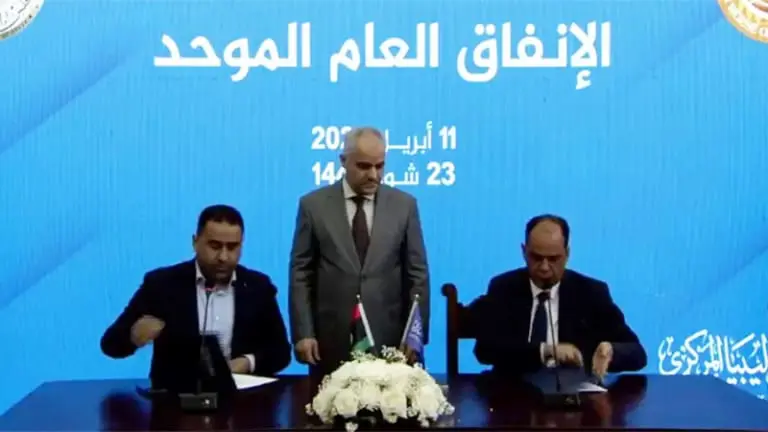
In April 2026, with the help of the United States, Libya’s two parallel governments reached an agreement on a unified national budget for the first time since 2013. The two administrations also participated in military exercises sponsored by the United States African Command (AFRICOM) that were held in Libya for the first time. While these developments may signal cooperation between the rival governments, realities on the ground belie any optimism about imminent reunification. Endemic corruption within each government works to perpetuate the status quo. Well-armed militias run patronage networks that help keep each government in place, while outside powers continue to aid their Libyan clients by way of various military and economic schemes, hindering unification. The United Nations continues to call for a stop to Libyan groups’ weapons smuggling and illicit petroleum exports. Although the United States and Europe may encourage higher Libyan oil production to make up for the shortfall caused by the closure of the Strait of Hormuz, any additional revenues are unlikely to filter down to the Libyan people.

A Country Plagued by Divisions

Libya remains deeply divided. The internationally recognized Government of National Unity (GNU) is based in the capital city of Tripoli, but its authority extends only to the western part of the country. The GNU is led by Abdul Hamid Dbeibah, who was supposed to be only an interim prime minister until the nationwide elections that were scheduled for December 2021. After those elections were postponed, however, he stayed on as prime minister (the 2021 vote has yet to be rescheduled). His government is supported by various militias based in and around Tripoli.

In eastern Libya, a second government, the House of Representatives (HoR), traces its origins to   the June 2014 elections that created that body. Months after the vote, Libya’s supreme court ruled that those elections were unconstitutional and that the HoR must be dissolved, but instead the HoR relocated to Tobruk, near Libya’s border with Egypt, and became the base of the eastern government. The HoR is supported militarily by the so-called Libyan National Army led by self-anointed Field Marshal Khalifa Haftar. Based in the city of Benghazi, Haftar is the real power in the east. In 2019-2020, Haftar attempted to take over the entire country, but his offensive was stymied by Tripoli-backed forces and by Turkey, which provided this government with advanced military equipment and personnel. Haftar then retreated to his stronghold in Benghazi. Now, his forces control the eastern coast and much of the interior.

The challenges of holding new national elections and creating a unified national government have frustrated the UN Support Mission in Libya (UNSMIL) for many years. On April 22, 2026, UNSMIL head Hanna Tetteh stated that the political process was stalled, delaying efforts to reunify the country. She voiced frustration, stating, “Allowing status quo actors to evade their responsibilities will only undermine efforts to preserve Libya’s unity and wealth and delay the path to sustained peace, stability, and development.” Her comments echoed those of past leaders of UNSMIL who resigned after facing similar intransigence.

Some Positive Developments

On April 11, 2026, the two governments approved the first unified state budget since 2013, a potential step toward unifying fractured state institutions and reducing corruption. The High State Council, the legislative body of the GNU, and the HoR agreed on a national budget of 190 billion Libyan dinars, equivalent to about $30 billion. The central bank governor, Naji Issa, stated optimistically that “this is a clear declaration that Libya is capable of overcoming its differences when a unified vision for its future is forged.” Representatives from the two governments said that the unified budget would help ensure a fair distribution of resources and would allocate substantial funds to improve the state-run National Oil Corporation (NOC).

Efforts to agree on a unified budget were assisted by Massad Boulos, Senior Advisor to President Donald Trump for Africa and Arab and Middle Eastern Affairs and the father-in-law of Trump’s daughter Tiffany. Boulos praised the new budget as not only supporting nationwide development projects in Libya but also as shoring up the NOC to allow it to increase energy production and to generate higher state revenues.

Given the current difficulties of exporting oil and gas from the Gulf because of the Iran war’s effective closure of the Strait of Hormuz, the Trump administration may be looking to Libya to meet part of the worldwide oil shortfall. Libya has the largest oil reserves in Africa, estimated at 48 billion barrels, and the country’s oil production has recently increased. Libya reportedly produced 1.43 million barrels per day (b/d) in early April 2026—one million more than it had produced in the previous month, and a ten-year high. Other reports have indicated that Libya plans to substantially increase natural gas exports to Europe by 2030. Currently the country exports very little gas via the Greenstream pipeline that runs from Libya to Sicily, but there are hopes of boosting this with the assistance of foreign companies.

In early April 2026, AFRICOM for the first time sponsored military exercises in Libya, called Flintlock, in partnership with 30 African and European countries. The exercises are designed to improve counterterrorism efforts in the Sahel and perhaps also to push back against Russian influence in the region. US Embassy Libya (which is currently based in Tunisia because of security concerns) said that Libya’s hosting of the exercises “highlights the ability of Libyan security institutions from east and west to work together to contribute to and lead regional security cooperation,” and that it was an “important step toward stronger, more unified Libyan military institutions.” During the exercises, Khalifa Haftar’s son Saddam, who serves as deputy commander of his father’s forces, said that the exercises reaffirmed “Libya’s position as a reliable partner in supporting regional and international peace and security.”

Meddling Across Borders and Corruption Continue Unabated

Such upbeat words belie facts on the ground, however. Haftar’s forces and allied militias have reportedly aided the Rapid Support Forces (RSF) in Sudan’s brutal civil war by taking over the so-called triangle area where the borders of Sudan, Libya, and Egypt meet. This territorial hold has allowed the RSF to smuggle gold, drugs, and people into Libya, often receiving arms and illicit petroleum exports in return. The RSF has committed numerous human rights abuses, including the execution of thousands of civilians in the town of al-Fasher in the North Darfur province, which makes it difficult to say, as Saddam Haftar claimed, that Libyan security forces are reliably contributing to regional peace and security.

Both Libyan administrations are engaged in extensive corruption schemes. In the words of one analyst, in western Libya “the appearance of state-building masks a far more predatory ecosystem. Over the past decade, ministries, public agencies, and state-owned enterprises have morphed into personal fiefdoms for factions that operate more like organized crime families than political actors.” In eastern Libya, where most of the country’s oil fields are located, Saddam Haftar has, as that same analyst put it, “refined the art of large-scale fuel smuggling, exploiting Libya’s heavily subsidized fuel system to siphon off billions [of dollars] annually.” Such smuggling schemes deprive the state of hard currency and contribute to a collapsing welfare system. The International Monetary Fund has noted persistently large fiscal deficits, which have put pressure on the exchange rate, foreign exchange reserves, and inflation, exacerbating social tensions. Many Libyan citizens are angry over their living conditions, given that Libya is an oil-rich country with only 7.5 million people but according to 2023 data has a poverty rate of nearly 40 percent.

Human rights groups have castigated both of Libya’s governments. Human Rights Watch, for example, recently noted that “armed groups, smugglers, and state authorities in Libya have subjected migrants, including infants and young children, to arbitrary detention, extortion, forced labor, sexual violence, and other serious abuses.” It also reported widespread arbitrary detention, torture and ill treatment in facilities run by state-affiliated forces and armed groups.

The Damaging Role of Outside Players

External powers, including EgyptRussiaTurkey, and the United Arab Emirates (UAE), are known to have assisted Libya’s rival factions to further their own agendas, with other outside actors such as the European Union (EU) also contributing negatively to the situation.

A March 2026 report by the UN Security Council’s Panel of Experts on Libya, mandated to monitor weapons embargo violations and other illicit activities involving the North African country, discusses the involvement of foreign actors in illegal schemes that fund Libya’s militias. The UN report confirmed the findings of a 2025 investigation by the Italian publication Il Foglio of an elaborate scheme involving the UAE and a notorious Libyan businessman known as Ahmed Gadalla, who is close to Saddam Haftar. The investigation showed that foreign actors continue to violate the UN embargo on weapons and other military items destined for Libya. It also revealed either lapsed judgment or a cover-up by the EU’s naval mission, Operation IRINI, which was established to monitor the arms embargo.

According to Il Foglio, in July 2025, a container ship that left the UAE port of Jebel Ali was intercepted by frigates associated with IRINI in the Mediterranean Sea near the port of Derna, Libya, after a tip-off from US intelligence. The cargo ship was then escorted to the Greek port of Astakos for inspection. Although the ship officially declared that it was only carrying cosmetics, cigarettes, and electronic equipment, it was actually transporting 240 pickup trucks destined for Libya, 86 of which were armored. Typically used for mounting machine guns, these trucks are the vehicles of choice for Libyan and Sudanese militias. The UN has defined these trucks as military equipment and their shipment is considered a violation of the embargo.

The investigation revealed that the decision to allow the ship to leave for Libya was the result of “secret negotiations” between the EU, Greece, the UAE, and the two Libyan authorities in the east and the west. According to Il Foglio, Greece—worried about the wave of migrants coming from eastern Libya to Crete—sought to avoid offending Haftar and to prevent any retaliation in the form of a new irregular migration surge, decided that allowing the cargo to Libya was the “lesser evil.” Instead of offloading the trucks in Tripoli, the ship docked in Misrata, a port under the control of Dbeibah’s government. Some 209 trucks were offloaded there; the rest were delivered to Benghazi, suggesting that both Libyan governments were involved in the scheme. The March 2026 UN report noted that 26 of the trucks wound up in the hands of a Libyan militia, al-Katiba 55, that run a notorious prison camp for migrants near Tripoli.

No Political Solution in Sight

Libya’s government is likely to remain divided for some time. Each administration benefits from the status quo through corruption schemes, while the militias depend on patronage that they receive from the governments or on revenues from their own rackets. While recent cooperation to agree on a unified budget may be encouraging, the fundamentals of the situation have not changed.

The decision by AFRICOM to host military exercises in Libya and to include military units belonging to each Libyan administration has done nothing to foster unity. Indeed, all it has probably achieved is to make those factions feel important. Rather than trying to forge unity through military posturing, the international community should increase its efforts to stop oil smuggling out of Libya in exchange for arms.

Some moves in that direction are already underway. On April 14, 2026, the UN Security Council unanimously passed a resolution to reinforce international efforts to monitor and prevent illicit oil smuggling from Libya. The resolution reaffirmed that the NOC is the sole entity authorized to market Libya’s oil and called for a prohibition on depositing Libyan oil revenues anywhere but in official accounts.

Yet there appears to be no real mechanism to enforce such a resolution except to target individuals and entities with sanctions—an approach that obviously has not worked well in the past. Only if meaningful punitive measures are applied to those involved in illicit oil sales will there be pressure on the two administrations to hold national elections and to bring about a unified government.

.


.