6 June 2026 8:43 pm

Enhancing International Cooperation on Climate and Trade

Enhancing International Cooperation on Climate and Trade

Colorful international flags fluttering in the wind against a blue sky in Lisbon, Portugal. by Ivan Dražić via Pexels

Enhancing International Cooperation on Climate and Trade through the Lens of the Global Stocktake

.

.

Trade policy is emerging as a critical tool for accelerating global climate action. The growing intersection of climate and trade policy could present opportunities for enhanced international cooperation.

Over the years, trade issues have been raised under the United Nations Framework Convention for Climate Change (UNFCCC) process, with parties holding different views as to whether it is an appropriate forum to discuss trade-related climate measures (TRCMs). Nevertheless, at COP30, Parties agreed to discuss “opportunities, challenges and barriers in relation to enhancing international cooperation related to the role of trade,” starting in June 2026. The Global Climate Action Agenda (GCAA) also launched a dedicated channel or “activation group” on climate and trade.

The Paris Agreement highlights that the outcomes of the global stocktake (GST) should inform Parties in enhancing international cooperation for climate action (Article 14, paragraph 3). In this context, the GST decision reaffirms that Parties should avoid arbitrary, unjustifiable, or disguised restrictions on international trade. Hence, trade policy may serve as a vehicle for implementing GST outcomes and strengthening international climate cooperation.

As they prepare for the climate and trade dialogues, Parties and non-Party stakeholders could consider how TRCMs can enhance international cooperation to accelerate the outcomes of the first GST (GST1). The GCAA is aligned with the GST1 and can support these efforts.

Accelerating the outcomes of GST1 through trade  

Climate and trade are both intimately connected to sustainable development goals. Several GST1 outcomes can be linked to economic sectors and have target dates, providing a useful framing for climate, sustainable development, and trade agendas to converge. These include tripling the global renewable energy capacity and doubling the annual rate of energy efficiency improvements, and the transition away from fossil fuels (TAFF) in energy systems to achieve net zero global emissions by 2050.

TRCMs can enhance international cooperation to achieve relevant GST1 outcomes, advancing sustainable development goals in the context of the Paris Agreement. Properly designed and implemented TRCMs may foster and enable:

  • climate-resilient supply chains through diversification, transparency, risk management, and circular economy approaches
  • technological innovation towards climate solutions
  • cost-efficient low-carbon products and technologies with green industrial policies and market mechanisms that incentivize production and consumption of low-emission goods
  • interoperable technical frameworks, i.e., those linked to emissions measurement, reporting, and verification, carbon accounting, and life cycle assessments. These frameworks can support policies that foster market recognition and differentiation of sustainable products and infrastructure
  • local value generation, including fiscal and labor-related benefits linked to foreign investments, the upskilling and reskilling of the workforce across clean technology supply chains, and community benefit-sharing for the extraction and processing of transition minerals and metals.

International equity considerations should be embedded in TRCMs, recognizing equity’s importance for a just transition.

The Role of National Policies and Trade Agreements 

National policies are a critical vehicle for advancing GST outcomes and can have implications for trade. For example, green industrial policies, such as subsidies for the development or production of renewable energy technologies, may alter the costs of traded goods. Simultaneously, trade policies supporting open and resilient economic systems impact climate goals.

Climate-focused trade agreements, such as the Agreement on Climate Change, Trade, and Sustainability (ACCTS), demonstrate that trade can drive cooperation towards achieving GST goals such as TAFF and tripling renewable energy capacity and doubling energy efficiency. For example, fossil fuel subsidies reinforce economic inefficiencies and slow the transition. The ACCTS is the first legally binding trade agreement to introduce specific provisions restricting fossil fuel subsidies, thereby reducing some forms of government financial support that would otherwise obstruct the TAFF. Tariff and non-tariff barriers on renewable energy products raise the cost associated with these technologies. The ACCTS reduces trade barriers for environmental goods and services, including those related to renewable energy and energy efficiency. This can reduce the cost of accessing these goods, enabling economies of scale and sourcing from the lowest-cost producers.

Looking Ahead: Informing GST2 

The second GST notably culminates in 2028, coinciding with a mandated high-level event on climate and trade, in the context of the UNFCCC climate and trade dialogues. And the GCAA with climate action plans or “plans to accelerate solutions” run through at least 2028.

This alignment creates an opportunity to examine how and whether trade could inform GST2.

Catalina Cecchi Hucke, Senior Manager for International Strategies, Center for Climate and Energy Solutions 

.


.

Vision 2030 and the Iran War: A Stalemate Overview

Vision 2030 and the Iran War: A Stalemate Overview

Majestic Saudi Arabian flag illuminated against the night sky, surrounded by cityscape lights in Riyadh. by Jepoy Fabian via Pexels

.

Vision 2030 and the Iran War: Saudi Arabia’s Resilience Under Strain

Featured image credit: Saudi Boy via Shutterstock

.

.

Three months after the United States and Israel attacked Iran on February 28, 2026, the conflict is at stalemate: The ceasefire that began on April 8, 2026, has neither yielded a political settlement nor an agreement to reopen the Strait of Hormuz to shipping. This state of limbo has disrupted global supply chains and caused other economic strain across the world. For Gulf states that rely heavily on the Strait for exports and imports, the war has exposed severe economic vulnerabilities. Iranian ballistic missiles and cheap, abundant drones have damaged critical infrastructure, hurting investor sentiment and raising insurance costs for shipping. The war’s economic and energy impact has been greatest in Kuwait and Qatar, which currently lack viable alternatives to the Strait of Hormuz for the export of oil and liquefied natural gas, respectively.

Compared to its neighbors in the Gulf, Saudi Arabia is in a relatively advantageous position. The kingdom’s sheer size means that most tourism, cultural, and sporting events can continue despite the war. On April 25, 2026, for example, at a time when many events in other Gulf countries had been canceled, nearly 60,000 fans packed the King Abdullah Sports City stadium in Jeddah for the final of the Asian Champions Football League. Saudi Arabia’s access to the Red Sea and its existing energy transport infrastructure have given the kingdom greater resilience during prolonged disruption. More mundanely, the alternative export and logistical routes offered by Saudi geography make the war less likely to challenge the underlying principles of Riyadh’s economic diversification model. This is especially because prior to the war, the kingdom had already begun to pivot away from the massively expensive real estate ‘giga-projects’ associated with Vision 2030 and toward sectors like artificial intelligence (AI) and renewable energy. The external shock of the Iran war might also serve to boost investment in domestic industry and supply chain resilience, in which case the conflict will have helped speed up policy shifts that were already underway. For Riyadh, the war brings less a new economic direction than confirmation that its earlier decision to adopt fiscal realism was correct.

The Saudi Advantage

The existence of ports and energy facilities on Saudi Arabia’s west (Red Sea) coast and of cross-country infrastructure such as the East-West pipeline and road and rail freight corridors have given the kingdom options to bypass the Strait of Hormuz for significant (although not all) flows of oil and volumes of goods. These are not failsafe alternatives: the capacity of the East-West pipeline cannot fully compensate for the loss of oil shipped by tankers via Hormuz, for example, so exports have fallen by about two million barrels per day (b/d) from prewar levels. A significant portion of refined products and petrochemicals at facilities on the east (Gulf) coast remain shut in by the closure of Hormuz, while oil facilities at the Red Sea terminus of the pipeline are within range of missiles and drones.

The East-West pipeline has enabled the kingdom to maintain a higher proportion of its prewar oil exports than any Gulf state except Oman.

The East-West pipeline has enabled the Saudi authorities to maintain a higher proportion of its prewar oil exports than any Gulf state except Oman, whose ports lie beyond Hormuz with direct access to the ocean. Opened during the Iran-Iraq War in the 1980s, the pipeline has rarely been used to capacity but has proved its value in the present conflict. Its ability to carry seven million barrels of oil per day from the fields in the east (five million of which are destined for export, the remainder for domestic use) far exceeds the capacity of other pipelines in the GCC region. Nevertheless, exports from west coast ports, including oil from Yanbu, remain vulnerable should Yemen’s Houthis resume attacks on Red Sea shipping, in which case the Bab al-Mandab would become a second chokepoint effectively closed for trade. Ironically, the return of oil tankers and maritime services to Saudi Arabia’s Red Sea ports after the Iran war began indicated how the kingdom’s prior concerns about risk, which had soared during the Houthis’ November 2023-September 2025 Gaza war campaign against shipping, were quickly re-evaluated once Iran blocked Hormuz.

With the kingdom’s oil exports remaining at between 60-70 percent of prewar levels, and its economy benefiting from the cushion of oil revenues from prices that soared after the conflict began, it is the secondary and knock-on effects of the Iran war that are more applicable to Saudi Arabia. Saudi Aramco reported a 25 percent increase in first-quarter profit (benefiting from higher export levels in January and February 2026 and then the elevated price levels in March), but an unexpected surge in government spending due to the war meant the budget deficit rose sharply and recorded its highest-ever quarterly deficit. Loss of output from refineries and petrochemical plants, as well as from the fertilizer and aluminum sectors, have hit economic growth. Meanwhile, the drop in oil production will affect natural gas output, which is used in domestic electricity generation. In each case, the impact of the disruption will grow the longer that the standoff with Iran continues and the longer that industrial cities and ports in the Gulf, such as Ras Tanura and Ras al-Khair, are affected, and will be reflected in second quarter results when they come in over the summer.

Impact of the War on Saudi Economic Strategy

More broadly, the Iran war has brought into focus key political economy challenges facing Saudi Arabia as the leadership marked the 10-year anniversary of the launch of Vision 2030 in April 2016 and is reassessing key objectives and policy priorities. This process predates (and is unrelated to) the Iran war and is part of a reallocation of government spending away from mega-projects, such as the futuristic city The Line, the ski resort Trojena in Neom, and the Mukaab skyscraper in Riyadh, which were suspended before the war began.

The suspension of these projects indicates that Crown Prince Mohammed bin Salman and those around him are more receptive to financial constraints and fiscal realities than when the projects were announced in 2021-22. The impact of the war is likely to reinforce this trend. Policy changes already underway prior to February 28, 2026, will continue the shift in focus of Saudi policymaking as Vision 2030 moves into its final phase.

Analysts and commentators paid much attention to the Public Investment Fund’s (PIF) new five-year strategy announced on April 15, 2026, for what it portended about the mood of financial realism in Riyadh amid wartime disruptions. However, the strategic reappraisal—to move away from lavish spending on the giga-projects and toward a more targeted portfolio of investments—was first telegraphed by PIF Governor Yasir al-Rumayyan in late October 2025 and had thus been underway for months before the war. To the extent that the rollout of the PIF plan was initially expected in February 2026, it may have been delayed by the war, but the focus on six main areas and three key themes is little changed from al-Rumayyan’s remarks in October 2025. While the new strategy confirmed the pre-February 28 shift in favor of AI, industrial development and mining, logistics, travel, entertainment, and tourism, the war may cause policymakers in Riyadh to focus even more selectively on infrastructure development and new logistics corridors, such as the repurposing of Neom and its port into an industrial hub far from the Strait of Hormuz and the Bab al-Mandab.

Shedding loss-making projects and tying new investments to domestic economic initiatives may better equip Saudi Arabia to navigate an uncertain postwar landscape.

With this in mind, it is clear that a process of rationalization has already taken place as to which projects will be prioritized and how scarce resources will be allocated, and the war’s disruption may bring into sharper relief which initiatives should continue. Expanding resilience to future shocks (as well as to the ongoing disruption, should it continue significantly) is consistent with the retooling of national priorities before the war, albeit with added urgency. The withdrawal of a planned $200 million funding agreement with the Metropolitan Opera House in New York City, and the likely non-renewal of a three-year deal to host the Women’s Tennis Association’s year-end championship in Riyadh, are indicative of the paring down of deals, as is the decision to pull funding from the breakaway LIV Golf tour, which captured global attention. Shedding loss-making projects and tying new investments more directly to domestic economic initiatives may better equip Saudi Arabia to navigate an uncertain postwar landscape.

Conclusion: Resilience without Resolution

Perhaps the larger conundrum for Mohammed bin Salman revolves around the challenge of converting financial leverage into political influence with a hyper-transactional White House. From almost the day that President Donald Trump returned to the Oval Office in January 2025, the Crown Prince has made pledges of Saudi investment in the US economy a central element of the Saudi-US relationship—and the figures climbed incrementally with the president’s May 2025 visit to Riyadh and Mohammed bin Salman’s November 2025 trip to Washington. It is likely a cause of genuine bafflement in Riyadh, as well as in Abu Dhabi and Doha, that a president who saw for himself the opportunities for the United States of a stable, secure, and prosperous Gulf has been so willing to put all that at risk, first in the 12-Day War in June 2025 and more recently, and at a far greater scale, in attacking Iran without any apparent planning for the aftermath. Saudi officials do not yet appear to have considered drawing back from the United States to consolidate investments domestically, but this may be a card that they will retain should the financial stresses of a long standoff with the Islamic Republic grow more acute.

While the Iran war has exposed vulnerabilities across the Gulf, Saudi Arabia has been relatively buffered from the worst of the disruption experienced in states which lack the Hormuz workarounds or the advantage of territorial depth that offers some insulation from Iranian attacks. The rethinking of Vision 2030 implementation and Saudi investment strategies predate the war but are being sharpened by the impact of the conflict in both its kinetic and stalemated phases, as the fragile ceasefire has lasted longer than the military operations but without diplomatic resolution. As officials had already signaled a change of course as the Kingdom gears up for the final push toward 2030, and then for the four years of projects to prepare for the 2034 FIFA Men’s World Cup, the impact of the war is more an acceleration of trends already underway rather than a major change of course.

The views expressed in this publication are the author’s own and do not necessarily reflect the position of Arab Center Washington DC, its staff, or its Board of Directors.

.


.

How Saudi Arabia’s Spending Spree Affected Growth

How Saudi Arabia’s Spending Spree Affected Growth

Mosque, Mecca, building, skyscraper by Mahdi-Artist69 via Pixabay

.

How Saudi Arabia’s spending spree reached the end of the line

  • BBC Published – 25 May 2025


By Sebastian Usher, Global affairs correspondent

Autocratic monarchs once left an echo of their glory in the ruins of the megaprojects they commanded at the peak of their unchallenged power. Those monumental physical traces are to be found in the fertile plains, mountainsides and deserts of the Middle East. But one of their most prominent modern counterparts may only have a digital footprint to leave behind for some of his most ambitious concepts.


How Saudi Arabia's Spending Spree Affected Growth A composite image showing Crown Prince of Saudi Arabia Mohammed bin Salman and a city with palm treesA decade ago, the Crown Prince of Saudi Arabia Mohammed bin Salman – or MBS as he is widely known – decreed a revisioning of his country that leapt from the realm of science fiction. It was called Vision 2030. Extraordinary monolithic structures were to help bring forth new technological marvels not just for the Kingdom but for the world.

Those ideas were made manifest in lavish PR material conjuring up fantastical landscapes that attracted reams of coverage that mingled awe and derision. It was made possible by the near $1trn (£744bn) sovereign wealth fund of Saudi Arabia (PIF) whose riches, so dependent on oil, were to be used to create the foundation for a future without oil.

How Saudi Arabia's Spending Spree Affected Growth A futuristic building that rises into a point in the middle. It is called Gidori and is an 'ultra modern community' that is part of the Neom developmentImage source, NEOM

Saudi has taken on mammoth building projects such as this one called Gidori as part of its regeneration drive

Four years from 2030, there has now been, perhaps predictably, a retrenchment. Part of that is down to financial imperatives, as a big fall in oil prices before the current war in the Middle East meant that even Saudi Arabia’s extraordinary wealth took a hit.

Even though those prices have now shot up because of the war, the uncertainty created by the conflict will continue to put constraints on Saudi revenue and spending. And the influx of foreign investment in these hyper-expensive visionary projects has never materialised to the degree on which the Saudis had been banking.

But is it a recalibration or a retreat?

From fantasy to realism

Some of the most striking projects are now being watered down, put on hold or even abandoned. Several come under the once all-embracing umbrella of the $500bn Neom mega-project.

It looks like The Line, which was meant to redefine the concept of a city as it stretched ramrod straight across more than 100 miles (161km) of untapped land in the north west of Saudi Arabia, looming taller than The Shard, is being turned into something considerably more prosaic.

How Saudi Arabia's Spending Spree Affected Growth A computer-generated image showing a white line crossing Saudi land by the seaImage source, NEOM

The Line as it was imagined

The winter resort of Trojena in the mountains of the north west has also been reined in. There is snow up there, belying the image of Saudi Arabia as an unyielding desert, but it doesn’t last very long. The concept of a year-round mountain resort took the area into a realm of artificiality that is no longer seen as viable. There were to have been miles of ski slopes and a full-on ski village with a man-made lake and luxury hotels and shops – a mini St Moritz in the mountains of Arabia. It was meant to have been ready in time to host the Asian Winter Games in 2029, but that has now been cancelled, with the Games to be held in Kazakhstan instead.

The Cube – a massive structure of flats and offices that could have contained the Empire State Building 20 times over – has been jettisoned entirely. It was set to cost an estimated $50bn.

Most recently, one of the apparent crown jewels of the Kingdom’s vaulting ambition to become a world powerhouse of sport from a standing start, the LIV Golf tour, has been reassessed as a hugely expensive dud that’s cost some $5bn to date and brought neither a financial nor a reputational return.

Some longtime observers of Saudi Arabia, such as Ellen R Wald, the author of Saudi, Inc., feel like they’ve seen it all before.

“This is the same playbook, the same thing again with The Line. You know, ‘We’re going to build this huge thing. Oh wait, well now we’re going to significantly downscale it.’ And it’s the same thing over and over again, and it’s been that way even since before Mohammed bin Salman. They make these big announcements, they’re very splashy, and then it either doesn’t get built or it gets built in a significantly scaled down or [in a] ‘not what it was’ way.”

Map of northwest Saudi Arabia highlighting the planned NEOM development area along the Red Sea coast, near the borders with Egypt and Jordan. A shaded region marks the “Area of NEOM Projects,” including locations labelled Trojena inland, Sindalah offshore, and Oxagon further south on the coast. A dashed strip along the coast indicates the Magna coastal resorts. A red line across the southern part of the region shows the original planned route of “The Line.” A scale shows 25 km (25 miles).
Infographic illustrating the scale of Saudi Arabia’s planned linear city, “The Line.” Two maps show its 170 km length compared to distances from Bristol to London in the UK and from Los Angeles to San Diego in the US. A size comparison below shows The Line as a 500 m tall, 200 m wide structure, towering above landmarks including Big Ben’s Elizabeth Tower (96 m), the Eiffel Tower (330 m), and the Empire State Building (443 m).

Wald recalls the new cities that were to be built in the 2000s under a previous monarch, King Abdullah.

The “Economic Cities” programme was also aimed at diversifying the Saudi economy away from oil, which has been a perennial imperative in the Kingdom for decades. Relying almost entirely on one natural resource that will not last for ever has long been seen as an obstacle to the development of a much more well-rounded and resilient economy.

The results were largely underwhelming even as billions of dollars were expended. Several of the proposed cities never got off the ground, others were recast as more modest enterprises. The biggest, the $100bn King Abdullah Economic City on the Red Sea coast north of Jeddah, did come to fruition, but the goal of it becoming a business and tourism hub hasn’t materialised.

The hope had been to bring in major new foreign investment and create jobs – real ones, away from the calcified state sector – for Saudi Arabia’s large and ever-growing young population. But by 2016, the rate of unemployment still stood at around 12%.

Wald thinks there is a fundamental failure to take a realistic view of the potential of such projects by the officials behind them. “Where did they think the market was? Who told them that this was a possibility? There’s a big ‘yes man’ mentality. You get people telling the king what he wants to hear. And that goes for consultants too, because they want the big contracts. So, they’ll say what they think their Saudi clients want to hear – and then these things fall short.”

That pattern goes back decades, with foreign companies often not wishing to risk the highly lucrative contracts they’ve secured by asking questions.

Sweeping change

Some believe that when MBS became de facto ruler of the Kingdom in 2017, he inherited a system that badly needed overhauling.

Ghanem Nuseibeh, an economic analyst who’s followed the shifts in Saudi Arabia for years, says MBS inherited “a social economic system that was very much out of touch with the modern world” that was “heading towards total stagnation.”

Vision 2030 was designed to change Saudi Arabia in three ways: economically, politically, but also socially. “The very, very tricky thing for them was that they needed to implement those in concert.”

Illuminated 18th-century mud-brick architecture that served as original home of Saudi royal family and is now UNESCO World Heritage SiteImage source, Getty Images

Saudi royalty now favours glass and steel over traditional materials

The social control exerted by the powerful and very conservative Islamic leadership of the country was seen by MBS and his advisors as a major obstacle in the ability of Saudi Arabia to achieve its full economic potential. Political change under MBS was presented as the handing over for the first time of the reins of power to a more dynamic, younger generation. But this did not mean that any new space for political discourse was allowed.

Indeed – as Nuseibeh acknowledges – MBS himself was responsible for some of the issues that have impeded the scope and rate of change – as well as casting a long shadow over his rule.

Just as he became de facto ruler in 2017, he ordered the mass detention of Saudi Arabia’s elite officials and businessmen in the Ritz-Carlton hotel in Riyadh, which the Saudi government portrayed as a crackdown on corruption, but others saw as a shakedown. And the savage killing of the Saudi journalist Jamal Khashoggi in the country’s consulate in Istanbul in 2018 left a stain on the Crown Prince’s reputation, which may have faded but remains indelible.

One Saudi who has direct experience of how the authorities there deal with dissent is Abdullah al-Ouda, an academic and human rights activist based in the US. His father, Salman al-Ouda, a prominent Saudi Islamic scholar, has been detained in prison since 2017 on charges including “stirring up unrest”.

Abdullah believes that episodes like the Ritz-Carlton purge have been counterproductive to the aim of funding Vision 2030, even if those held in that gilded cage did cough up an estimated $100bn.

MBS in front of large photographsImage source,AFP via Getty Images
Image caption,

MBS has overseen huge changes in the kingdom

“Long term, it’s actually scared away investors, he said. “And all the oppression also affected how investors see Saudi Arabia as a government, as a country, that lacks what investors want, which is predictability. When you have no predictability, you can simply be an investor one day and the next an arbitrary detainee – and nobody wants that.”

Vision 2030 helped shift the conversation, as did the parade of major sports and entertainment events that started coming to Saudi Arabia from 2016, hugely transforming both its internal reality and its outside image. It wasn’t all surface; headline-grabbing moves such as finally giving women the right to drive did shift Saudi Arabian society. To such an extent that a prominent US-based Saudi fashion influencer told me that her Saudi friends teased her for being behind the times in her attitude each time she visited.

But human rights issues still overshadowed these changes. As MBS and the Saudi sovereign fund moved into one new sphere after another, accusations of sportswashing, artwashing, greenwashing and so on have multiplied. Many prominent figures from the world of sport and entertainment have been happy to appear in Saudi Arabia, but others have refused, citing its human rights record. Thousands of fans have flocked to Riyadh for events such as motor racing and boxing, but other potential tourists have been put off by negative views of the Kingdom.

That doesn’t, however, negate the fact that for many young Saudis, the ambitions of MBS have been inspiring and popular.

Saving Vision 2030

The big cutback in spending on some of the flashiest projects – which looks to the outside world like at least a partial admission of failure – is being cast in as positive a light as the Saudi authorities can manage.

“The thinking now is to basically get small wins, small successes here and there, instead of these mega projects,” says Abdullah. “Like, for example, the Red Sea island resort of Sindalah could be one small win that they can promote, which is basically a very traditional style of resort, which can still be presented as part of the vision, instead of the likes of The Line and The Cube. And so they can say, ‘these represent the basis of Neom, and we didn’t have to have the whole thing’.”

This tracks with what the authorities have started saying. The governor of the PIF, Yasir al-Rumayyan, has recently said that under a new five-year plan, the fund would “focus, through its strategy, on improving the efficiency of its spending and disbursements, along with a sustainable evaluation of the performance of its businesses, to achieve a balance and ensure the sustainability of its financial resources”.

For some analysts, this re-focusing is essentially the best option for the Saudi authorities and a way for them to save Vision 2030 itself.

Thamer Shaker, a prominent Saudi businessman and management consultant, frames it differently: “What we are seeing is the natural evolution from an ambition-led phase into an execution-led phase. Every major national transformation reaches a point where prioritisation, sequencing, and resource allocation become more important than the scale of announcements themselves.”

Some of the headline projects – which are less sci-fi in concept – will continue to be developed. That includes the remodelling and revival of the old capital, Diriyah, in Riyadh and the massive state-of-the-art theme park Six Flags Qiddiya City, also near the Saudi capital. The successful development of the ancient site of AlUla in the north, famed for Nabataean monuments that rival Petra, is a template for how such projects can be accomplished.

A large yellow rock monument looms against a bright blue skyImage source,Getty Images
Image caption,

AlUla is one of the country’s many ancient monuments

The project to transform a once-forgotten corner of the Kingdom into the flagship project of Saudi Arabia’s revamped national and cultural identity has cost several billion dollars already, with billons more earmarked to try to further develop it into a global tourism hub. A more achievable objective than, for example, The Line.

And of course in sport, the Saudis managed to secure one of the biggest of all prizes, the football World Cup in 2034. There’s no doubt that MBS will try to ensure that there will be a visionary element to the designs, although some of the more ambitious concepts appear to have been reined in to try to keep the cost under some measure of control.

A computer-generated image showing a man in traditional Saudi dress and a woman in Western clothing overlooking a large football stadiumImage source,NEOM
Image caption,

Saudi Arabia has positioned itself as a magnet for sports (computer-generated image)

Saudi officials are clearly trying to portray the relative openness about changing course over Vision 2030 as a break with the past of concealment and obfuscation. The sense given is that they have owned up to mistakes and corrected their course.

A specialist in the political and economic dynamics of the Gulf, Mate Szalai, says this is helpful up to a point for foreign politicians and diplomats.

“For them, the fact that the Saudis at least partly admit their mistakes and talk about them, that’s definitely a positive sign. But I don’t think that this goes as far as most investors and most stakeholders want it to.”

The Saudi businessman Thamer Shaker is more sanguine: “In many cases, disciplined prioritisation can actually increase investor confidence… The conversation internationally is increasingly shifting from ‘how big are the announcements?’ to ‘how credible is the execution model?'”

Turning off the tap

The reassessment of Vision 2030 was already under way before the war between the US, Israel and Iran. The conflict has sent a shockwave through the status quo across the Gulf region and raised doubts about the strategy the UAE spearheaded of becoming a commercial and tourist hub for the world, which Saudi Arabia had clearly wanted not just to emulate but to outdo.

Szalai says just months into its recalibration, the war has caused further confusion over the future direction of Vision 2030.

“Before the war, the key areas where the Saudis wanted to have more investment were AI and various other, substantive projects – tourism, manufacturing and mining, and some local industries. But all of these have been severely affected by the war, except for mining.

“Before the war, the main message was that now Neom is going to be redefined as a hub for industries focusing on AI. Which makes sense in the context of the war, of course, but it shows that the main message is changing on a monthly basis. And that indicates some strategic confusion. But it’s also a positive sign in the sense that Saudi officials know that they have to come up with a new plan.”

An oil rig worker wearing a white hard het and khaki boiler suit looks away from the cameraImage source, Reuters

Saudi has been trying hard to shake its economic dependency on oil

Vision 2030 has helped the emergence of a different Saudi Arabia, to the celebration of some and condemnation of others.

But if there were three pillars to the transformation, there is still a long way to go.

Politically, dissent has been punished as severely as ever.

Socially, there have been big changes so that the very feel of living in a city like Riyadh has been transformed. That’s increased the amount of money that Saudis themselves spend inside the country on a huge range of entertainment that simply didn’t exist 20 years ago.

Economically, the mega projects of Vision 2030 were intended to drive the country forward finally into a future in which private and foreign investment became a match for the immense oil wealth of the state. That has only partly materialised.

For the Saudi leadership, it has of course been presented as a success story, even if not on the scale once envisaged. However much of a visionary MBS would like to be seen as, it seems clear that he and those around him also want to be seem as practical and pragmatic when necessary.


.

.
What to Play Next: Rethinking Development Today

What to Play Next: Rethinking Development Today

View of an unfinished high-rise building under construction against a clear blue sky, showcasing urban development. by The Capturist via Pexels

.

By Heiner Janus and Michael Roll – 
What to Play Next: Development after the End of Development

Heiner Janus and Michael Roll argue that the largest aid contraction on record coincides with a reopened decades-old fault line: what “development” means, who it serves — and how the field can reinvent itself for what comes next.

Manchester embodies reinvention like few other places. It built the world’s first industrial economy, watched it rust, and recast itself as the capital of England’s north. When protests turned deadly at the Peterloo massacre, it helped galvanise a tradition of organised labour and democratic reform — one that later produced the suffragettes, founded there by Emmeline Pankhurst. And when Joy Division collapsed, the remaining members re-emerged as New Order. That instinct — not to reassemble what broke but to build something new — was the animating spirit when the University of Manchester’s Global Development Institute convened researchers in mid-April to ask: is the era of Development over? And if so, what replaces it?

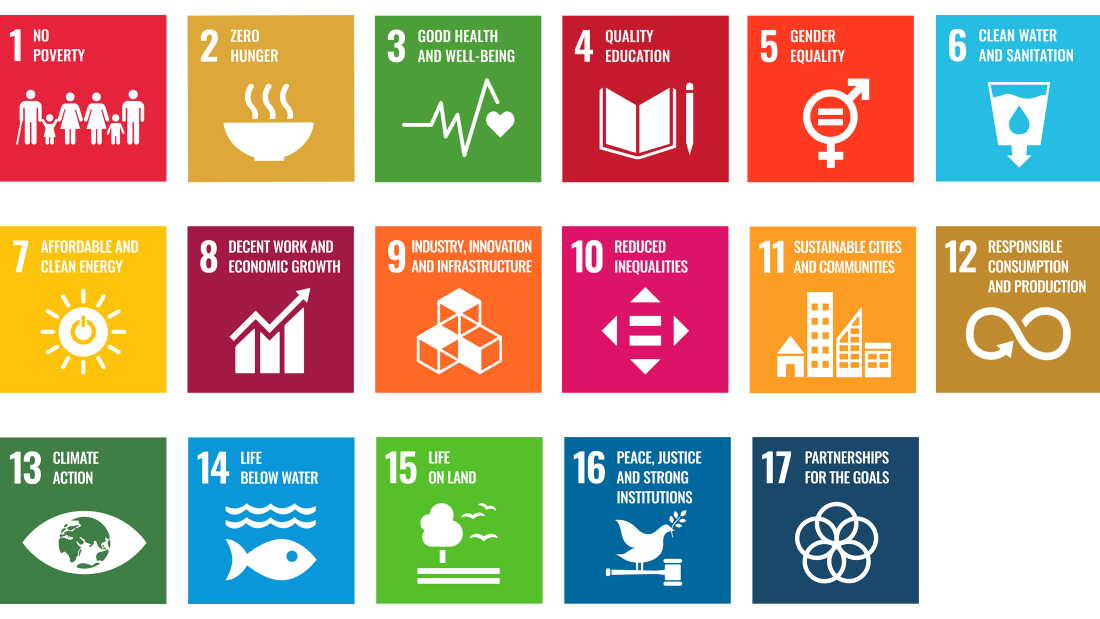
The question is sharpened by recent events. According to preliminary OECD data, official development assistance by DAC members fell by 23.1 percent from 2024 to 2025, the largest annual contraction on record, bringing aid back to where it stood when the Sustainable Development Goals (SDGs) were adopted in 2015. The SDGs themselves, once billed as a universal aspiration, have been formally denounced by Washington at the United Nations General Assembly. Yet the upheaval is not just institutional. It has reopened a fault line that has run through the concept of “development” from the start: what the term actually means and who it refers to.

Two distinctions matter. The first is between big-D Development, the organised international project of aid agencies, multilateral institutions, and global goal-setting, and small-d development, the messy, nationally driven process of economic and social transformation that has always owed more to domestic politics than to foreign assistance. The dismantling of the former does not necessarily halt the latter. The second distinction concerns geography. Is development a universal process, occurring in Manchester, Mumbai and Mombasa alike, or does it describe a specific relationship between richer and poorer parts of the world? The conference confronted both questions, and the answers offered little comfort.

The opening plenary dispensed with the notion that this crisis is a temporary disruption. Lee Jones of Queen Mary University argued that we are witnessing a “second Cold War” — not a systemic battle between rival ideologies, as in the first, but a positional struggle within globalised capitalism, where the pillars of the neoliberal order are being pulled apart from the inside. The implications he drew were blunt: the multilateral system is unlikely to survive in its current form, major powers are converging on a miserly approach to development spending, and what remains will be “small-d development” — capitalist integration through reworked value chains, constrained to strategically relevant geographies. National security and economic competition will trump poverty reduction and climate action.

Yuen Yuen Ang of Johns Hopkins University drew a sharper conclusion. The “polycrisis,” she argued, is paralysing only for those attached to the old order. No society has ever escaped poverty through aid or randomised controlled trials. The era of aid dependence is ending, and the spread of universal institutions has ground to a halt. For the global majority, which has never been the producer of the dominant development paradigm, this represents what she calls a “polytunity”: an opening to redefine development itself, away from assimilation and mimicry and toward what she terms an adaptive, inclusive, and moral political economy.

If Jones and Ang diagnosed a paradigm in collapse, Daniela Gabor, SOAS University of London, examined the financial architecture being built in its place. Her concept of the “Wall Street consensus” describes a world where development has been recast as an investible asset class: states de-risk while private capital extracts. The Lake Turkana wind farm in Kenya served as her case in point, a project assembled through a patchwork of dozens of financial agencies that ended up owned by BlackRock, structured in a way she called fundamentally anti-developmental. She pointed to fossil fuel subsidies rolled out in response to rising energy prices, and donor agencies bluntly subsidising domestic companies, as variations on the same theme.

The Wall Street consensus, Gabor argued, is a weak strategy of American hegemony for three reasons: it is not fast enough, not just enough, and not stable enough. Even the World Bank’s renewed interest in industrial policy amounts to little more than subsidising private capital with public money. In closing, she called for a new state-coordinated developmentalism — one that covers all states and combines industrial policy with decarbonisation.

The sharpest challenge to the current development cooperation system came from Ken Opalo of Georgetown University, who opened the second day by accusing the development community of navel-gazing. The sky has not fallen in most low-income countries, he argued, and the pathologies of aid dependency may mean its decline is less catastrophic than the sector assumes. The SDGs, in his telling, represent the lowest common denominator imaginable: any education minister merely parroting SDGs is not thinking about context, and without context, policy outruns the capacity to implement it. His prescription was a pivot from “nano-development,” meaning small, tightly measured interventions, to national development and the proactive use of policy autonomy: context-specific knowledge production, support for local priorities rather than donor-driven faddism, and honest conversations about how European trade and environmental policies actively harm the countries they claim to help.

The closing plenary surfaced the underlying tension. “Development” is becoming a dirty word, observed one participant working in a development agency. Partners find it patronising; within five years it may no longer function as a policy category. Another colleague noted that geopolitics had dominated the conference at the expense of other forms of politics, and that the return to thinking in terms of national development risks ignoring the inequalities within states that development studies had spent decades trying to illuminate. The field is being asked to reopen debates it thought it had closed. Whether development studies can survive without big-D Development remains an open question. The field’s fragmentation and its uncertain institutional footing suggest that muddling through is not an option.

Yet there is a counterweight that has been overlooked: bureaucratic inertia itself. Research on how officials in development agencies behave suggests that career bureaucrats are driven less by ideology than by institutional incentives — blame avoidance, risk aversion, and the desire to keep programmes running. These instincts are usually treated as pathologies. They often are. But in a period of erratic political disruption, they also act as a brake. Bureaucratic routines absorb and dissipate radical policy shifts. Budget lines survive reorganisations; institutions outlast the politicians who threaten to abolish them. None of this defends the status quo. But it does mean that the window for reinvention may be wider than the rhetoric of crisis suggests. The machinery slows the demolition, buying time for those willing to design what comes next.

Manchester knows something about that. Development studies at the university began in the late 1950s as a training centre for “overseas administrators.” Over the following decades it was rebuilt, first into a research institute, then into the Global Development Institute — now one of Europe’s largest centres for the study of development. A key leader in this transformation was David Hulme, the institute’s long-serving executive director, who retires this year. The conference closed with a standing ovation in his honour — a reminder that institutions, like cities, are shaped by people willing to keep innovating. The development community now faces the same test. The raw material for reinvention exists. As any member of New Order could confirm, the hardest part is not letting go. It is deciding what to play next.

.


Heiner Janus is a Project Lead and Senior Researcher at the German Institute of Development and Sustainability (IDOS), where he leads a research project on the effectiveness of development policy.

Michael Roll is a Project Lead and Senior Researcher at IDOS, where he works on the governance of urban sustainability transformations in the Transformative Urban Coalitions (TUC) project.

Photo by Austin Garcia from Pexels

.


.
How Severe Has the Economic Impact of the Iran War Been?

How Severe Has the Economic Impact of the Iran War Been?

Silhouette of Kuwait City’s skyline with a vibrant sunset backdrop, highlighting the urban landscape. by Abdullah Alsaibaie via Pexels

.

How severe has the economic impact of the Iran war been for the Gulf states?

.

By Emilie Rutledge, The Open University


.

The US and Israel’s war on Iran has cast a long shadow over the Gulf. It has placed many of the economies that make up the Gulf Cooperation Council (GCC) regional grouping – Bahrain, Kuwait, Oman, Qatar, the United Arab Emirates (UAE) and Saudi Arabia – under substantial strain.

Since the war began in February, the World Bank has downgraded its 2026 GDP growth forecast for the region from 4.4% to just 1.3%.. Some thinktanks, including Oxford Economics, even predict that some GCC economies will enter recession in the second half of the year.

However, the effects of the war have differed across the region. While the Gulf states are often viewed as a unified economic bloc bound by a shared dependence on hydrocarbons, the conflict has revealed significant differences in their economic vulnerability and resilience.

Countries like Qatar and Kuwait have seen their oil and gas exports seriously disrupted by the effective closure of the Strait of Hormuz. But Saudi Arabia and the UAE, which have access to bypass infrastructure, have been partly able to circumvent this limitation.

Saudi Arabia has diverted 7 million barrels of crude per day through its east-west pipeline, allowing it to export oil from Yanbu on the Red Sea. The UAE, meanwhile, has utilised a pipeline from Habshan to Fujairah to export up to 1.8 million barrels of oil each day from the Gulf of Oman.

This infrastructure has enabled both countries to capitalise on soaring global oil prices. Saudi Aramco, Saudi Arabia’s state oil company, reported a 26% jump in profits in the first quarter of 2026.

Disruption to energy exports is one part of the story. The war has also caused substantial physical damage to energy infrastructure across the region. Around 80 energy facilities, ranging from production plants to refineries and pipelines, have been targeted by Iranian missile and drone attacks so far.

It will take months – and in some cases years – to repair the damage (which stands at an estimated US$58 billion) once the war ends. Qatar’s liquified natural gas industry, in particular, has suffered serious damage. QatarEnergy, the state-owned energy company, says it will take up to five years to repair its Ras Laffan industrial hub alone.

Gulf diversification

The GCC states have adopted strategies to diversify their economies away from a dependency on hydrocarbons. Tourism and aviation are two central pillars of this, with GCC countries investing heavily in these sectors. The Gulf is now home to some of the busiest international airport hubs in the world.

But these industries, too, have been damaged by the war. Financial analysis firm, Moody’s, suggested recently that hotel occupancy in Dubai is set to plummet to 10% in the second quarter of 2026 from 80% before the war. Some Iranian attacks have targeted civilian areas, including hotels and residential buildings, prompting tourists to stay away.

The Iran war has also placed Gulf airlines such as Emirates, Etihad and Qatar Airways under increasing financial pressure. More than 30,000 flights to the Middle East were cancelled in the first month of the war and jet fuel prices – the biggest variable cost to airlines – are up 90% on the annual average.

The logistics sector is another area of Gulf diversification. It has grown rapidly since the early 2000s thanks to the region’s strategic position between east-west trade routes. The UAE’s Jebel Ali Port, for instance, is now one of the world’s largest container ports and the base of Dubai’s multinational logistics firm, DP World.

However, Jebel Ali has seen a 40% drop in vessels due to the war, with container carriers rerouting to alternatives such as Salalah in Oman and Colombo in Sri Lanka. And while DP World has opened emergency land corridors to ports outside the Gulf to keep cargo moving, these routes are costly and have limited capacity.

The UAE and Qatar also both serve as major air freight hubs, acting as bridges for cargo travelling between Asia and Europe. But this has been affected by the war too. Freight rates have increased following attacks on both Dubai and Doha that led to grounded flights and air space closures.

In the long-term, the economic impact of the war on the Gulf economies will hinge on its duration and political outcome. But the risks are firmly tilted to the downside. The fiscal outlook for some GCC states is deteriorating, with several facing scenarios where government spending exceeds revenue. Public sector debt in some GCC states is rising too.

Moody’s has downgraded its outlook on Bahrain, which was already facing longstanding financial issues prior to the war, from “stable” to “negative”. This will make it harder for Bahrain to access much-needed capital and increase future borrowing costs.

GCC economies invest their surplus oil and gas revenues through sovereign wealth funds, which collectively manage between US$4 trillion and US$6 trillion in global assets. Governments are likely to draw on these funds to support domestic spending on reconstruction and bolstering their defences after the war.

This could undermine their future potential to fund large long-term diversification mega-projects such as Saudi Arabia’s Neom City. Plans for Neom, which was initially proposed as a linear city to home 9 million people, have already been scaled down in recent years due to issues including funding pressures.

The Gulf’s loss of “safe-haven” status due to the war, and the resulting reputational damage, cannot easily be reversed. Even after the conflict ends, higher risk premiums will persist for those doing business in the Gulf. Shipping disruptions could take months to unwind, and a prolonged closure of the Strait of Hormuz would be likely to trigger permanent rerouting.

If the conflict drags on, structural shifts in global supply chains may deepen, with lasting costs for the Gulf economies.The Conversation

Emilie Rutledge, Senior Lecturer in Economics, The Open University

This article is republished from The Conversation under a Creative Commons license. Read the original article.

The Conversation.


.