With Chinese investment, Egypt turns to Solar Panel Manufacturing

With Chinese investment, Egypt turns to Solar Panel Manufacturing

.

Vietnam on the Nile? With Chinese investment, Egypt turns to Solar Panel Manufacturing

.

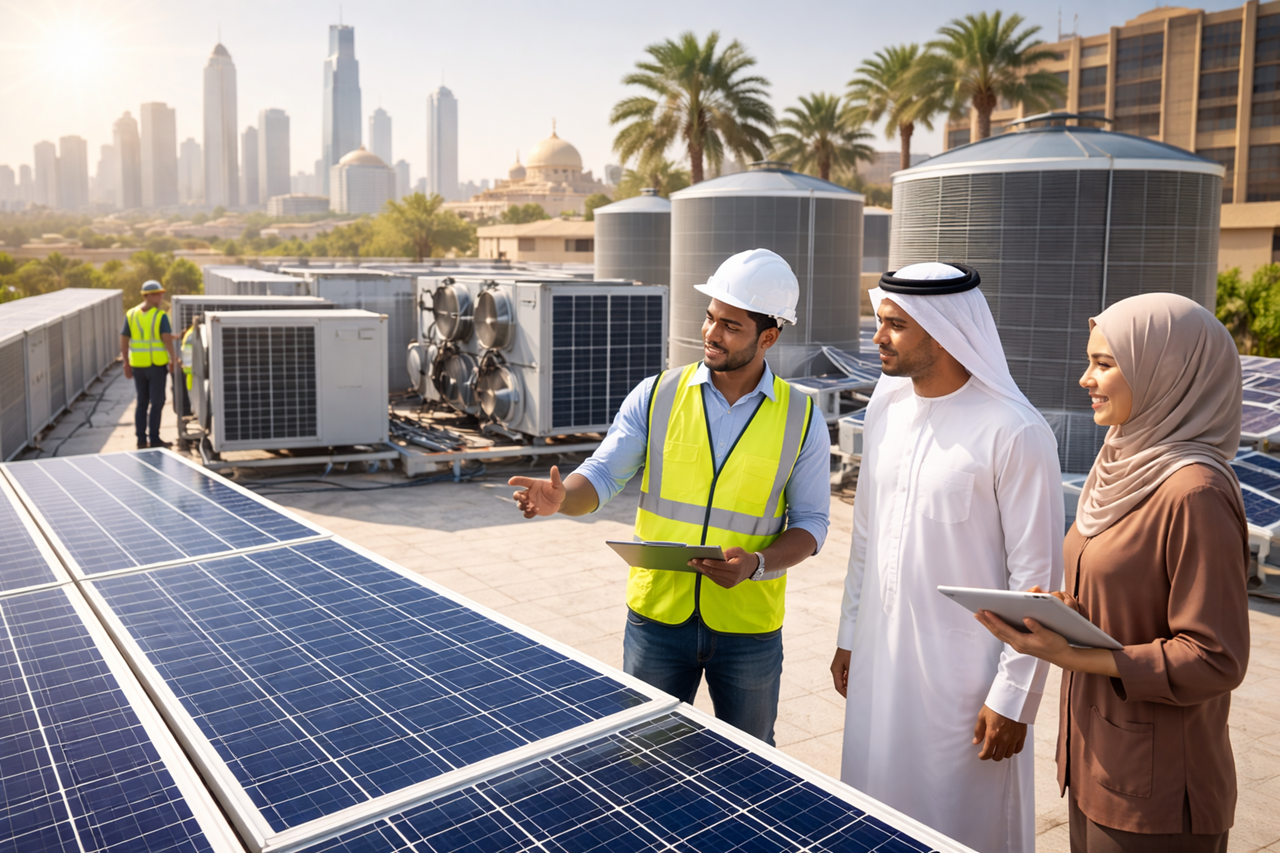
Ann Arbor (Informed Comment) – A new $210 million facility is being built in Egypt to produce 4 gigwatts of solar components annually.

These numbers are not world shaking, but this development is. Egypt has enormous industrial potential. It has as many as 2.5 million workers in various sectors of the textile industry and 33 million over all, and the country’s literacy rate is now on the order of 75%. Literate workers are valuable because they are able to read and follow instructions.

If Egypt becomes a hub for producing solar cells, panels and arrays, it could be an engine for economic growth and also for the production of inexpensive energy in the country, which also acts as a fillip to economic growth.

Green Building Africa reports that “The $210 million Atum Solar project is being developed in the TEDA industrial zone in Sokhna and will have an annual production capacity of 2 GW of solar cells and 2 GW of solar modules.” The investors include JA Solar, a Chinese solar panel manufacturer, as well as concerns in the UAE, Bahrain and Egypt itself. The UAE and Bahrain have substantial investment capital lying about from oil sales, but small domestic populations and lack what economists call absorptive capacity. Egypt is a promising investment field for them as a fellow Arab country with a big workforce.

The plant will create over 800 direct jobs, and likely many more indirect ones.

The solar cells will be exported to the United States. Note that this facility is a way for JA Solar to sidestep the stiff US tariffs on Chinese solar cells, since the units will come from Egypt. The panels will be sold inside Egypt and also to other African countries.

The energy consultancy Ember reported last summer that there are now the first signs of large-scale African adoption of solar panels.

I commented about a year ago on a report that Sweden’s Sunshine Pro has partnered with Egyptian institutions to establish a solar panel manufacturing facility with a capacity to produce 1 gigawatt of solar panels annually.

Egypt is, of course, creating large solar farms for electricity generation, and so will have a use for these domestically produced panels. By the start of 2024, the Egyptians had installed 1.8 gigawatts of solar, most of it at the Benban Solar Park some 400 miles south of Cairo in the Aswan Governorate. It now, at the beginning of 2026, has about 2.8 gigawatts of solar capacity, with plans for a rapid build out the rest of this year. Cairo is hoping for 12 gigawatts of sustainables by the end of 2026.

As Chinese labor costs have risen, Chinese companies have been moving to other countries for some manufacturing purposes, benefiting from their cheaper labor costs. It is even government policy, with the slogan “Go out!” attached to it. Since China is the preeminent leader in greentech, it is natural that some of the expansion of Chinese investments in factories abroad would be in sustainables.

One advantage for Chinese firms of investing in a facility abroad is that they can often lower their tariff costs. For instance, the African Union has low tariffs for member states, so a factory that is partially Chinese-owned established in an African country can export cheaply throughout the continent. That role seems to be envisioned for the panels produced at the Atum plant, while the solar cells (the basic component of the panels) will be sent to the US.

If Egyptians manage their affairs well, they could become the Vietnam of the Middle East with regard to solar panel production. Vietnam now produces 18 gigawatts of solar panels annually and is the fourth-largest panel exporter, having 12% of the world market, up from almost nothing a decade ago.

The world’s largest rooftop solar installation

The world’s largest rooftop solar installation

Bahrain, Manama, Bahrain World Trade Center, WTC, Bahrain by IrinaKar via pixabay

.


Bahrain announces plans for what will become the world’s largest rooftop solar installation

The evidence would suggest that a myriad of energy-rich nations in the Middle East are fostering investments in astonishing new renewable energy projects amid calls to diversify the global energy market. One such nation that has expressed its renewable energy ambitions is Bahrain. The Gulf nation has recently announced its plans to construct and operate what will be the world’s largest rooftop solar installation, marking a new future for the Middle East energy market that aligns with global emission and clean energy goals.

Even the Middle East has jumped on board the renewable energy train

The litany of Middle East nations are turning to the untapped and up until now, overlooked energy generation potential of the renewable energy market, following decades of relying on the conventional oil and gas sectors. The region has seen vast resources of oil and gas transforming nations into oil-dependent countries that have seen insane economic growth over the past few decades.

At the recent G20 Summit in South Africa, nearly every nation in attendance reaffirmed its commitment to reducing emissions and developing clean energy projects in the years to come. Following announcements of renewable energy projects in the Kingdom of Saudi Arabia, such as the world-changing NEOM project, Bahrain is aiming to become the home of the regional solar sector with an astonishing new project that will reshape the global energy market.

Bahrain’s new rooftop solar installation will be the largest in the world

Foulath Holding, the parent company of Bahrain Steel and SULB, has announced a new partnership with Yellow Door Energy, the leading sustainable energy developer in the Middle East and Africa, to develop a new 123-Megawatt-Peak (MWp) solar project in Bahrain, setting the stage for a new future in the nation, powered by solar power.

“Today, the island nation of Bahrain stands at the forefront of sustainable global innovation. We are incredibly proud of this transformative project – marking the largest rooftop solar plant in the world. This milestone not only strengthens our position as a regional leader in clean energy, but embodies our dedication to build a resilience, sustainable future in line with our national vision of elevating Bahrain’s international competitiveness.” – H.E. Noor bint Ali Alkhulaif, Minister of Sustainable Development, Chief Executive of Bahrain EDB

Bahrain’s new solar installation will be a landmark achievement for the global renewable sector

The project will consist of 77,000 solar panels installed across a new 262,000-square-meter stockyard shed. This would be the largest industrial-scale on-site solar project in the world, boasting ten rooftop solar photovoltaic (PV) plants and four ground-mounted solar PV installations set to reshape the nation’s steel industry for the better.

The project aims to generate an astonishing 200 million kilowatt-hours (kWh) of clean energy in its first year of operation and will benefit from a new Power Purchasing Agreement, which has become a prerequisite for new energy projects across the renewable energy biosphere. Yellow Door Energy will oversee financing, construction, and maintenance operations for the new solar project.

The clean energy transition has reached every corner of the world

Bahrain’s ambition to develop what will be the world’s largest solar rooftop installation comes as the market sees substantial growth, underscoring nations’ clean energy targets for the new year and further beyond. Turkey’s clean energy ambitions have been boosted by the news that AIIB and TSKB will fund a new solar project in the nation, exemplifying global sentiments toward the renewable energy market. The world has been forced to face the reality that the only constant is change; thankfully, the Middle East region is aiming to lead the transition to the renewable energy sector through astonishing new projects.

*


*
MENA states are increasing focus on South-South cooperation

MENA states are increasing focus on South-South cooperation


Image for illustration: A man holds a “One World” sign on the Brooklyn Bridge, symbolizing unity and activism. By Lara Jameson via Pexels

.

MENA states increasing focus on South-South cooperation

.
MENA states increasing focus on South-South cooperation | Arab News

People take documentation at the hall of the Second High-level UN Conference on South-South Cooperation in Buenos Aires. (AFP)

.

Several countries across the Middle East and North Africa have, in recent years, emerged as key players in reshaping global cooperation dynamics, particularly through South-South cooperation. This dynamic process allows developing countries, often historically marginalized in global power structures, to collaborate and share knowledge, resources and expertise. Regional nations are clearly transitioning from simple contributors to central champions of South-South cooperation, challenging the traditional north-south power structures that have dominated global governance for decades.
South-South cooperation aims to foster mutual development and solidarity among nations of the Global South by enabling exchanges of knowledge, technology and resources. The UN Office for South-South Cooperation, established in 1974, has long supported these initiatives, which include knowledge sharing, technical expertise, diplomatic ties and development financing. MENA countries, historically more aligned with the West due to geopolitical interests, are now at the forefront of this global shift, pushing for a more equitable and collaborative approach to global governance.
One of the most striking examples of MENA’s growing role in South-South cooperation is the significant increase in bilateral trade and investments between the region’s countries and other developing regions, particularly Africa and Asia. MENA countries’ economic diversification strategies are shifting their focus from traditional oil and gas revenues to more sustainable partnerships, driven by the desire to reduce reliance on the West.
Countries such as Saudi Arabia, Kuwait, Qatar and the UAE have long had national funds for development aid, such as the Saudi Fund for Development and the Kuwait Fund for Arab Economic Development. These have already invested billions into projects across Africa, Latin America and Asia. In fact, between 2011 and 2020, these four Gulf Cooperation Council countries provided more than $81 billion in bilateral official development assistance, with a significant portion aimed at boosting the economic growth of developing regions.
The Kuwaiti fund alone has issued nearly 800 loans and provided more than 230 technical assistance grants across 16 Arab states, supporting infrastructure, healthcare and education projects. In 2023, Saudi Arabia delivered $5.2 billion in official development assistance, including $4.7 billion dedicated to programmable bilateral aid, primarily for infrastructure and support to the least developed countries.

MENA countries are now pushing for a more equitable and collaborative approach to global governance.

Zaid M. Belbagi

In Africa, the scale of MENA’s investments is increasingly evident, as GCC-Africa greenfield foreign direct investment reached 85 projects worth $11.5 billion in 2023 alone. This surge is set to continue, with 73 projects in 2024 committing more than $53 billion, accounting for 6 percent of global FDI, further solidifying MENA’s leadership in South-South cooperation.
The GCC countries have also broadened their multidimensional partnerships with regions such as East Asia and Latin America. A notable example of this is Saudi Arabia’s deepening engagement with China, as the two countries have significantly expanded their cooperation in defense technology, energy diversification and infrastructure development. In 2024, trade between China and the GCC countries exceeded $288 billion, illustrating the scale of this strategic partnership, which now includes joint ventures in areas such as drones and missiles, reducing the region’s reliance on traditional Western defense suppliers.
However, countries across the MENA region are now actively pursuing partnerships that go beyond financial assistance. Morocco, for example, has spearheaded major initiatives aimed at boosting African integration and economic autonomy. The Nigeria-Morocco gas pipeline, designed to address energy needs across West Africa, shows how MENA countries are leveraging their resources to fuel the growth of their southern neighbors.
Qatar, too, is rising as a key player in South-South cooperation, particularly through its diplomatic and financial investments. Qatar’s establishment of the South Fund for Development and Humanitarian Assistance under the Group of 77 highlights its commitment to strengthening multilateral South-South ties. The fund has already been instrumental in supporting development initiatives across several Global South countries.
The UAE has similarly expanded its partnerships with emerging economies, not only in Asia but also in Africa and Latin America. Its Masdar City, a global leader in renewable energy development, provides a model for sustainable energy projects in the Global South, particularly in countries struggling with energy security. The UAE’s growing collaboration with South Korea for technology transfer in defense and renewable energy is another example of how the region is diversifying its partnerships and reducing dependence on Western institutions.
Furthermore, the shifting global order is becoming increasingly evident in MENA’s relationships with regional players such as India and Brazil. In 2024, India’s Comprehensive Economic Partnership Agreement with the UAE marked a significant milestone in enhancing bilateral trade, with merchandise trade topping $83 billion. The agreement has facilitated trade across multiple sectors, including non-oil commodities, technology and renewable energy.
Despite the growing influence of South-South cooperation, the MENA region is not immune to challenges. To fully capitalize on its emerging role as a champion of South-South cooperation, the region’s countries must continue to strengthen their local capabilities, enhance technological innovation, strengthen diplomatic ties and, most importantly, build robust domestic industries.
These efforts are already evident in countries such as Saudi Arabia, the UAE and Qatar, which are heavily investing in developing their own defense technologies, renewable energy infrastructure and space exploration programs. Through these strategic initiatives, regional champions are leading the charge in shaping a more equitable and decentralized global order.
The region’s leadership in South-South cooperation marks a significant shift in global governance, challenging the traditional north-south divide. With countries in the region increasingly diversifying international partnerships, investing in shared development projects and fostering diplomatic engagement, the region is contributing to the rebalancing of global power structures, offering an alternative to the conditionalities of Western institutions such as the International Monetary Fund and World Bank.
This shift signals growing autonomy for countries in the Global South, where shared development goals and mutual cooperation are becoming the cornerstones of a new international order. The result is a more plural, negotiated and less hierarchical global governance system, in which MENA’s leadership is central to driving an innovative and equitable future for the Global South.

• Zaid M. Belbagi is a political commentator and an adviser to private clients between London and the Gulf Cooperation Council.
X: @Moulay_Zaid

Read the original in https://arab.news/px8na

*


*


Sustainable water initiatives in MENA projects and technologies

Sustainable water initiatives in MENA projects and technologies

Peaceful beach scene with ocean waves and wind turbines at sunset, showcasing renewable energy. by Christian Himmel via pexels

.

Sustainable water initiatives in MENA

NatureAsia Published

24 December 2025

.

As water scarcity deepens across MENA, wastewater use is emerging as a solution.  We look at projects and technologies being adopted across the region.

Rasha Dewedar

The As-Samra wastewater treatment plant, Jordan. Credit: Jake Lyell/ Alamy Stock ImagesThe As-Samra wastewater treatment plant, Jordan. Credit: Jake Lyell/ Alamy Stock Images
The Bahr El Baqar wastewater plant in Egypt recycles more than five million cubic metres of water every day for agricultural use daily for farmland. Yet across the region, many similar facilities are either operating partially, unfinished, or abandoned.The Middle East and North Africa region has 14 of the world’s top 20 water-scarce countries. This challenge, driven by climate change, urbanization, and population growth, demands reliable and sustainable solutions.


Wastewater Treatment (WWT) removes pollutants, microorganisms, and chemical toxins, making water safe for reuse. Plants often combine two or more technologies to reach the required quality, depending on costs, purpose, and environmental factors.


Conventional methods for WWT deliver results quickly but are energy-intensive, whereas extended methods are nature-based systems, like lagoons and reed beds, that require more land but consume less energy and require minimal maintenance.


Why plants fail


One of the main challenges for wastewater treatment in MENA is cost.


“Many WWT plants in MENA have been constructed but never operated close to capacity, or shut down,” says Sammy Kayed, co-founder of the Environment Academy at the Nature Conservation Center, American University of Beirut.


Energy is another challenge. Treatment plants require more energy, especially in hot climates, explains Mostafa Hadei, Assistant Professor of Environmental Health Engineering at Tehran University.


Looking for smarter Solutions


Efforts are already in place to overcome the challenges and introduce innovations in WWT. Between 2018 and 2022, the International Water Management Institute (IWMI) launched ‘ReWater’, a regional project aimed at expanding water reuse in Egypt, Jordan, and Lebanon. The project addressed cultural resistance, outdated regulations, and the lack of financial models for cost recovery.

As one of the ReWater project partners, the International Center for Agricultural Research in the Dry Areas (ICARDA), has experimented the usage of wastewater on specific crops and soil to reach the best techniques for irrigation systems, at the Sarapium Wastewater Treatment Plant in Ismailia, Egypt.


ReWater MENA launched the National Analysis of Water Reuse Potential in Irrigation, offering a technical and governance guidance to the potential of water reuse in Lebanon and the potential of its manifestation in the current political and economic context.

Kayed suggests nature-based solutions that benefit both people and the planet. This method usually involves Reeds, coarse grasses that grow in wet areas, and is used as a cheap method to treat liquid waste.


“One promising method I’ve worked on is lagoons and reed beds,” says Kayed. “If designed carefully, they can operate relatively passively at a fraction of the cost and are best suited for irrigation of orchards”.


Hadei says that the broader adoption of WWT depends on comprehensive planning, strong public-private partnerships, financial incentives, and applying “fit-for-purpose” treatment that cleans water only as much as needed for its intended use.


Sustainable Practices 


Building on the ReWater project, IWMI launched ReWater+ in Egypt, Jordan, and Morocco, as part of the Near East and North Africa Water Scarcity Initiative. The project involves multiple partners and stakeholders collaborating to analyze costs, benefits, and social impact.


“Reuse projects often reduce emigration from rural areas, fix soil, and increase employment rates, which in turn offer financial gains,” says Youssef Brouziyne, the International Water Management Institute’s (IWMI) MENA representative. In the Bahr El Baqar  project operational costs are optimized at every step, and revenue is diversified through selling byproducts. The plant was launched Bahr El Baqar in 2021, and  treats 5.6 million cubic meters of water per day to cultivate more than 400,000 acres in Sinai.


Integrating local capabilities is another factor in ensuring sustainability. “WWT plants can produce biogas from sludge to lower energy costs, and nutrients can be recovered and reused in agriculture,” says Hadei.  The As-Samra plant in Jordan, for example, produces almost 80% of its required operational energy from biogas and hydropower, while generating bio-solids for fertilizer and fuel.


Other projects highlight the social dimension of water reuse, like the SafeAgroMENA project by IHE Delft, running in Egypt, Lebanon, Iraq, and the Netherlands. The project employs an interdisciplinary approach to provide safe water for agricultural use, helping small-scale farmers reuse treated wastewater safely, according to Hadeel Hosney, the project leader.

“SafeAgroMENA is economically relevant and sustainable, as it conducts comprehensive assessments from a technical, political, and socio-economic perspective,” says Hosney. This practice allows the development of tailored, nature-based solutions using local materials from target countries.


Digital innovation is also shaping the sector, including decision-support, earth observation, and data analytics tools, all powered by AI. Such tools offer valuable insights into wastewater’s supply and demand, and recommend water reuse accordingly, in countries like the United Arab Emirates, Saudi Arabia, and Egypt.

.


.

.

Sustainability trends for 2026

Sustainability trends for 2026

As we approach 2026, sustainability is starting to function more as a core business discipline rather than a standalone initiative. The public, private, and civic sectors are applying sustainability strategies to improve energy efficiency, reduce operating costs, strengthen supply chain resilience, and manage long-term risk — much of which is supported by advances in circularity, modern energy systems, artificial intelligence (AI), and emerging quantum technologies.

But progress requires coordination, credible data, and solutions designed to scale. These needs are increasingly impacting the priorities of our customers and partners, and as a result, are now firmly on the boardroom agenda. And across sectors, organizations are incorporating sustainability decisions into operational and technology decisions in response to changing market conditions and AI-era innovations. Here are the trends we expect to take shape in the year ahead.

  1. Sustainability becomes a more structured and strategic business discipline.

    Organizations are increasingly treating sustainability as a core business priority — integrating energy efficiency, energy security, operational resilience, and circularity into day-to-day operations and long-term planning.

    In parallel, global standards and reporting practices are becoming more aligned — particularly for multinational organizations navigating different rules and requirements. Frameworks such as the International Sustainability Standards Board (ISSB) and the European Sustainability Reporting Standards (ESRS) are converging toward clearer guidance on sustainability-related reporting. While approaches vary by jurisdiction, disclosure is now common practice among large enterprises. According to the Organisation for Economic Co-operation and Development (OECD), 91 percent of large companies now disclose sustainability-related information.

    At Cisco, sustainability is one component of our business strategy — helping to inform how we design products and build partnerships to improve efficiency, circularity, and system performance. This approach is reflected in our investment strategy as well, including support for innovators such as CorPower Ocean, whose wave energy technologies represent promising new models for reliable, clean power generation.

  2. Circularity advances from recycling to design-led systems thinking.

    Circularity is becoming an integral part of design and operations strategy — shaping decisions across material selection, engineering, manufacturing, and product life cycle planning. Organizations are moving beyond traditional end-of-life recycling and embedding circularity earlier in the design process — reducing waste upfront, extending useful life, and keeping materials in use longer. Emerging tools such as digital twins allow teams to model product life cycles, evaluate material impacts, and plan for reuse before anything is built — making circular design more practical to implement and embed into everyday engineering decisions. At Cisco, we are proud to be at the forefront of this shift. We recently reached our goal of embedding Circular Design Principles into 100 percent of new products and packaging, demonstrating how circularity is becoming a core sustainability capability.

  3. Innovation scales across systems, from secure grid modernization to microgrids.

    After years of pilots, innovation is being deployed more broadly across both large-scale infrastructure and localized solutions — from smart buildings to neighborhood-level microgrids. Public sector modernization programs, rising resilience requirements, and the need for secure, reliable energy systems are accelerating this transition.

    At Cisco, we are supporting this shift through secure, scalable networking and smart building technologies — along with continued investment in energy-efficient design. Cisco Silicon One, for example, delivers industry-leading performance per watt — helping organizations modernize infrastructure with lower energy consumption and greater capacity. These advances enable utilities and communities alike to deploy energy solutions that are more reliable, resilient, secure, and ready for the future.

  4. AI continues to reshape the energy equation.

    As enterprises scale AI workloads, electricity demand is rising. Data center grid demand in the United States alone is forecast to nearly triple by 2030. AI-optimized servers, which currently represent about 21 percent of data center electricity usage, could account for 44 percent by 2030 — placing new demands on secure and resilient energy infrastructure.

    These trends are prompting organizations to rethink efficiency, load management, and the infrastructure required to support AI at scale. Cisco is helping customers prepare for this shift by optimizing networks and operations for greater efficiency, visibility, and security, so that infrastructure is ready to support increasingly complex workloads.

  5. Quantum moves from concept to preparation.

    Quantum computing remains an emerging field, but 2026 marks a shift from curiosity to preparation. Organizations are beginning to plan for quantum-safe networks, next-generation cryptography, and early simulation capabilities that could eventually accelerate advances in materials science, energy systems, and climate modeling.

    The priority now is readiness. That means building infrastructure and security practices that can evolve as quantum technologies mature. Industry partnerships, including Cisco’s collaboration with IBM to develop fault-tolerant quantum systems, reflect early steps toward this future as organizations focus on long-term security, resilience, and trust.

Looking ahead, progress across all these areas will depend on deeper collaboration across industries, governments, and communities, and on technology choices designed for longevity, security, and adaptability. We anticipate that more organizations will integrate sustainability considerations into core planning as they modernize infrastructure and prepare for emerging technologies.

The organizations that lead will be those that integrate sustainability into core planning, modernize infrastructure with intention, and prepare today for the technologies that will shape tomorrow.

At Cisco, we remain focused on enabling that future by reducing environmental impact, strengthening resilience, and helping our customers design systems that are secure, adaptable, and built to perform as demands evolve.

Authors

Avatar

Mary de Wysocki, SVP & Chief Sustainability Officer

Chief Sustainability Office