Is Automation really the Answer? The Hidden Challenge Inside the Middle East’s Recycling Boom. Let us what Abhijeet Chaudhary and Teeba Allaw of Egis say.
Across the Gulf Cooperation Council, recycling is moving from the margins to the mainstream. Governments are setting ambitious circular economy and waste diversion targets under national programs such as Saudi Arabia’s Vision 2030, Qatar National Vision 2030, the UAE Net Zero Strategy 2050 and Oman’s Vision 2040. These frameworks are reinforced by flagship projects such as NEOM, where sustainability and resource recovery are embedded in the city’s design. Collectively, they are backed by large-scale investment in new infrastructure, from waste-to-energy plants to material recovery facilities, designed to keep resources in circulation and reduce dependence on landfills.
Within this regional transition, material recovery facilities are taking centre stage. The latest plants combine conveyors, optical sorters and robotics to process hundreds of tons of recyclables each day. Automation aligns with the wider digital agenda promoted through the UAE National AI Strategy 2031, Qatar’s National AI Strategy and Saudi Arabia’s Data and AI Strategy. Together, these efforts signal a determined move toward smarter, data-led waste systems and measurable diversion outcomes.
Yet amid this momentum lies a practical design question:how much automation is enough?Can technology alone overcome the region’s complex waste composition, or does lasting efficiency depend on combining machines with informed human oversight?
Across Europe and the United States, recycling plants have evolved quietly but decisively. Cameras and robotic arms now handle tasks that once depended entirely on manual sorting. Computer vision distinguishes between aluminium cans, coloured plastics and glass fragments while learning from every batch it processes. In regions where households already separate their waste, these tools have raised recovery rates by as much as twenty percent and reduced worker exposure to hazards on sorting lines.
The GCC starts from a different baseline. According to the Gulf Statistical Center, municipal waste in member states contains between fifty and sixty percent organic material, while paper, cardboard and plastics form less than a quarter. This mix leaves recyclable streams heavily contaminated. In the United Arab Emirates, for example, studies show impurity levels of thirty to forty percent in recyclable waste. Behavioural patterns add to the challenge: only about one-third of household’s separate recyclables at home, while more than half still dispose of all materials together. When facilities receive such mixed feedstock, even advanced robotics struggle to produce clean and valuable output.
Investment patterns further shape outcomes. Robotic sorting lines, recognition systems and specialised software require high initial capital and continual spending on maintenance, energy and skilled technicians. In Europe and the United States, consistent waste data and stable recycling policies make such investments predictable. In the GCC, data on waste generation and composition is collected by national authorities but is not always publicly available or detailed enough for private operators to base technology decisions on. This limited visibility makes it harder to compare performance or evaluate long-term returns. That is beginning to change. Policy initiatives such as Dubai’s Green Building System, Saudi Arabia’s National Environment Strategy and Qatar’s National Waste Management Framework are improving data transparency and standardising recycling metrics. As information quality improves and source separation becomes more common, operators will be able to apply automation where it delivers measurable gains in purity and recovery instead of adopting technology for its own sake.
Building the next generation of waste infrastructure in the GCC is not only about installing new machines. It is about knowing what level of automation truly fits the market, what it costs to sustain and how it supports long-term diversion goals. These are complex questions that sit between policy, economics and technology. Egis works in this space, helping governments and municipalities interpret automation and translate it into practical, scalable design decisions.
Every engagement begins with data. Egis studies what the waste stream actually contains, how separation occurs at the source and what recovery levels are realistic within current market conditions. From that foundation, the firm assesses where automation improves purity and throughput and where simpler processes ensure resilience and easier maintenance. This approach shaped Egis’s advisory work for one of the GCC municipalities developing the region’s largest integrated waste-to-energy and material recovery facility under a public-private partnership model. The project combines large-scale energy recovery with a high-capacity facility for recyclables, showing how technology can serve as an enabler rather than a headline feature.
Egis also connects the GCC with global innovation. With offices and technical teams in more than one hundred countries, the firm maintains constant dialogue with technology developers, equipment suppliers and research partners from Europe to Asia and North America. This global reach allows Egis to test new ideas and offer governments a clear view of what truly performs under regional conditions. It replaces buzzwords with evidence and helps public authorities make confident, data-driven investment choices.
Across the region, Egis applies this collective intelligence to one persistent challenge: turning available waste data into actionable design guidance. By combining local datasets, site audits and digital modelling, the firm helps cities and ministries understand how automation influences performance, cost and operations. In doing so, Egis brings clarity to one of the most complex questions in modern recycling: how much technology is enough, and where human insight still adds the greatest value.
Across the GCC, the new measure of progress in recycling is not how automated a plant is but how well its design fits local reality. Real innovation lies in balance, where technology supports the goal of better recovery instead of becoming the goal itself. Consultants are central to that transformation. They link policymakers who set direction with technology creators who build solutions. Through this collaboration, automation becomes a means of solving the waste problem rather than a costly race to install equipment.
Egis stands at the centre of this change. Its strength lies in translating complexity into clarity and turning global technology insight into practical, data-driven choices for cities and ministries. By bringing together markets, governments and innovators, Egis is helping shape a circular economy in which progress is measured not by automation but by outcomes: cleaner materials, smarter investment and stronger systems.
The forecast stands 2.4 percentage points below the World Bank Group’s January projections
In the event of a prolonged conflict, the current impacts on the region will be compounded through elevated energy and food prices, declining trade, tourism and remittances, increased fiscal pressures and displacement
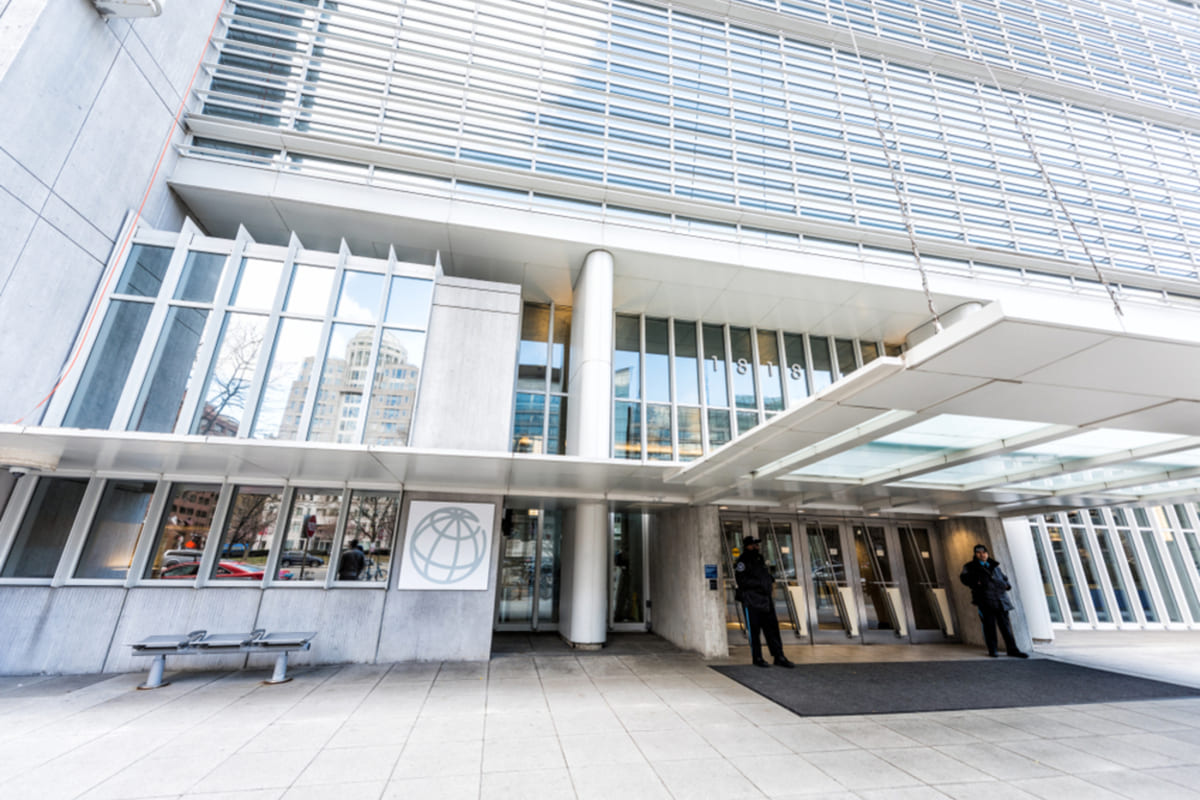
Economic growth in the Middle East, North Africa, Afghanistan and Pakistan (MENAAP) region is expected to slow from 4.0 percent in 2025 to 1.8 percent in 2026, according to the World Bank’s latest Regional Economic Updates.
This forecast stands 2.4 percentage points below the World Bank Group’s January projections.
Energy disruptions weaken 2026 growth outlook
The World Bank noted that the latest conflict in the Middle East has taken a serious and immediate economic toll on countries’ growth in the surrounding region. The closure of the Strait of Hormuz and destruction of energy and public infrastructure have disrupted markets, increased financial volatility and weakened the 2026 growth outlook.
The conflict also comes as an additional shock to a region already suffering from low productivity growth, limited private sector dynamism and persistent labor market challenges, underscoring the urgent need to strengthen governance and macroeconomic fundamentals and take action to boost long-term job creation and resilience.
“The current crisis is a stark reminder of the work ahead for the region: not only to weather shocks, but to rebuild more resilient economies with stronger macroeconomic fundamentals, innovate and improve governance, invest in infrastructure and boost employment-creating sectors,” said Ousmane Dione, World Bank Vice President for the Middle East, North Africa, Afghanistan and Pakistan.
“Peace and stability are preconditions for the region’s durable development. With peace and the right action, countries can build the institutions, capabilities and competitive sectors that create opportunities for people,” added Dione.
GCC growth projected at 1.3 percent in 2026
In the Middle East, the decline in economic growth is concentrated in Gulf Cooperation Council economies and Iraq, which are heavily affected by the conflict. The World Bank has downgraded growth in the GCC by 3.1 percentage points since January and now projects it to slow from 4.4 percent in 2025 to 1.3 percent in 2026.
The World Bank added that risks are tilted to the downside. In the event of a prolonged conflict, the current impacts on the region will be compounded through elevated energy and food prices, declining trade, tourism and remittances, increased fiscal pressures and displacement.
“As countries face the heavy toll of the present conflict, it is important to also not lose sight of the work needed for long-lasting peace and prosperity,” said Roberta Gatti, World Bank Group Chief Economist for the Middle East, North Africa, Afghanistan and Pakistan.
Projections differed in each region but were all revised downward. Sub-Saharan Africa’s economic recovery from a decade of global shocks is showing signs of stalling, with growth projections for 2026 revised downward by 0.3 percentage points from estimates previously published in October 2025.
In the East Asia and Pacific (EAP) region, growth is projected to slow to 4.2 percent in 2026 from 5.0 percent in 2025, as the energy shock due to the Middle East conflict compounds the adverse impact of elevated trade barriers, global policy uncertainty and domestic economic difficulties.
Growth in China is projected to decelerate from 5.0 percent in 2025 to 4.2 percent in 2026 and 4.3 percent in 2027.
Meanwhile, economic growth in the developing countries of Europe and Central Asia (ECA) is expected to weaken to 2.1 percent in 2026. The World Bank added that Latin America and the Caribbean (LAC) is projected to grow 2.1 percent in 2026, below the 2.4 percent recorded in 2025.
Finally, growth in South Asia is expected to slow to 6.3 percent in 2026 from 7 percent in 2025 due to disruptions in global energy markets.
Artificial intelligence needs vast computing power, and that power now depends on water. In the Middle East and North Africa (MENA), one of the world’s driest regions, this creates a serious new pressure on already scarce resources.
Why AI Data Centers Need Water
AI data centers generate intense heat as servers train and run large models. Operators often rely on water-based cooling, either through evaporative systems that directly consume freshwater or through chillers and towers that use large volumes indirectly. Water is also embedded in the electricity that powers these facilities, because many power plants themselves need water for cooling.
Recent research shows how quickly this adds up. Training a single large model can consume millions of liters of water when you include both onsite cooling and the power supply. One study estimates that answering 20 to 50 AI queries can use the equivalent of a 500‑milliliter bottle of water, when you count the full water footprint of the data center and grid.
A Thirsty Technology In The World’s Driest Region
MENA holds about 6.3% of the world’s population but only around 1.4% of its renewable freshwater, making it the most water‑stressed region on Earth. Of the 17 most water‑stressed countries globally, 11 are in MENA, and some forecasts warn that almost the entire population could face acute scarcity by 2050 if trends continue.
At the same time, Gulf states and other regional economies are racing to become AI and cloud hubs. New data centers are rising in Saudi Arabia, the United Arab Emirates, Qatar and beyond, often in areas where rainfall is minimal and summer temperatures soar above 40 degrees Celsius. Analysts expect regional data center water use to grow rapidly this decade as AI clusters demand denser, more water‑intensive cooling.
Desalination, Energy And The Water–Energy Nexus
Because natural freshwater is so limited, many MENA countries depend heavily on desalination. In Kuwait, about 90% of drinking water comes from desalinated sources; in Oman it is around 86%, in Saudi Arabia nearly 70%, and in the UAE more than 40% of municipal supply. The region already accounts for roughly 42% of global operational desalination capacity, with thousands of plants producing tens of millions of cubic meters per day.
Desalination is lifeline and burden at once. It is energy‑intensive and can harm marine ecosystems through brine discharges, so each extra unit of water for cooling AI infrastructure can also mean more emissions and coastal impacts if powered by fossil fuels. Experts argue that integrating solar and wind power into desalination and water treatment is essential to keep this nexus from becoming a vicious circle.
Emerging Solutions For Water‑Smart AI
There are promising technical responses. In the MENA, some large data centers now use closed‑loop systems and onsite treatment that recycle up to 96% of process water. Mega‑campuses in Saudi Arabia and the Gulf are pairing photovoltaic‑powered desalination with advanced cooling designs, using underground thermal storage and waste‑heat recovery to cut both water use and energy demand.
Globally, major cloud providers are also rethinking their strategies. Microsoft’s own projections showed that its annual water use for data centers could more than triple by 2030, before it revised designs and targets to curb the increase. Independent reviews still find sharp year‑on‑year rises in water consumption for Microsoft and Google, underlining how fast AI is outpacing earlier efficiency gains.
Policy And Transparency Gaps
Despite the scale of the challenge, water data for AI facilities in MENA remains patchy. Many companies do not disclose their withdrawals or consumption, because regulation has not yet caught up with the speed of investment. This lack of transparency makes it hard for communities and policymakers to judge trade‑offs between digital growth and local water security.
Some governments and regional bodies are starting to respond. New water‑energy strategies, desalination partnerships and water security task forces in the Gulf link future infrastructure to renewable energy, wastewater reuse and stricter efficiency standards. To keep AI compatible with a liveable future in MENA, these efforts need to go further—making water‑smart cooling, regenerative desalination and full public reporting standard features of every new data center, not optional extras.
The European Union is once again facing an energy crisis due to its reliance on imported fossil fuels — and is once again poised to lean into renewables to blunt the effects.
As the war in the Middle East upends global oil and gas markets, European Union energy chief Dan Jørgensen urged member states on Tuesday to build even more renewable energy, faster.
It’s an uncomfortable but familiar position for the EU. Following Russia’s invasion of Ukraine in 2022, the bloc rapidly reduced its reliance on Russian gas imports and swiftly built out new wind and solar power to cushion the blow to the region’s electricity sector.
The results speak for themselves. The European Union more than doubled its solar generation between 2021 and 2025. Wind grew at a more modest 24% over that time period, but it was already providing a higher share of the bloc’s electricity generation. Meanwhile, fossil fuel–generated electricity declined. For the first time ever, in 2025 the EUproduced more electricity from wind and solar than it did from fossil fuels.
But the region has not ditched gas entirely. The EU got about 17% of its electricity from gas last year, and it imports almost all the natural gas it burns — 86% in 2024.
That means its energy system is still exposed to the historic disruption caused by the Iran war. The war has shut down liquefied natural gas production in Qatar, the world’s second-largest exporter of the fuel, for the past month. Gas prices globally and in the EU have surged as a result.
This energy shock will be messy and play out in different stages. For Europe, the most immediate and acute effects are being felt in the availability of jet fuel and diesel. But electricity costs will rise too, as nations are forced to buy much-more-expensive natural gas. In certain countries, it will also get dirtier, at least for a time — some EU nations are relying more heavily on coal-fired electricity to get them through the immediate fallout.
But over the longer term, this energy shock is likely to produce the same outcome as the previous one: an even faster transition away from imported fossil fuels and to domestic wind and solar.
Global renewable capacity reached 5,149 GW in 2025, up 692 GW from 2024
Annual renewable growth rate rose to 15.5% in 2025
Middle East crisis underscores fossil fuel energy security risks, says La Camera
LONDON, March 31 (Reuters) – Renewable power made up almost 50% of the world’s electricity capacity last year after a record increase in solar installations, data from the International Renewable Energy Agency shared exclusively with Reuters showed on Tuesday.
As the Middle Eastern conflict has led to record monthly gains on oil markets, some in industry have lobbied for more investment in fossil fuels, but countries with higher renewable capacity have been insulated from the market shock, some analysts say.
The Reuters Power Up newsletter provides everything you need to know about the global energy industry. Sign up here.
“The Middle East crisis has, in some ways confirmed dramatically energy security is not something we can be sure of with fossil fuels,” IRENA Director-General Francesco La Camera told Reuters.
Global renewable power capacity reached a record 5,149 gigawatts at the end of 2025, up 692 GW from 2024, the data showed.
Expansive view of solar panels in a rural landscape, showcasing renewable energy. by Osman Arabacı via pexels
SOLAR SURGE IS BIGGEST CONTRIBUTOR
The growth was led by a leap in solar capacity. which grew by 511 GW in 2025 to 2,392 GW, confirming its position as the world’s largest renewable source.
The figures are far greater than the 116 GW growth in fossil fuel power capacity and took the share of renewables in global electricity capacity to 49.4% in 2025, up from 46.3% the year before, the data showed.
More than 100 countries at the COP28 climate summit in Dubai in 2023 agreed to triple renewable energy capacity by 2030 as part of efforts to meet global climate targets and La Camera said last year’s additions mean the sector is closer to reaching the target.
“This 700 gigawatts means that we may be quite close in 2030 to the tripling target, not exactly the triple, but very close to it,” he said.
The data shows the annual growth rate in renewable capacity in 2025 rose to 15.5% compared with a growth rate of around 15.1% in 2024.
Renewable groups last year said meeting the target by 2030 would require annual growth of 16.6% from 2025-2030.
New wind energy installations were 159 GW, taking the total installed capacity to 1,291 GW.
Capacity is a measure of the amount of power plants are able to produce but they often generate less than capacity if they are taken offline for reasons such as maintenance or refuelling, or in the case of renewables during low wind and sun periods.
Data from think tank Ember last year showed renewable energy sources generated more electricity than coal globally for the first time in the first half of 2025. In all, renewables provided 34% of global electricity.
It has yet to publish its full-year data for 2025.
We use cookies on our website to give you the most relevant experience by remembering your preferences and repeat visits. By clicking “Accept”, you consent to the use of ALL the cookies.
This website uses cookies to improve your experience while you navigate through the website. Out of these cookies, the cookies that are categorized as necessary are stored on your browser as they are essential for the working of basic functionalities of the website. We also use third-party cookies that help us analyze and understand how you use this website. These cookies will be stored in your browser only with your consent. You also have the option to opt-out of these cookies. But opting out of some of these cookies may have an effect on your browsing experience.
Necessary cookies are absolutely essential for the website to function properly. This category only includes cookies that ensures basic functionalities and security features of the website. These cookies do not store any personal information.
Any cookies that may not be particularly necessary for the website to function and is used specifically to collect user personal data via analytics, ads, other embedded contents are termed as non-necessary cookies. It is mandatory to procure user consent prior to running these cookies on your website.




You must be logged in to post a comment.