Interview: Sheikh Hamad bin Talal Al Thani on Future City Models

Interview: Sheikh Hamad bin Talal Al Thani on Future City Models

Explore the futuristic skyline of Doha, showcasing modern architectural designs and towering skyscrapers. by Rockwell Branding agency via Pexels

.

Interview: Sheikh Hamad bin Talal Al Thani, CEO, Qatari Diar, on emerging technologies reshaping urban development models

.

How do you define a smart city, including the role of its key pillars and infrastructure?

AL THANI: Smart cities are often associated with technology, but technology alone does not make a city smart. The core pillars include governance, connectivity, mobility, health and safety, sustainability, quality of life and economic development. What distinguishes a smart city is the integration of these elements to serve its people efficiently. Ultimately, a smart city is not defined by the deployment of technology, but by how effectively data and information are used to improve the urban experience overall. Digital infrastructure forms the backbone of smart city systems. This includes fibre networks, data platforms, sensors, mobility systems, utility networks and integrated communications infrastructure. When designed and embedded from the outset, these systems enable improved service delivery and stronger interoperability across sectors.

Which are the main challenges involved in implementing large-scale smart city programmes?

AL THANI: One key challenge is prioritisation, as cities must balance competing areas such as mobility, public services, sustainability, safety and real estate while integrating them into a coherent system. A second challenge is investment, given the significant upfront capital required for smart city infrastructure. While efficiencies and cost savings emerge over time, cities must manage the initial transition period. The most important challenge is translating technology into tangible user value. Residents and businesses are less concerned with the technology itself and more focused on whether services are simpler, faster, safer and more reliable.

In what ways does a smart city improve urban life while safeguarding privacy, security and trust?

AL THANI: The purpose of a smart city is to enhance the urban experience. The key measure is not the visibility of technology, but whether services function seamlessly for users. The most effective systems are those that are invisible to the end user. For example, an efficient airport journey may appear simple to the traveller, but is enabled by coordinated data systems and operational processes working in the background. The same applies to cities: success is reflected in smoother mobility, improved access to services, safer environments and greater convenience. Data governance is central to smart city success. While data enables better urban services, it must be protected through strong safeguards for privacy, security and ethical use. Interoperability is also key, allowing data to flow across systems under clear rules on access, sharing and use, ensuring consistency and accountability.

What role do data-driven systems and smart cities play in advancing sustainability and enabling innovation in emerging technologies?

AL THANI: Data enables cities to move from broad efficiency targets to precise, real-time optimisation. For example, in irrigation systems, the integration of weather data, sensors and water management platforms allows operators to adjust usage based on actual conditions. While these improvements may appear incremental, they accumulate into significant reductions in water and energy consumption as well as operating costs. Similar approaches can be applied across district cooling, lighting, waste management and transport systems. These efficiencies support environmental sustainability and long-term operational savings.

Smart cities can act as living laboratories, providing access to real-world data and testing environments that are often difficult to obtain elsewhere. They enable pilot projects in areas such as artificial intelligence, mobility systems, predictive maintenance and digital public services. This allows solutions to be tested and refined under real operating conditions. As a result, cities shift from being passive users of technology to active platforms that enable and accelerate innovation.

.


.

Jeddah Tower to Become World’s Tallest Skyscraper Progress

Jeddah Tower to Become World’s Tallest Skyscraper Progress

Scenic view of Dubai skyline with Burj Khalifa at sunset and full moon in the sky. by Sanat Anghan via Pexels

.

Jeddah Tower on Course to Become World’s Tallest Skyscraper as Building Hits 430m Mark

.

.

Once completed, the tower is expected to surpass Dubai’s Burj Khalifa, becoming the first skyscraper to exceed 1 km in height

.

Jeddah Tower on Course to Become World's Tallest Skyscraper as Building hits 430m Mark

.

Saudi Arabia’s landmark mixed-use skyscraper, Jeddah Tower, has achieved a major construction milestone this month, reaching 430m in stature.

Saudi Arabia’s landmark mixed-use skyscraper, Jeddah Tower, has achieved a major construction milestone this month, reaching 430m in stature.

.

Highlights

Saudi Arabia’s landmark mixed-use skyscraper, Jeddah Tower, has achieved a major construction milestone this month, reaching 430m in stature. With a planned height of over 1,000m, the building will become the tallest in the world, once completed.

Development Firms

The project is being developed by Jeddah Economic Company (JEC), a prominent Saudi real estate development firm, heavily backed by Saudi billionaire Prince Alwaleed bin Talal’s Kingdom Holding Company, which is also a major international investment firm. The JEC is managing the project in co-operation with renowned architects Adrian Smith & Gordon Gill Architecture, and engineers from Thornton Tomasetti and Langan International.

Prince Alwaleed reaffirmed his commitment to “completing the world's tallest tower.
Prince Alwaleed reaffirmed his commitment to “completing the world’s tallest tower”

.

Centrepiece of the City

Jeddah Tower serves as the centrepiece of the city’s broader Economic City, a 57-million-sq-ft development designed to reposition the kingdom as a premier global hub for business and luxury tourism.

Once completed, the tower is expected to surpass Dubai’s Burj Khalifa, becoming the first skyscraper to exceed 1-km in height. The mixed-use building will boast residences, a luxury hotel, office spaces and one of the world’s highest observation decks.

.

.


.


Urban‑Development Experiments in New Cities Today

Urban‑Development Experiments in New Cities Today

.

Building tomorrow’s cities from blank ground: urban‑development experiments in Xiong’an and Egypt’s New Capital


Published: Jul 26, 2026 

Global Times OPINION / VIEWPOINT


Illustration: Xia Qing/GT

Illustration: Xia Qing/GT

Scrolling through social‑media travel content this summer, I recently stumbled upon a “futuristic city” video.  The second I clicked on it, two brand-new cities popped up side by side.

One is Xiong’an New Area in North China, where self-driving cars glide through neighborhoods on the North China Plain, with smart traffic lights that seem to think for themselves.  The other is Egypt’s New Capital – a dazzling skyline of glass towers rising from the endless desert sands, resembling a sci‑fi vision brought to real‑life reality.

Neither location held inherent natural‑resource advantages. Xiong’an emerged from quiet, unremarkable farmland with no major rivers or coastline. Egypt’s New Capital rose from windswept sands of the North African desert. Over seven thousand kilometers apart, these two radically different places are proving the same powerful point: The urban blueprints for future‑oriented cities are increasingly being written from entirely blank land, rather than upgrading over‑burdened historic metropolitan centers.

The driving pressures behind both projects stem from identical long‑standing urban‑dilemmas troubling their respective capital hubs. Xiong’an New Area is designed to relieve functions that are non-essential to Beijing’s role as the national capital and advance the coordinated development of the Beijing-Tianjin-Hebei region. Egypt’s New Capital is created specifically to relieve Cairo’s crippling congestion and overcrowding and boost economic development.

To break age‑old urban pitfalls, China started from scratch to build a city on the vast, empty North China Plain, while Egypt began rising one from the dunes of the Sahara, as a core pillar of Egypt Vision 2030. Almost in perfect sync, the two countries launched parallel experiments in building the cities of tomorrow.

Just nine years ago, Xiong’an was nothing but endless farmland. Today, it has rapidly matured into a three‑tiered city framework comprising above‑ground living spaces, underground utility tunnels, and a cloud‑based digital smart‑brain system.

Above ground, livability is taken to the extreme. You’re never more than 300 meters from green space, and parks are often just a five-minute walk away. Low-rise buildings blend into lush woods and flowerbeds. More importantly, the city offers a comprehensive support system – affordable and stable housing, diverse jobs, branch campuses of top schools, and quality healthcare. Cozy cafes, restaurants, and shops are already bustling with students, workers, and residents. The city planners also built high-tech zones to nurture innovative companies that will grow alongside the city.

Have you ever seen a city with no manhole covers? Xiongan has made it happen. All municipal utility lines – water, electricity, gas, heating, and internet – are neatly housed together in underground utility tunnels, along with over 20 million square meters of parking and world-leading autonomous logistics tunnels. Goods move below, while the surface belongs to people, bikes, and buses – a true “people above, things below” approach.

At the digital level, the city’s powerful AI “brain” keeps a constant watch over traffic, utilities, and the environment. It spots trouble early, prevents issues before they arise, clears the way for ambulances, and acts like a tireless doctor performing round-the-clock check-ups on the entire city.

It’s like planting a thriving oasis in the desert, getting everything ready for comfortable living, then warmly welcoming people with dreams to come and make it truly alive.

This isn’t just Xiong’an’s story – Egypt’s New Capital tells a similar one. Lacking rivers, seaports, or mineral wealth, both cities used visionary planning, green design, and smart technology to show that even empty land can grow into a thriving modern city.

The videos on social media are breathtaking: buildings and Africa’s tallest skyscraper rising from the desert sands, glass towers dramatically clashing with golden dunes – a striking reminder that desert countries can fight the sand and build the future at the same time.

Like Xiong’an, Egypt’s New Capital is also embracing AI. A smart central system links power, water, and transport via IoT, while real-time AI manages traffic and energy. To tackle the desert’s extreme dryness, the city aggressively recycles water and uses smart irrigation to maximize every drop.

This common focus on intelligent, sustainable designs creates a strong resonance between the Xiong’an New Area and Egypt’s New Capital.

Egypt’s new governmental CBD is already taking shape, though residential areas and everyday amenities are still catching up – something that has raised concerns. But the cranes keep turning in the desert, and construction continues. Chinese vloggers have even made the trip to see it for themselves. This desert city’s story is only just beginning.

Xiong’an and Egypt’s New Capital both have broken free from centuries of traditional urban evolution. They prove that a country can start with ecology, infrastructure, and public services first – then attract people and industries. Bold vision and strong execution are all it takes to build a truly sustainable city.

Two small but touching moments from the videos stay with me: In Xiong’an, the city brain alerts staff when an elderly person’s water meter stops moving for a period of time, prompting a caring check-in. In the Egyptian desert, people stand at the foot of Africa’s tallest tower, gazing hopefully at unfinished neighborhoods and dreaming of the life yet to come. Two tiny scenes, bound by one universal aspiration: better cities for everyone.

Rising from blank land these two cities are writing their own unique stories. They offer no single perfect model, but together they’re opening an exciting new path for the future of human living.

The author is a chief reporter with the Global Times.  liaixin@globaltimes.com.cn

.


.
AlMusalla Jeddah, Saudi Arabia: A New Era in Design

AlMusalla Jeddah, Saudi Arabia: A New Era in Design

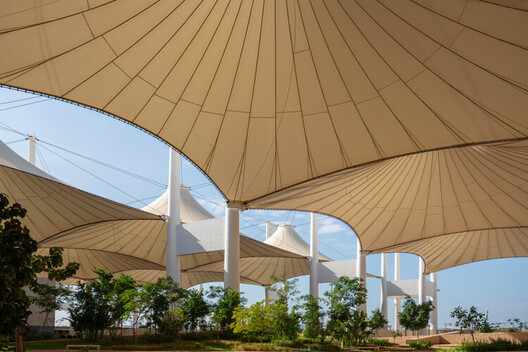
Abstract view of a large architectural canopy creating unique shapes and patterns against a clear blue sky. by Saad Alkot via Pexels

.

AlMusalla Jeddah

.

Jeddah, Saudi Arabia by World-Architects – 2025

.

AlMusalla Jeddah, Saudi Arabia: A New Era in Design

Foto © Diriyah Biennale Foundation, Photo by Mansor Alsofi

.

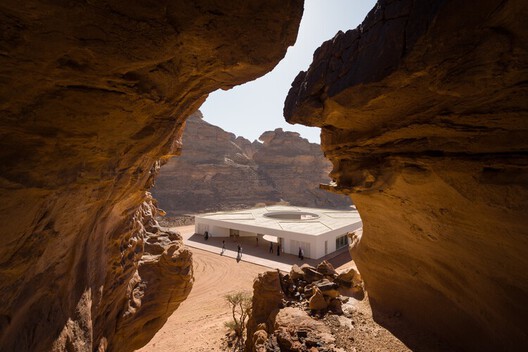
The Diriyah Biennale Foundation launched a new international architecture competition at the iconic Western Hajj Terminal that celebrates the architectural legacy of Muslim societies. The AlMusalla Prize reimagines future spaces of worship as modular, empowering, and transient. It not only pushes the paradigms on sustainable design and cutting-edge technology, but also emphasizes opportunities for dialogue and community building, reclaiming the true essence of a musalla space. The winning proposal by EAST Architecture Studio in collaboration with artist Rayyane Tabet and engineers AKT II features a structure inspired by regional weaving traditions and relies on waste materials derived from local date palm trees. The design consists of an open central courtyard and prayer spaces that form a structure that resembles a loom, addressing togetherness and proximity, which are core dimensions of prayer in Islam. This adaptable structure will be accessible to all visitors throughout the Biennale’s run.

On Weaving, winner of the Diriyah Biennale Foundation’s inaugural AlMusalla Prize, reconciles the historic and contemporary, giving new life to the ancient architectural traditions of Islamic prayer.

It brings together the legacy of courtyard typologies in places of worship, the tradition of using date palm trees as a building material in Saudi Arabia, and the art of weaving, referencing ancient textile making techniques that are indigenous to the Gulf region.

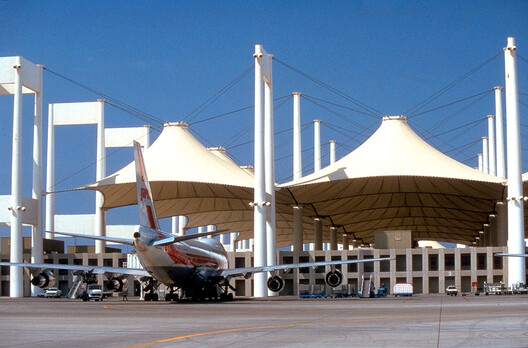
Set within the Western Hajj Terminal at King Abdulaziz International Airport in Jeddah, the gateway for pilgrims to Mecca and Medina, the design of the modular musalla; meaning a space for prayer; is an exemplary study in materiality, craft, contextuality and communality.

Created for the Islamic Arts Biennale in January 2025, the musalla is designed and engineered by EAST Architecture Studio in collaboration with international engineering firm AKT II, and Beirut and San Francisco-based artist Rayyane Tabet.

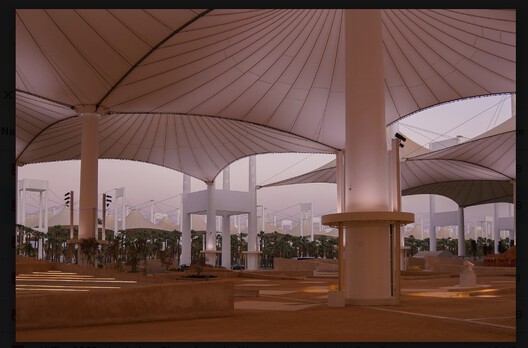
Not shy in scale to the vast semi-conical vents of the Hajj Terminal’s roof above, designed by Skidmore, Owings & Merrill, the musalla’s grand, modular date palm structure pays homage to Saudi Arabia’s culture and climate. Date palm, one of the region’s most prevalent natural resources, usually a waste product, is here used in abundance – creating a truly carbon-negative structure.

Drawing on regional craft and the tradition of weaving, the structure’s open central courtyard and woven-like prayer spaces evoke a loom, while its facades weave together palm fronds and fibers. Gaps in the translucent facades conduct and diffuse the light.
Set within a landscape grid inspired by the layout of palm-tree plantations, used for shade by local populations for millennia, the musalla is in dialogue with the wider desert environment.

Conversations continue back in the generous, communal central courtyard, whilst the prayer spaces, more contained, create a meditative atmosphere. Modular and multifunctional, the musalla, which can be dismantled and reassembled, will have a future life after the Biennale in Jeddah and beyond.

.

AlMusalla Jeddah, Saudi Arabia: A New Era in Design

Foto © Diriyah Biennale Foundation, Photo by Mansor Alsofi

.

AlMusalla Jeddah, Saudi Arabia: A New Era in Design

Foto © Diriyah Biennale Foundation, Photo by Mansor Alsofi

.

Foto © Diriyah Biennale Foundation, Photo by Mansor Alsofi

.

.


.
Soon, there will be so much electricity from renewables

Soon, there will be so much electricity from renewables

Aerial view of solar panels in a vast solar farm under bright sunlight. by K via Pexels

.

Soon, there will be so much electricity you might be paid to use it

.

By Amin Al-Habaibeh, Nottingham Trent University

.

Imagine a perfect summer weekend day: a cloudless blue sky with a gentle breeze. Solar panels are at full capacity, wind turbines are turning offshore – and many people are out and about, in gardens or parks. Electricity supply is high, but demand is low.

.

Simon Collins / shutterstock


Electricity systems must balance supply and demand in real time. In the above scenario, when renewables are producing lots of electricity but there isn’t much demand, energy companies may need to curtail output – disconnecting their turbines or panels from the grid, and essentially wasting clean energy that could have been generated. Hours later, when demand rises, that energy is no longer available.

In the UK, wind farms are already being paid to switch off on days when supply outstrips demand. Similar curtailment of renewable generation already happens regularly in places with lots of solar power such as California, Spain or Australia. As renewable energy continues to grow – and in the UK’s case, as cheap plug-in solar panels become available – this could happen a lot more often.

For example, April 22 2026 was a sunny day in the UK, with moderate wind. Solar generation reduced the demand for gas-generated electricity to almost zero. Had the wind speed been any higher, there could have been more electricity generation than demand.

The limits of supply and storage

One option would be to control the supply to try and match demand. When electricity mostly came from fossil fuels, this was easy enough – power plants would just burn less coal or gas. But you can’t control the weather, and you certainly can’t keep sunlight in a pile of fuel to use later. The electricity it generates is either used, stored or lost.

Another option would be to simply store that excess electricity until it’s needed. There are lots of approaches available, ranging from huge battery banks to pumped-storage hydro schemes that store energy by pumping water uphill before generating electricity when needed. Millions of electric car batteries could even become part of the grid.

But all these technologies remain expensive and limited in capacity. Not all surplus power can be saved for later.

Without other solutions, this mismatch can increase reliance on fossil fuels at times of high demand. The UK’s National Energy System Operator (Neso) recently warned it will need to use “more tools, more often” to keep the grid stable.

A simpler solution

A third option is to shift when people use electricity.

The use of renewable energy has made balancing the grid depend not just on supply – weather conditions – but on user behaviour. If people consume electricity when renewable energy is available, there would be less need for other sources of energy or for big investments in energy storage. That’s why shifting electricity demand is one of the simplest and cheapest ways to balance the grid.

Smart meters are already able to vary electricity prices throughout the day. In our summer weekend scenario, when electricity is cheap and plentiful but demand is minimal, a smart meter might advise you that prices have gone right down – or even turned negative – creating an incentive to heat water, wash clothes or charge electric cars. In effect, households would be paid to absorb excess renewable energy.

This would encourage people to install smart meters and change when they use electricity. It should be particularly useful for low-income households. And at the national level such payments can be cheaper overall than investments in energy storage or curtailing wind or solar farms and unleashing them later.

Paying people to use electricity may sound odd, but it represents the cost of keeping the system balanced.The Conversation

Amin Al-Habaibeh, Professor of Intelligent Engineering Systems, Nottingham Trent University

This article is republished from The Conversation under a Creative Commons license. Read the original article.

.


.