A New Energy Era: Full Renewable Energy Supply

A New Energy Era: Full Renewable Energy Supply

Combine harvester in wheat field with wind turbines, showcasing renewable energy and agriculture. by Anton Klyuchnikov via Pexels

.

A new energy era: full renewable energy supply is possible

.

Solar power, battery storage and digital energy technologies are converging into an integrated energy system that could deliver reliable renewable electricity around the clock, writes The smarter E Europe

.

Suddenly, everything happened very quickly: while solar power expanded only gradually in the early years of its commercial deployment, it has since become the world’s leading source of electricity generation. The rise of renewable energies is linked to a broader systemic shift that is driving and accelerating the growth of other cleantech sectors, most notably battery storage, electromobility and heat pumps. Flexibility has also emerged as a key priority and can serve as a balancing factor for the variability of renewables. The electrification of all sectors is widely considered a fundamental prerequisite for an efficient, cost-effective and resilient energy system.

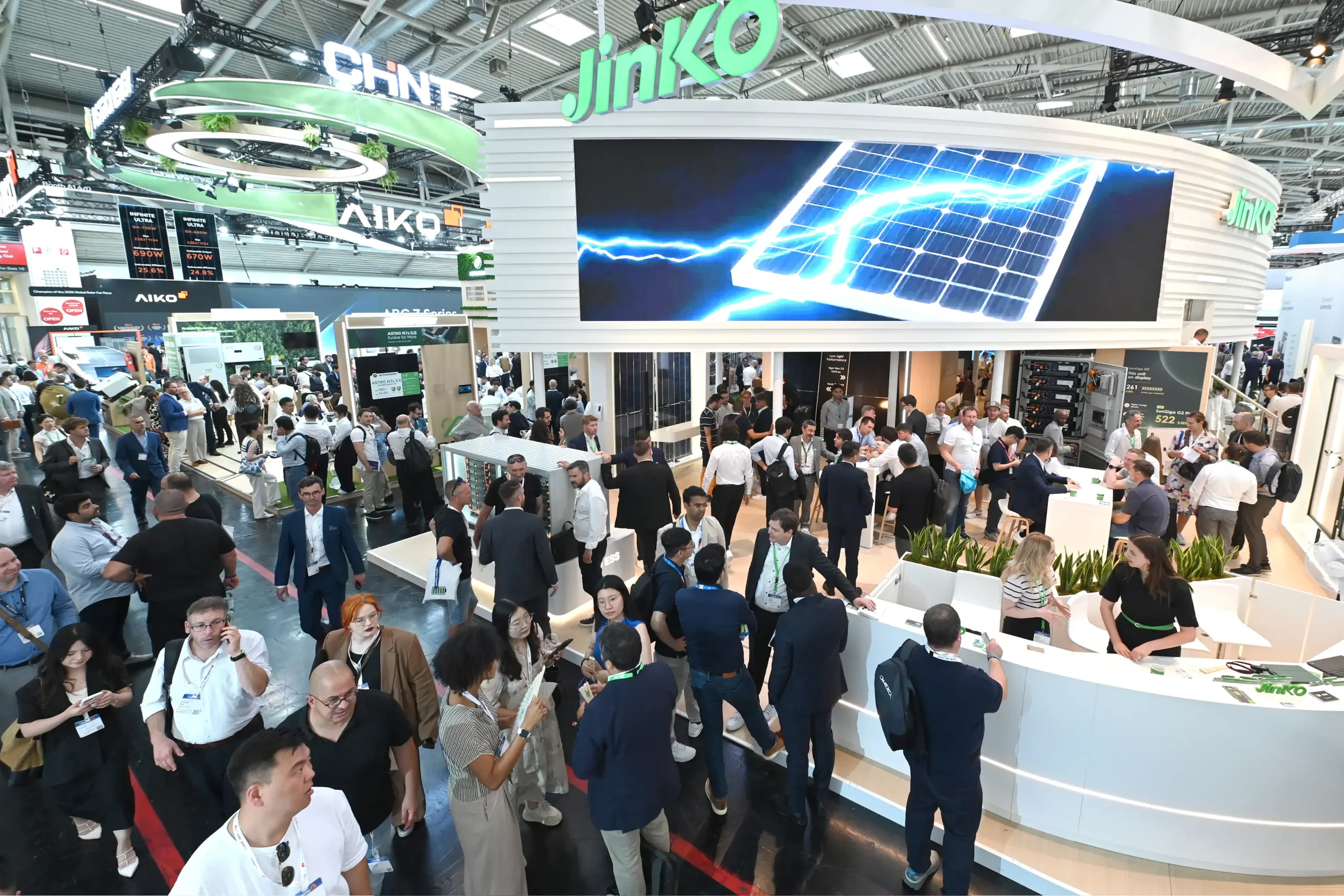
At the recent The smarter E Europe 2026, Europe’s largest alliance of exhibitions for the energy industry, 2,650 exhibitors offered around 105,000 visitors a glimpse into the components that can help make an integrated energy system successful. The Renewables 24/7 special exhibit, organised by Solar Promotion GmbH and Freiburg Wirtschaft Touristik und Messe GmbH & Co. KG, demonstrated how a round-the-clock renewable energy supply can work.
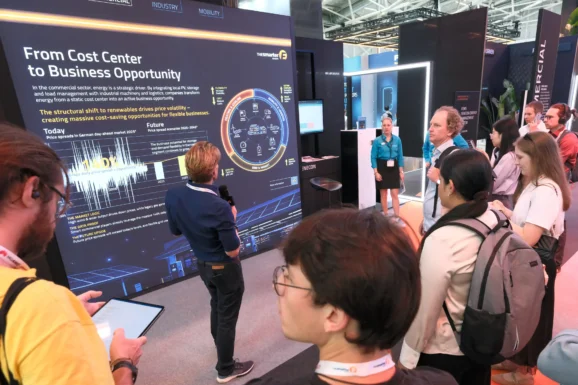
Delegates attend a presentation at the Renewables 24/7 special exhibit, exploring how flexibility, storage and smart energy management can support a fully renewable electricity system. Credit: Solar Promotion GmbH

Photovoltaics and battery storage: from niche to industry standard

According to Jaran Rystad, founder and CEO of the research and consulting firm Rystad Energy, speaking at The smarter E Europe, forecasts for photovoltaic expansion have consistently underestimated the pace of deployment, including those produced by his own company, although they were often regarded as overly optimistic when they were published. According to SolarPower Europe’s Global Market Outlook for Solar Power 2026–2030, a record 664 gigawatts (GW) of new photovoltaic capacity were installed worldwide in 2025, bringing global installed solar capacity above the three terawatt (TW) mark for the first time. The milestone carries symbolic significance: In 2025, solar power produced more electricity worldwide than wind power for the first time, becoming the largest single driver of global growth in energy generation, ahead of natural gas, oil and coal.
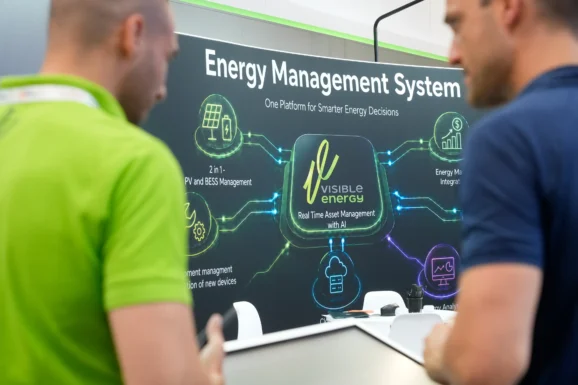
An energy management platform on display at The smarter E Europe 2026, illustrating how digital systems are being used to integrate solar power, battery storage and flexible electricity demand. Credit: Solar Promotion GmbH

China remained the world’s largest solar market, adding 382 GW of new capacity, equivalent to 57 per cent of global installations, although policy changes are expected to result in a temporary slowdown in 2026. Europe continued to be on course for growth: In 2025, the EU-27 once again installed more solar capacity than in the previous year, reaching approximately 67 GW. Solar power has become firmly established as a cornerstone of Europe’s electricity supply. In June 2025, photovoltaics temporarily covered more than 22 per cent of total electricity demand across the EU.

Europe’s battery storage market is expanding just as rapidly. SolarPower Europe’s European Battery Market Outlook 2026–2030 reports that 36 gigawatt hours (GWh) of new storage capacity were installed in 2025, a 48 per cent increase over the previous year, bringing Europe’s total installed storage capacity above 100 GWh for the first time. Utility-scale storage accounted for more than half of all new installations, also a first. This growth has been driven in no small part by the sharp decline in battery costs: Production costs for lithium-ion battery cells have fallen by around 85 per cent since 2010. By 2030, annual installations are expected to reach 138 GWh, almost four times the 2025 level. “We are entering the battery age,” said Markus Elsässer, CEO of Solar Promotion GmbH, at The smarter E Europe.

Together, these trends – driven by rapidly expanding solar output and growing storage capacity – are laying the foundation for a round-the-clock renewable energy supply. This vision was at the heart of the Renewables 24/7 special exhibit at the recent The smarter E Europe.

Economically viable, technically feasible: 24/7 renewable energy

Too expensive. Too unreliable. Technically impossible. These are among the most common misconceptions surrounding a fully renewable energy supply. The Renewables 24/7 special exhibit at The smarter E Europe 2026 addressed these misconceptions. The exhibit was based on the study Cost-Optimal Transformation of the German Energy System by 2045, prepared by the Fraunhofer Institute for Solar Energy Systems ISE. Both the study and the special exhibit demonstrate how an industrialised country such as Germany can achieve a completely climate-neutral energy system powered entirely by renewable energy in a way that is technically feasible, economically viable and socially manageable.
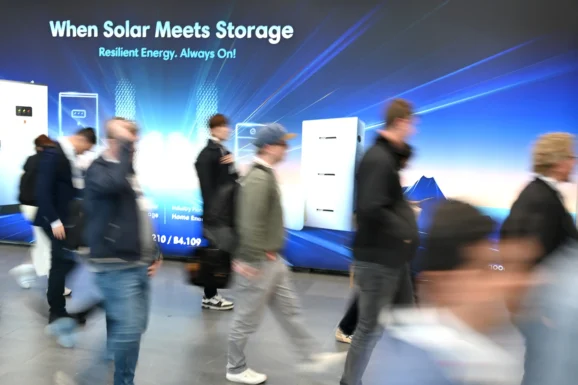
Visitors pass an exhibition highlighting the combination of solar generation and battery storage, technologies increasingly seen as central to round-the-clock renewable electricity. Credit: Solar Promotion GmbH

Through exhibits, expert presentations and practical examples, the special exhibit presented evidence challenging the assumption that extended periods of low wind and limited sunshine, often referred to as ‘dark doldrums’, represent an obstacle to a renewable energy system. Dr. Charlotte Senkspiel, one of the study’s lead authors at Fraunhofer ISE, explained: “The ‘dark doldrums’ account for only about one per cent of the year. Yes, we still need 100 gigawatts of dispatchable power generation for these periods, and seasonal hydrogen storage is the key to operating it.” The models used in the study and their visualisation at the special exhibit were based on the considerable expansion of storage capacity and increasing utilisation of flexibility. Examples include peak shaving in industry and commerce, demand-side flexibility across all consumption sectors and bidirectional charging of electric vehicles.

At Renewables 24/7, visitors saw to great effect how the individual technologies and applications underpinning the energy transition can efficiently work together as an integrated system. “Solar power, energy storage, e-mobility, power grids and digitalisation are not developing independently. They are converging into an integrated energy system,” said Markus Elsässer at the opening of the special exhibit.

A strong alliance of associations and industry backing the special exhibit

A broad coalition of leading industry associations supported the initiative. Supporters included the German Renewable Energy Federation (BEE), the German Association of Energy Market Innovators (bne), the German Solar Association (BSW-Solar), the German Solar Energy Society (DGS), the German Hydrogen Association (DWV), the Biogas Trade Association, VDMA (German Engineering Federation) Photovoltaics Equipment and VDMA Power Systems. It was also internationally backed by E-Mobility Europe, Energy Storage Europe (ESE), Smart Energy Europe (smartEn) and SolarPower Europe.
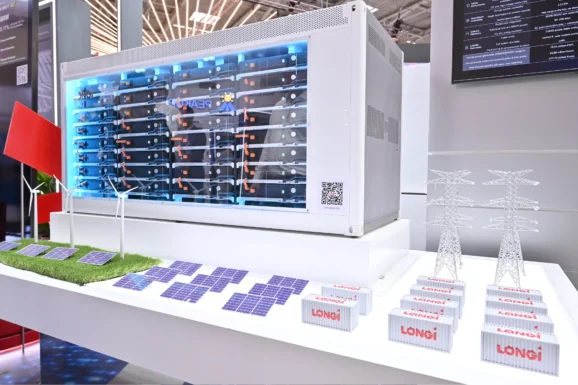
A utility-scale battery storage system exhibited at The smarter E Europe 2026, reflecting the rapid expansion of energy storage alongside solar power. Credit: Solar Promotion GmbH

Leading technology solution partners contributed to the special exhibit, presenting technical and commercial solutions. These included CATL, Energy3000, Fenecon, FoxESS, GE Vernova, Maxsolar, Octopus Energy and Siemens AG. Together, they showcased the technologies and solutions that can enable a fully renewable, round-the-clock energy supply.

Next steps: the solutions are here; policy must follow

The smarter E Europe 2026 and its Renewables 24/7 special exhibit demonstrated that the industry is already providing many of the technologies and products needed for a resilient, climate-neutral and cost-effective energy system. What is needed now is appropriate incentives from policymakers and institutions, as well as a consistent commitment to change. This is essential to address bottlenecks such as insufficient grid capacity and regulations that do not yet adequately support an integrated energy system.

.


.

MENA Power Sector Enters a Decisive Phase of Investment

MENA Power Sector Enters a Decisive Phase of Investment

Silhouettes of power pylons stand tall against a vibrant sunset in the countryside. by Devesh Kumar via Pexels

.

MENA power sector enters a decisive phase

.

04 August 2026

Population growth, urbanisation, gigaprojects and industrial demand are driving record investment in generation, transmission and smart grids. MEED

.


The Middle East and North Africa (Mena) power sector stands at a historic crossroads in 2026. Navigating a landscape of complex regional geopolitical tensions and shifting global dynamics, the region’s energy ecosystem is demonstrating remarkable resilience.

Far from slowing down, Mena nations are accelerating their energy transitions, proving that secure, sustainable infrastructure is the ultimate foundation for long-term economic stability.

Driven by visionary national strategies, the region is successfully transforming these macroeconomic headwinds into unprecedented commercial opportunities. Mena continues to break global records in low-cost utility-scale solar and wind deployment, while pioneering cross-border grid interconnections that fortify regional energy security.

.

Contract awards

Power project contracts worth $315.7bn have been awarded in the Mena region (across 14 countries) between 2016 and April 2026, with an annual average of $28.7bn.

Saudi Arabia holds the largest share in awarded value with just more than $135.2bn, followed by the UAE with $49.7bn.

Total contract values increased from approximately $12.8bn in 2016 to a peak of over $80bn in 2024, before moderating to around $66.9bn in 2025 and a projected $10.4bn in 2026. After an initial rise in 2017, awards declined in 2018-19, followed by a steady recovery from 2020 onwards, accelerating significantly in 2023 and reaching a historic high in 2024.

Sector-wise, generation projects consistently accounted for the majority share of investments ($215.2bn), while transmission projects with $100.5bn contributed a smaller but stable portion, with noticeable growth during peak investment years.

Power infrastructure now sits at the centre of economic transformation across the region

Installed capacity in the region continued to grow in 2026, driven by increasing power demand from the population and industrial growth. In absolute terms, Saudi Arabia was the leader in the Mena region, with an installed capacity of nearly 121.4GW in 2024, followed by Egypt, with nearly 63.5GW, and the UAE, with 45.5GW.

Although Saudi Arabia led in terms of total installed capacity, Morocco witnessed the largest increase in installed capacity between 2023 and 2024. With a 7.4% growth in electricity installed capacity, Morocco is driven by the National Energy Strategy that mandates 52% of total installed power capacity come from clean energy by 2030.

Download sample pages from MEED’s Mena Power Projects Market 2026 report here

.


.

UAE Professionals Taking on More Responsibilities and AI Use

UAE Professionals Taking on More Responsibilities and AI Use

A stunning view of the iconic Etihad Towers reaching toward the sky in Abu Dhabi. by Khalid via Pexels

.

UAE professionals taking on more responsibilities without more pay, study finds

.

Nearly half are working longer hours, while 73% now use AI to cope with growing workloads

.

Dhanusha Gokulan, Chief Reporter
Gulf News – Last updated: 

.

A new study by Robert Walters found that 79 per cent of UAE professionals say their job responsibilities have expanded over the past year, with many reporting longer working hours and increased use of AI to manage growing workloads. Picture used for illustrative purposes.

.A new study by Robert Walters found that 79 per cent of UAE professionals say their job responsibilities have expanded over the past year, with many reporting longer working hours and increased use of AI to manage growing workloads. Picture used for illustrative purposes.Virendra Saklani/Gulf News


.

Dubai: A new study has revealed that nearly eight in 10 professionals in the UAE say they are doing far more at work than they originally signed up for, with many taking on extra responsibilities without additional pay, promotions or formal recognition.

Global talent solutions firm Robert Walters found in its study titled “Shadow Workloads”: 79 per cent of UAE professionals said their roles had unofficially expanded over the past 12 months, creating what the company describes as “shadow workloads” — additional responsibilities that gradually build up without being formally acknowledged.

The findings suggest that many employees are coping by working longer hours. Almost half (49 per cent) said they are spending more time at work, while a quarter (25 per cent) said they delegate tasks wherever possible.

Despite the growing workload, only 17 per cent of professionals said they had spoken to their managers about the increase in responsibilities.

Andrew Powell, Chief Commercial Officer at Robert Walters, said many businesses are operating under financial pressure and are trying to achieve more with existing teams.

SPONSORED LINKS BY PROJECT AGORA

“Many organisations are navigating a tough operating environment right now, facing ongoing cost pressures and the need to deliver more with fewer resources,” he said.

He added that while it is natural for roles to evolve, problems arise when extra work is not formally recognised.

“When that shift happens without clear visibility or formal recognition, it can create ‘shadow workloads’ – where additional responsibilities build up informally over time.”

UAE workplaces adapting quickly

Oli Sanford-Scutt, Senior Director at Robert Walters Middle East, said professionals across the UAE are increasingly reporting that their roles have quietly expanded as businesses adapt to a rapidly changing environment.

“The UAE’s business environment moves fast, and organisations have had to adapt quickly, but that pace of change means additional responsibilities can accumulate before anyone has had a chance to address them,” he said.

He warned that if left unchecked, the added pressure could become normalised, increasing the risk of burnout and lower productivity.

AI helping workers — but also adding pressure

The report found that artificial intelligence is becoming a key tool for employees trying to keep up with growing workloads.

Nearly three-quarters (73 per cent) of UAE professionals said they now use AI tools to complete tasks they would not normally have been able to do.

The report also referred to a recent Harvard Business Review study, which found that AI adoption among employees at a US technology company expanded the scope of work, increased the pace of work and led to longer working hours, contributing to what it described as “workload creep”.

Powell said AI has clear productivity benefits but warned it must be introduced carefully.

“AI is already proving to be a powerful tool for boosting productivity and helping employees step into new areas more quickly.”

However, he added: “The challenge is ensuring it’s implemented in a way that genuinely reduces pressure rather than simply raising expectations.”

Sanford-Scutt said the UAE’s rapid adoption of AI gives businesses a competitive advantage, but it can also raise expectations of employees without formally changing their roles.

“When AI enables people to take on tasks beyond their usual remit, expectations can shift without anyone explicitly saying so.”

Burnout becoming more common

The research also found that many professionals are experiencing what it calls a “competence hangover” — a feeling of mental exhaustion, brain fog and emotional fatigue which comes after long periods of ‘high performance.’

More than two in five respondents (43 per cent) said they experience this regularly, while another 31 per cent said it happens from time to time.

Powell said taking on new responsibilities can benefit both employees and employers, but only if the extra effort is properly recognised and managed.

“If that effort isn’t recognised or managed effectively, it can lead to fatigue and diminishing returns, impacting everything from decision-making to overall productivity.”

He said organisations need to identify where workloads are increasing and respond by redistributing work, investing in better tools or bringing in temporary support where necessary.

“Ultimately, organisations that strike the right balance between efficiency and sustainable workloads will be better positioned to maintain long term performance.”

Dhanusha Gokulan
Dhanusha Gokulan, Chief Reporter
Dhanusha is a Chief Reporter at Gulf News in Dubai, with her finger firmly on the pulse of UAE, regional, and global aviation. She dives deep into how airlines and airports operate, expand, and embrace the latest tech.

.


.

Empowering Young People to Drive Sustainable Innovation

Empowering Young People to Drive Sustainable Innovation

A young woman using a laptop in a computer classroom setting.by Peter Kambey via Pexels

.

Empowering Young People to Shape a More Sustainable Future

.

UNDP –  August 3, 2026

“Unlocking the full potential of younger generations requires massive investment in inclusive quality education and training. Closing the skills gap can help create decent jobs and sustainable livelihoods at scale.” – United Nations Secretary-General António Guterres

.

Empowering Young People to Shape a More Sustainable Future

“Unlocking the full potential of younger generations requires massive investment in inclusive quality education and training. Closing the skills gap can help create decent jobs and sustainable livelihoods at scale.” – United Nations Secretary-General António Guterres

.

Every year, World Youth Skills Day reminds us that investing in young people is one of the most powerful investments societies can make. As the world navigates rapid technological change, climate challenges and evolving labour markets, equipping young people with the right skills has never been more important.

As United Nations Secretary-General António Guterres noted in his message for this year’s observance, unlocking the full potential of younger generations requires sustained investment in quality education and training. Closing the skills gap is not only essential for creating decent jobs, but also for building more inclusive, resilient and sustainable societies.

At UNDP Saudi Arabia, this vision is translated into action through a range of initiatives that empower young people with the knowledge, practical experience and opportunities they need to contribute to the Kingdom’s sustainable development journey under Vision 2030.

For the past three years, the UNDP Summer Academy Programme has opened the doors of the UNDP Country Office to aspiring young professionals, offering them a unique opportunity to work alongside UNDP teams and gain first-hand experience of the United Nations development system. Through mentorship, collaborative assignments and exposure to research, innovation and project development, participants strengthen both their technical and professional skills while deepening their understanding of the Sustainable Development Goals.

Young people also play an important role through the United Nations Volunteers (UNV) Programme, where national and international Youth UN Volunteers contribute to UNDP’s programme and operational work while developing valuable professional experience in an international development environment. The programme reflects UNDP’s commitment to creating meaningful pathways for youth engagement while strengthening national capacities.

Building technical expertise is equally central to UNDP’s partnerships. Through its collaboration with the Ministry of Environment, Water and Agriculture (MEWA) on Integrated Water Resources Management (IWRM), UNDP supports the Young Talent Programme, which combines technical training, mentorship and capacity development to prepare a new generation of highly qualified professionals in Saudi Arabia’s water sector. By investing in young talent today, the programme contributes to the long-term sustainability and resilience of one of the Kingdom’s most critical sectors.

UNDP also continues to promote scientific literacy as an essential skill for the future through its partnership with the King Abdullah University of Science and Technology (KAUST). Through the SDG Collection, developed with Frontiers for Young Minds, complex scientific research is transformed into accessible articles reviewed by young readers themselves. This innovative approach encourages curiosity, critical thinking and scientific communication while helping young people engage with global challenges such as land restoration, biodiversity and climate change.

Together, these initiatives reflect a shared belief that the skills of the future extend far beyond technical expertise. They include critical thinking, innovation, collaboration, scientific literacy and the confidence to turn knowledge into action. Whether through research, volunteering, mentorship or hands-on learning, UNDP is committed to creating opportunities that enable young people to grow as leaders, innovators and active contributors to sustainable development.

This commitment reflects UNDP’s broader mission to ensure that no one is left behind. By investing in young people from diverse backgrounds and equipping them with the skills to thrive in a changing world, UNDP is helping build stronger institutions, more resilient communities and a more inclusive future for all.

This World Youth Skills Day, we celebrate the energy, creativity and determination of young people across Saudi Arabia. They are not only preparing for the future. They are already helping to shape it.

.


.

From Humanitarian Aid to Investment-Led Development in Somalia

From Humanitarian Aid to Investment-Led Development in Somalia

A broad aerial view of a refugee camp with makeshift shelters and blue tarps in an urban area. by Abd Alrhman Al Darra via Pexels

.

Opinion: From Humanitarian Aid to Investment-Led Development: Somalia’s Path to Sustainable Growth

.

Dawan Africa, August 1, 2026
Opinion: From Humanitarian Aid to Investment-Led Development: Somalia’s Path to Sustainable Growth
By Said Abdirizak Ali – Senior Corporate Manager of NGOs & Climate Resilience Finance, International Bank of Somalia (IBS), Mogadishu, Somalia

“Sustainable development begins when humanitarian assistance creates pathways to investment, jobs, and resilient communities.”- Said Abdirizak Ali

.

For decades, humanitarian assistance has been a lifeline for Somalia, helping millions survive conflict, drought, floods, displacement, and food insecurity. While emergency aid remains indispensable during times of crisis, it cannot, on its own, generate lasting economic opportunities or reduce long-term dependence on external support.

Somalia now has a unique opportunity to transition from a development model centred primarily on relief to one driven by productive investment, financial inclusion, and private sector growth. This shift does not replace humanitarian assistance; rather, it complements it by helping communities become more resilient, self-reliant, and economically productive.

Investment-led development focuses on creating sustainable livelihoods instead of providing temporary relief. It enables farmers to increase agricultural productivity, supports entrepreneurs in expanding their businesses, creates employment for young people, empowers women-owned enterprises, and strengthens local markets.

More importantly, investment builds productive assets, raises incomes, and lays the foundation for long-term economic stability.

Several sectors offer significant investment opportunities across Somalia. Agriculture and livestock—the backbone of the national economy—can benefit from modern irrigation, mechanisation, veterinary services, and stronger value chains.

Fisheries, renewable energy, affordable housing, digital finance, and small and medium-sized enterprises (SMEs) also present considerable potential to generate employment, strengthen food security, increase exports, and stimulate inclusive growth.

International and local non-governmental organisations (NGOs) continue to play a critical role in Somalia’s development. Increasingly, many are expanding beyond emergency response by supporting enterprise development, providing technical assistance, strengthening community capacity, and preparing entrepreneurs to access commercial finance.

These efforts help reduce investment risks while ensuring that vulnerable communities are not left behind.

Financial institutions are equally central to this transformation. Banks can provide Islamic finance solutions, SME financing, climate finance, agricultural and livestock loans, trade finance, and digital banking services that enable businesses to grow.

 Beyond lending, they can promote financial literacy, encourage savings, and deliver advisory services that strengthen local enterprises and improve long-term business sustainability.

The greatest impact, however, will come from stronger partnerships among government institutions, development partners, NGOs, financial institutions, and private investors. Blended finance models—combining donor grants, technical assistance, and commercial financing—can mobilise greater investment while reducing risks for both lenders and entrepreneurs.

Matching grant programmes have already demonstrated how shared financing between donors, financial institutions, and business owners can strengthen local ownership and improve project sustainability.

Climate resilience must also remain at the heart of Somalia’s investment agenda. Investments in solar-powered irrigation, water harvesting, climate-smart agriculture, renewable energy, drought-resilient farming, and sustainable fisheries can help communities adapt to climate change while creating new economic opportunities and protecting livelihoods.

Women and young entrepreneurs deserve particular attention. Expanding access to finance, business development services, markets, and digital financial solutions can unlock their potential as drivers of innovation, job creation, and inclusive economic growth. Investing in their success is essential to Somalia’s long-term prosperity.

Ultimately, Somalia’s progress should not be measured by the volume of humanitarian assistance it receives, but by the number of businesses it nurtures, jobs it creates, investments it attracts, and resilient communities it builds.

Achieving this vision requires coordinated policies, innovative financing, and strong partnerships across both the public and private sectors.

The transition from humanitarian assistance to investment-led development is more than an economic strategy—it is a pathway toward a more resilient, inclusive, and prosperous Somalia.

 By investing in people, productive sectors, and sustainable financial systems, Somalia can transform recurring crises into lasting opportunities for growth, stability, and national development.

————

 Said Abdirizak Ali is Senior Corporate Manager of NGOs & Climate Resilience Finance, International Bank of Somalia (IBS), Mogadishu, Somalia

——-

Related articles

  • Lower Shabelle Launches Bank-Based Salary Payments for First Time in 35 Years
Lower Shabelle Launches Bank-Based Salary Payments for First Time in 35 Years
  • Djibouti Cuts Bottled Water Prices After Deal with Producers
Djibouti Cuts Bottled Water Prices After Deal with Producers