A New Energy Era: Full Renewable Energy Supply

A New Energy Era: Full Renewable Energy Supply

Combine harvester in wheat field with wind turbines, showcasing renewable energy and agriculture. by Anton Klyuchnikov via Pexels

.

A new energy era: full renewable energy supply is possible

.

Solar power, battery storage and digital energy technologies are converging into an integrated energy system that could deliver reliable renewable electricity around the clock, writes The smarter E Europe

.

Suddenly, everything happened very quickly: while solar power expanded only gradually in the early years of its commercial deployment, it has since become the world’s leading source of electricity generation. The rise of renewable energies is linked to a broader systemic shift that is driving and accelerating the growth of other cleantech sectors, most notably battery storage, electromobility and heat pumps. Flexibility has also emerged as a key priority and can serve as a balancing factor for the variability of renewables. The electrification of all sectors is widely considered a fundamental prerequisite for an efficient, cost-effective and resilient energy system.

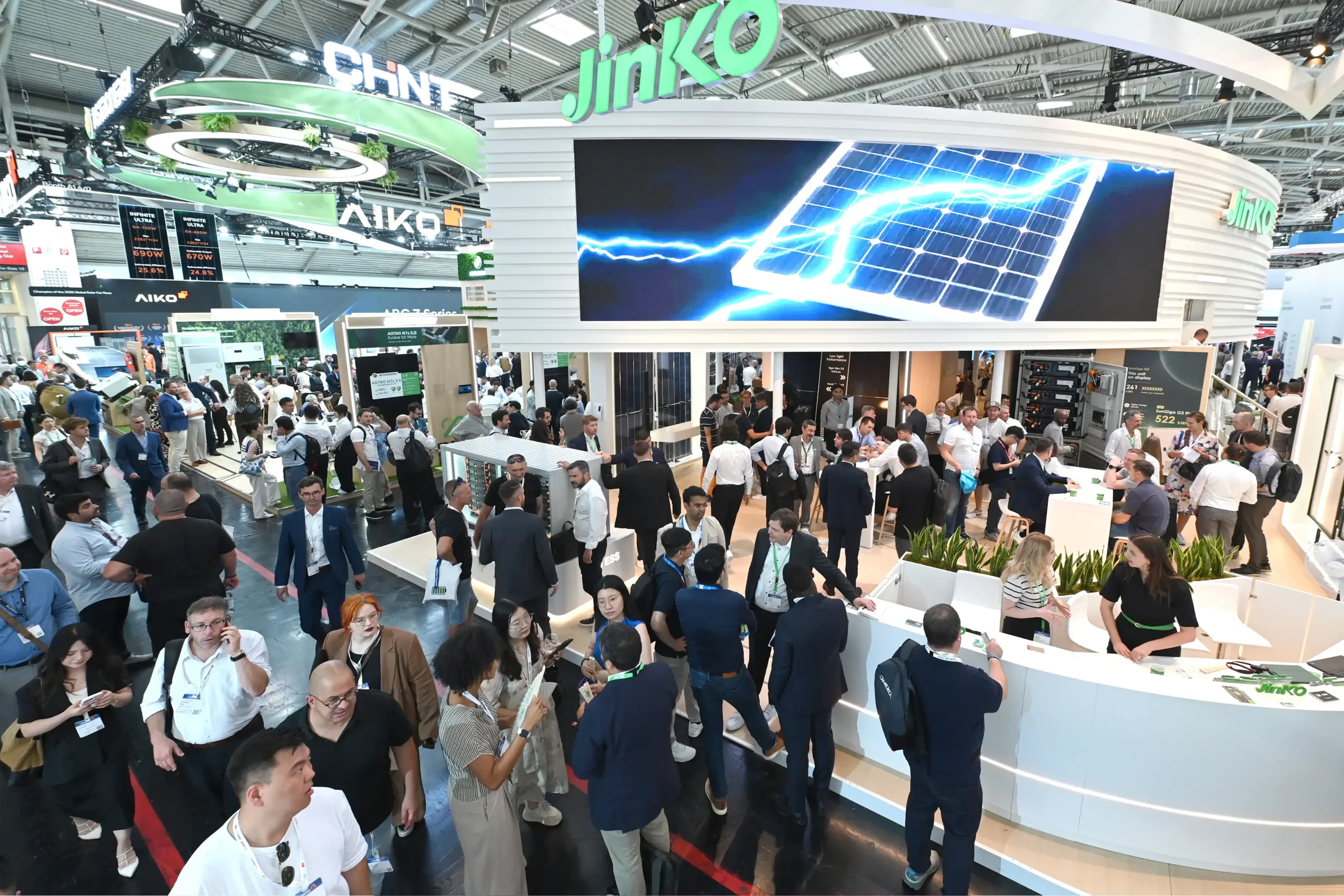
At the recent The smarter E Europe 2026, Europe’s largest alliance of exhibitions for the energy industry, 2,650 exhibitors offered around 105,000 visitors a glimpse into the components that can help make an integrated energy system successful. The Renewables 24/7 special exhibit, organised by Solar Promotion GmbH and Freiburg Wirtschaft Touristik und Messe GmbH & Co. KG, demonstrated how a round-the-clock renewable energy supply can work.
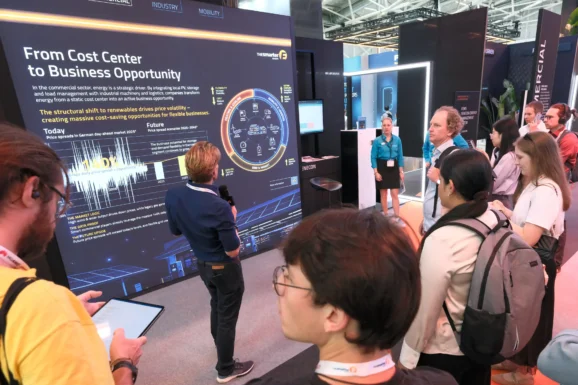
Delegates attend a presentation at the Renewables 24/7 special exhibit, exploring how flexibility, storage and smart energy management can support a fully renewable electricity system. Credit: Solar Promotion GmbH

Photovoltaics and battery storage: from niche to industry standard

According to Jaran Rystad, founder and CEO of the research and consulting firm Rystad Energy, speaking at The smarter E Europe, forecasts for photovoltaic expansion have consistently underestimated the pace of deployment, including those produced by his own company, although they were often regarded as overly optimistic when they were published. According to SolarPower Europe’s Global Market Outlook for Solar Power 2026–2030, a record 664 gigawatts (GW) of new photovoltaic capacity were installed worldwide in 2025, bringing global installed solar capacity above the three terawatt (TW) mark for the first time. The milestone carries symbolic significance: In 2025, solar power produced more electricity worldwide than wind power for the first time, becoming the largest single driver of global growth in energy generation, ahead of natural gas, oil and coal.
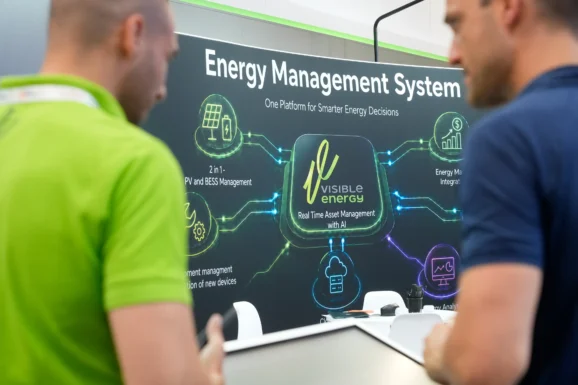
An energy management platform on display at The smarter E Europe 2026, illustrating how digital systems are being used to integrate solar power, battery storage and flexible electricity demand. Credit: Solar Promotion GmbH

China remained the world’s largest solar market, adding 382 GW of new capacity, equivalent to 57 per cent of global installations, although policy changes are expected to result in a temporary slowdown in 2026. Europe continued to be on course for growth: In 2025, the EU-27 once again installed more solar capacity than in the previous year, reaching approximately 67 GW. Solar power has become firmly established as a cornerstone of Europe’s electricity supply. In June 2025, photovoltaics temporarily covered more than 22 per cent of total electricity demand across the EU.

Europe’s battery storage market is expanding just as rapidly. SolarPower Europe’s European Battery Market Outlook 2026–2030 reports that 36 gigawatt hours (GWh) of new storage capacity were installed in 2025, a 48 per cent increase over the previous year, bringing Europe’s total installed storage capacity above 100 GWh for the first time. Utility-scale storage accounted for more than half of all new installations, also a first. This growth has been driven in no small part by the sharp decline in battery costs: Production costs for lithium-ion battery cells have fallen by around 85 per cent since 2010. By 2030, annual installations are expected to reach 138 GWh, almost four times the 2025 level. “We are entering the battery age,” said Markus Elsässer, CEO of Solar Promotion GmbH, at The smarter E Europe.

Together, these trends – driven by rapidly expanding solar output and growing storage capacity – are laying the foundation for a round-the-clock renewable energy supply. This vision was at the heart of the Renewables 24/7 special exhibit at the recent The smarter E Europe.

Economically viable, technically feasible: 24/7 renewable energy

Too expensive. Too unreliable. Technically impossible. These are among the most common misconceptions surrounding a fully renewable energy supply. The Renewables 24/7 special exhibit at The smarter E Europe 2026 addressed these misconceptions. The exhibit was based on the study Cost-Optimal Transformation of the German Energy System by 2045, prepared by the Fraunhofer Institute for Solar Energy Systems ISE. Both the study and the special exhibit demonstrate how an industrialised country such as Germany can achieve a completely climate-neutral energy system powered entirely by renewable energy in a way that is technically feasible, economically viable and socially manageable.
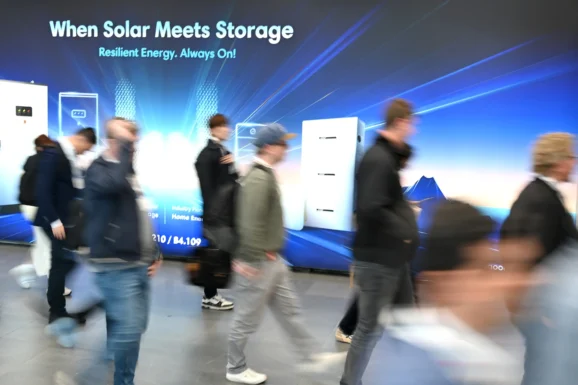
Visitors pass an exhibition highlighting the combination of solar generation and battery storage, technologies increasingly seen as central to round-the-clock renewable electricity. Credit: Solar Promotion GmbH

Through exhibits, expert presentations and practical examples, the special exhibit presented evidence challenging the assumption that extended periods of low wind and limited sunshine, often referred to as ‘dark doldrums’, represent an obstacle to a renewable energy system. Dr. Charlotte Senkspiel, one of the study’s lead authors at Fraunhofer ISE, explained: “The ‘dark doldrums’ account for only about one per cent of the year. Yes, we still need 100 gigawatts of dispatchable power generation for these periods, and seasonal hydrogen storage is the key to operating it.” The models used in the study and their visualisation at the special exhibit were based on the considerable expansion of storage capacity and increasing utilisation of flexibility. Examples include peak shaving in industry and commerce, demand-side flexibility across all consumption sectors and bidirectional charging of electric vehicles.

At Renewables 24/7, visitors saw to great effect how the individual technologies and applications underpinning the energy transition can efficiently work together as an integrated system. “Solar power, energy storage, e-mobility, power grids and digitalisation are not developing independently. They are converging into an integrated energy system,” said Markus Elsässer at the opening of the special exhibit.

A strong alliance of associations and industry backing the special exhibit

A broad coalition of leading industry associations supported the initiative. Supporters included the German Renewable Energy Federation (BEE), the German Association of Energy Market Innovators (bne), the German Solar Association (BSW-Solar), the German Solar Energy Society (DGS), the German Hydrogen Association (DWV), the Biogas Trade Association, VDMA (German Engineering Federation) Photovoltaics Equipment and VDMA Power Systems. It was also internationally backed by E-Mobility Europe, Energy Storage Europe (ESE), Smart Energy Europe (smartEn) and SolarPower Europe.
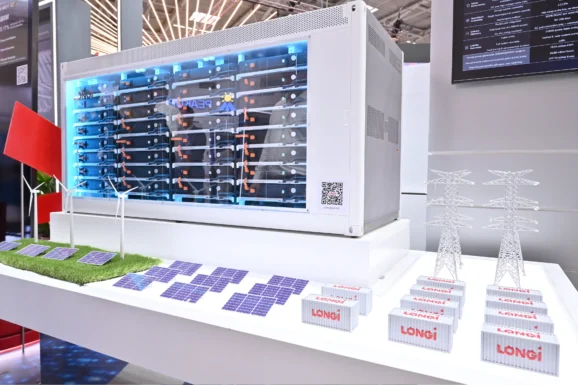
A utility-scale battery storage system exhibited at The smarter E Europe 2026, reflecting the rapid expansion of energy storage alongside solar power. Credit: Solar Promotion GmbH

Leading technology solution partners contributed to the special exhibit, presenting technical and commercial solutions. These included CATL, Energy3000, Fenecon, FoxESS, GE Vernova, Maxsolar, Octopus Energy and Siemens AG. Together, they showcased the technologies and solutions that can enable a fully renewable, round-the-clock energy supply.

Next steps: the solutions are here; policy must follow

The smarter E Europe 2026 and its Renewables 24/7 special exhibit demonstrated that the industry is already providing many of the technologies and products needed for a resilient, climate-neutral and cost-effective energy system. What is needed now is appropriate incentives from policymakers and institutions, as well as a consistent commitment to change. This is essential to address bottlenecks such as insufficient grid capacity and regulations that do not yet adequately support an integrated energy system.

.


.

MENA Power Sector Enters a Decisive Phase of Investment

MENA Power Sector Enters a Decisive Phase of Investment

Silhouettes of power pylons stand tall against a vibrant sunset in the countryside. by Devesh Kumar via Pexels

.

MENA power sector enters a decisive phase

.

04 August 2026

Population growth, urbanisation, gigaprojects and industrial demand are driving record investment in generation, transmission and smart grids. MEED

.


The Middle East and North Africa (Mena) power sector stands at a historic crossroads in 2026. Navigating a landscape of complex regional geopolitical tensions and shifting global dynamics, the region’s energy ecosystem is demonstrating remarkable resilience.

Far from slowing down, Mena nations are accelerating their energy transitions, proving that secure, sustainable infrastructure is the ultimate foundation for long-term economic stability.

Driven by visionary national strategies, the region is successfully transforming these macroeconomic headwinds into unprecedented commercial opportunities. Mena continues to break global records in low-cost utility-scale solar and wind deployment, while pioneering cross-border grid interconnections that fortify regional energy security.

.

Contract awards

Power project contracts worth $315.7bn have been awarded in the Mena region (across 14 countries) between 2016 and April 2026, with an annual average of $28.7bn.

Saudi Arabia holds the largest share in awarded value with just more than $135.2bn, followed by the UAE with $49.7bn.

Total contract values increased from approximately $12.8bn in 2016 to a peak of over $80bn in 2024, before moderating to around $66.9bn in 2025 and a projected $10.4bn in 2026. After an initial rise in 2017, awards declined in 2018-19, followed by a steady recovery from 2020 onwards, accelerating significantly in 2023 and reaching a historic high in 2024.

Sector-wise, generation projects consistently accounted for the majority share of investments ($215.2bn), while transmission projects with $100.5bn contributed a smaller but stable portion, with noticeable growth during peak investment years.

Power infrastructure now sits at the centre of economic transformation across the region

Installed capacity in the region continued to grow in 2026, driven by increasing power demand from the population and industrial growth. In absolute terms, Saudi Arabia was the leader in the Mena region, with an installed capacity of nearly 121.4GW in 2024, followed by Egypt, with nearly 63.5GW, and the UAE, with 45.5GW.

Although Saudi Arabia led in terms of total installed capacity, Morocco witnessed the largest increase in installed capacity between 2023 and 2024. With a 7.4% growth in electricity installed capacity, Morocco is driven by the National Energy Strategy that mandates 52% of total installed power capacity come from clean energy by 2030.

Download sample pages from MEED’s Mena Power Projects Market 2026 report here

.


.

UAE Professionals Taking on More Responsibilities and AI Use

UAE Professionals Taking on More Responsibilities and AI Use

A stunning view of the iconic Etihad Towers reaching toward the sky in Abu Dhabi. by Khalid via Pexels

.

UAE professionals taking on more responsibilities without more pay, study finds

.

Nearly half are working longer hours, while 73% now use AI to cope with growing workloads

.

Dhanusha Gokulan, Chief Reporter
Gulf News – Last updated: 

.

A new study by Robert Walters found that 79 per cent of UAE professionals say their job responsibilities have expanded over the past year, with many reporting longer working hours and increased use of AI to manage growing workloads. Picture used for illustrative purposes.

.A new study by Robert Walters found that 79 per cent of UAE professionals say their job responsibilities have expanded over the past year, with many reporting longer working hours and increased use of AI to manage growing workloads. Picture used for illustrative purposes.Virendra Saklani/Gulf News


.

Dubai: A new study has revealed that nearly eight in 10 professionals in the UAE say they are doing far more at work than they originally signed up for, with many taking on extra responsibilities without additional pay, promotions or formal recognition.

Global talent solutions firm Robert Walters found in its study titled “Shadow Workloads”: 79 per cent of UAE professionals said their roles had unofficially expanded over the past 12 months, creating what the company describes as “shadow workloads” — additional responsibilities that gradually build up without being formally acknowledged.

The findings suggest that many employees are coping by working longer hours. Almost half (49 per cent) said they are spending more time at work, while a quarter (25 per cent) said they delegate tasks wherever possible.

Despite the growing workload, only 17 per cent of professionals said they had spoken to their managers about the increase in responsibilities.

Andrew Powell, Chief Commercial Officer at Robert Walters, said many businesses are operating under financial pressure and are trying to achieve more with existing teams.

SPONSORED LINKS BY PROJECT AGORA

“Many organisations are navigating a tough operating environment right now, facing ongoing cost pressures and the need to deliver more with fewer resources,” he said.

He added that while it is natural for roles to evolve, problems arise when extra work is not formally recognised.

“When that shift happens without clear visibility or formal recognition, it can create ‘shadow workloads’ – where additional responsibilities build up informally over time.”

UAE workplaces adapting quickly

Oli Sanford-Scutt, Senior Director at Robert Walters Middle East, said professionals across the UAE are increasingly reporting that their roles have quietly expanded as businesses adapt to a rapidly changing environment.

“The UAE’s business environment moves fast, and organisations have had to adapt quickly, but that pace of change means additional responsibilities can accumulate before anyone has had a chance to address them,” he said.

He warned that if left unchecked, the added pressure could become normalised, increasing the risk of burnout and lower productivity.

AI helping workers — but also adding pressure

The report found that artificial intelligence is becoming a key tool for employees trying to keep up with growing workloads.

Nearly three-quarters (73 per cent) of UAE professionals said they now use AI tools to complete tasks they would not normally have been able to do.

The report also referred to a recent Harvard Business Review study, which found that AI adoption among employees at a US technology company expanded the scope of work, increased the pace of work and led to longer working hours, contributing to what it described as “workload creep”.

Powell said AI has clear productivity benefits but warned it must be introduced carefully.

“AI is already proving to be a powerful tool for boosting productivity and helping employees step into new areas more quickly.”

However, he added: “The challenge is ensuring it’s implemented in a way that genuinely reduces pressure rather than simply raising expectations.”

Sanford-Scutt said the UAE’s rapid adoption of AI gives businesses a competitive advantage, but it can also raise expectations of employees without formally changing their roles.

“When AI enables people to take on tasks beyond their usual remit, expectations can shift without anyone explicitly saying so.”

Burnout becoming more common

The research also found that many professionals are experiencing what it calls a “competence hangover” — a feeling of mental exhaustion, brain fog and emotional fatigue which comes after long periods of ‘high performance.’

More than two in five respondents (43 per cent) said they experience this regularly, while another 31 per cent said it happens from time to time.

Powell said taking on new responsibilities can benefit both employees and employers, but only if the extra effort is properly recognised and managed.

“If that effort isn’t recognised or managed effectively, it can lead to fatigue and diminishing returns, impacting everything from decision-making to overall productivity.”

He said organisations need to identify where workloads are increasing and respond by redistributing work, investing in better tools or bringing in temporary support where necessary.

“Ultimately, organisations that strike the right balance between efficiency and sustainable workloads will be better positioned to maintain long term performance.”

Dhanusha Gokulan
Dhanusha Gokulan, Chief Reporter
Dhanusha is a Chief Reporter at Gulf News in Dubai, with her finger firmly on the pulse of UAE, regional, and global aviation. She dives deep into how airlines and airports operate, expand, and embrace the latest tech.

.


.

Saudi Arabia Rediscovers Clay for Sustainable Building

Saudi Arabia Rediscovers Clay for Sustainable Building

Low-angle view of a modern hotel in Makkah under a clear blue sky. by Maddy via Pexels

.

Saudi Arabia rediscovers clay as ancient building material finds new role in Vision 2030 projects

.

Rahaf Jambi

.

Updated 31 July 2026

RIYADH: Clay has shaped Saudi Arabia’s architecture for centuries. Now, as the Kingdom’s construction boom accelerates, the ancient material is making a comeback in luxury hotels, cultural landmarks and modern homes as developers seek healthier, lower-carbon building finishes.

The renewed interest reflects a broader shift in Saudi Arabia’s construction sector, where sustainability has become as important as speed and scale. Alongside giga-projects, architects are increasingly turning to natural materials that reduce environmental impact while preserving the Kingdom’s architectural identity.

Long before concrete became the global standard, Saudi builders relied on locally sourced clay to construct homes naturally suited to the desert climate. Thick earthen walls helped to regulate indoor temperatures, while clay’s ability to absorb and release moisture created comfortable interiors without mechanical cooling.

Today, those same principles are returning with modern engineering.

From the restoration of historic mud-brick districts to contemporary developments inspired by traditional architecture, clay is increasingly viewed as both a cultural and environmental asset. Projects such as Diriyah, Red Sea Global developments and the Tuwaiq Heritage Tower demonstrate how traditional earth-based construction methods can be adapted for modern buildings while maintaining the character of Saudi architecture.

The environmental benefits extend beyond heritage preservation.

Unlike cement- or acrylic-based finishes, natural clay plasters require significantly less energy to produce because they are dried rather than fired or chemically manufactured. They contain little or no volatile organic compounds, helping to improve indoor air quality, while their hygroscopic properties allow them to naturally regulate humidity inside buildings.

Perhaps most importantly for Saudi Arabia’s ambitious construction pipeline, clay contributes to lowering embodied carbon — the greenhouse gas emissions generated through extracting, manufacturing, transporting and installing building materials.

Majed Al-Qatari, a Saudi sustainability expert, said that the Kingdom’s unprecedented construction presented an opportunity to rethink not only how buildings were designed but also the materials used to build them.

“Saudi Arabia’s boom in construction paves the way for a much-needed consideration of not just construction volume, but also construction materials,” he told Arab News.


James Bryce, Clayworks’ representative for Saudi Arabia and the wider GCC, said the company’s expansion into the Kingdom was driven by increasing demand rather than a planned market entry. (SUPPLIED)


“Natural materials such as clay can help minimize embodied carbon, which refers to greenhouse gas emissions associated with material extraction, manufacturing, transport and installation. Clay requires less industrial processing than many conventional finishing materials, contains no petrochemical binders and can often be sourced locally, reducing transportation emissions while supporting circular economy principles.”

Al-Qatari said that clay also offered operational advantages beyond reducing emissions.

“Clay finishes naturally regulate indoor humidity, improve thermal comfort and are free from volatile organic compounds, creating healthier indoor environments,” he said. “While clay is not intended to replace structural materials such as concrete or steel, it has significant potential as a scalable finishing material that combines traditional building knowledge with modern engineering.”

He added that studies consistently showed that natural clay finishes had substantially lower embodied carbon than acrylic- or cement-based coatings while also requiring less maintenance throughout a building’s life cycle.

“The ecological advantage does not stop at carbon emissions,” he said. “Clay finishes are breathable, repairable and recyclable, making them one of the lowest-impact finishing materials available as Saudi Arabia accelerates sustainable construction and green building certification.”

The growing interest was on display on July 27 when Conmarble Atelier hosted British natural plaster manufacturer Clayworks for an interactive workshop in Riyadh, inviting architects, designers and industry professionals to experience traditional clay plastering techniques firsthand.

Participants applied the company’s natural clay finishes themselves, reflecting growing demand for materials that combine sustainability with contemporary design.

For Clayworks, the workshop represented more than a product launch. It reflected what the company sees as a rapidly expanding Saudi market driven by Vision 2030 developments.

“We started getting lots of specifications from architects and designers in Saudi Arabia about five years ago,” James Bryce, Clayworks’ representative for Saudi Arabia and the wider GCC, told Arab News.

“The volume kept increasing to the point that we couldn’t ignore it anymore, which is why we needed to be present here and tailor our designs to Saudi Arabia.”

The company now supplies projects including developments by Red Sea Global and Diriyah, where designers are incorporating natural clay finishes into hotels, cultural venues and luxury residential spaces.

Bryce believes Saudi Arabia’s long relationship with earthen architecture gives the Kingdom a distinct advantage compared with many international markets.

“Saudi Arabia has a very strong tradition and relationship with earth and natural materials,” he said. “Where we can show designs that are sensitive to that tradition while also making them contemporary for the future, we’ve found the right balance.”

Unlike conventional paints, Clayworks’ products are made entirely from natural clay. Different textures and finishes are achieved by varying application techniques rather than changing the material itself, allowing designers to create smooth bedroom walls, textured feature spaces or water-resistant bathroom finishes using the same natural base.

“The material is the same. It’s earth. It’s clay,” Bryce said. “What changes is the design around how the client, architect or homeowner wants the space to feel.”

As Saudi Arabia continues investing in tourism, hospitality, residential communities and cultural destinations, demand for environmentally responsible building materials is expected to grow alongside construction activity. In many ways, the Kingdom is returning to one of its oldest building materials not as a relic of the past, but as a practical solution for creating healthier, more sustainable buildings for the future.

.

.


.

Jeddah Tower to Become World’s Tallest Skyscraper Progress

Jeddah Tower to Become World’s Tallest Skyscraper Progress

Scenic view of Dubai skyline with Burj Khalifa at sunset and full moon in the sky. by Sanat Anghan via Pexels

.

Jeddah Tower on Course to Become World’s Tallest Skyscraper as Building Hits 430m Mark

.

.

Once completed, the tower is expected to surpass Dubai’s Burj Khalifa, becoming the first skyscraper to exceed 1 km in height

.

Jeddah Tower on Course to Become World's Tallest Skyscraper as Building hits 430m Mark

.

Saudi Arabia’s landmark mixed-use skyscraper, Jeddah Tower, has achieved a major construction milestone this month, reaching 430m in stature.

Saudi Arabia’s landmark mixed-use skyscraper, Jeddah Tower, has achieved a major construction milestone this month, reaching 430m in stature.

.

Highlights

Saudi Arabia’s landmark mixed-use skyscraper, Jeddah Tower, has achieved a major construction milestone this month, reaching 430m in stature. With a planned height of over 1,000m, the building will become the tallest in the world, once completed.

Development Firms

The project is being developed by Jeddah Economic Company (JEC), a prominent Saudi real estate development firm, heavily backed by Saudi billionaire Prince Alwaleed bin Talal’s Kingdom Holding Company, which is also a major international investment firm. The JEC is managing the project in co-operation with renowned architects Adrian Smith & Gordon Gill Architecture, and engineers from Thornton Tomasetti and Langan International.

Prince Alwaleed reaffirmed his commitment to “completing the world's tallest tower.
Prince Alwaleed reaffirmed his commitment to “completing the world’s tallest tower”

.

Centrepiece of the City

Jeddah Tower serves as the centrepiece of the city’s broader Economic City, a 57-million-sq-ft development designed to reposition the kingdom as a premier global hub for business and luxury tourism.

Once completed, the tower is expected to surpass Dubai’s Burj Khalifa, becoming the first skyscraper to exceed 1-km in height. The mixed-use building will boast residences, a luxury hotel, office spaces and one of the world’s highest observation decks.

.

.


.