A New Energy Era: Full Renewable Energy Supply

A New Energy Era: Full Renewable Energy Supply

Combine harvester in wheat field with wind turbines, showcasing renewable energy and agriculture. by Anton Klyuchnikov via Pexels

.

A new energy era: full renewable energy supply is possible

.

Solar power, battery storage and digital energy technologies are converging into an integrated energy system that could deliver reliable renewable electricity around the clock, writes The smarter E Europe

.

Suddenly, everything happened very quickly: while solar power expanded only gradually in the early years of its commercial deployment, it has since become the world’s leading source of electricity generation. The rise of renewable energies is linked to a broader systemic shift that is driving and accelerating the growth of other cleantech sectors, most notably battery storage, electromobility and heat pumps. Flexibility has also emerged as a key priority and can serve as a balancing factor for the variability of renewables. The electrification of all sectors is widely considered a fundamental prerequisite for an efficient, cost-effective and resilient energy system.

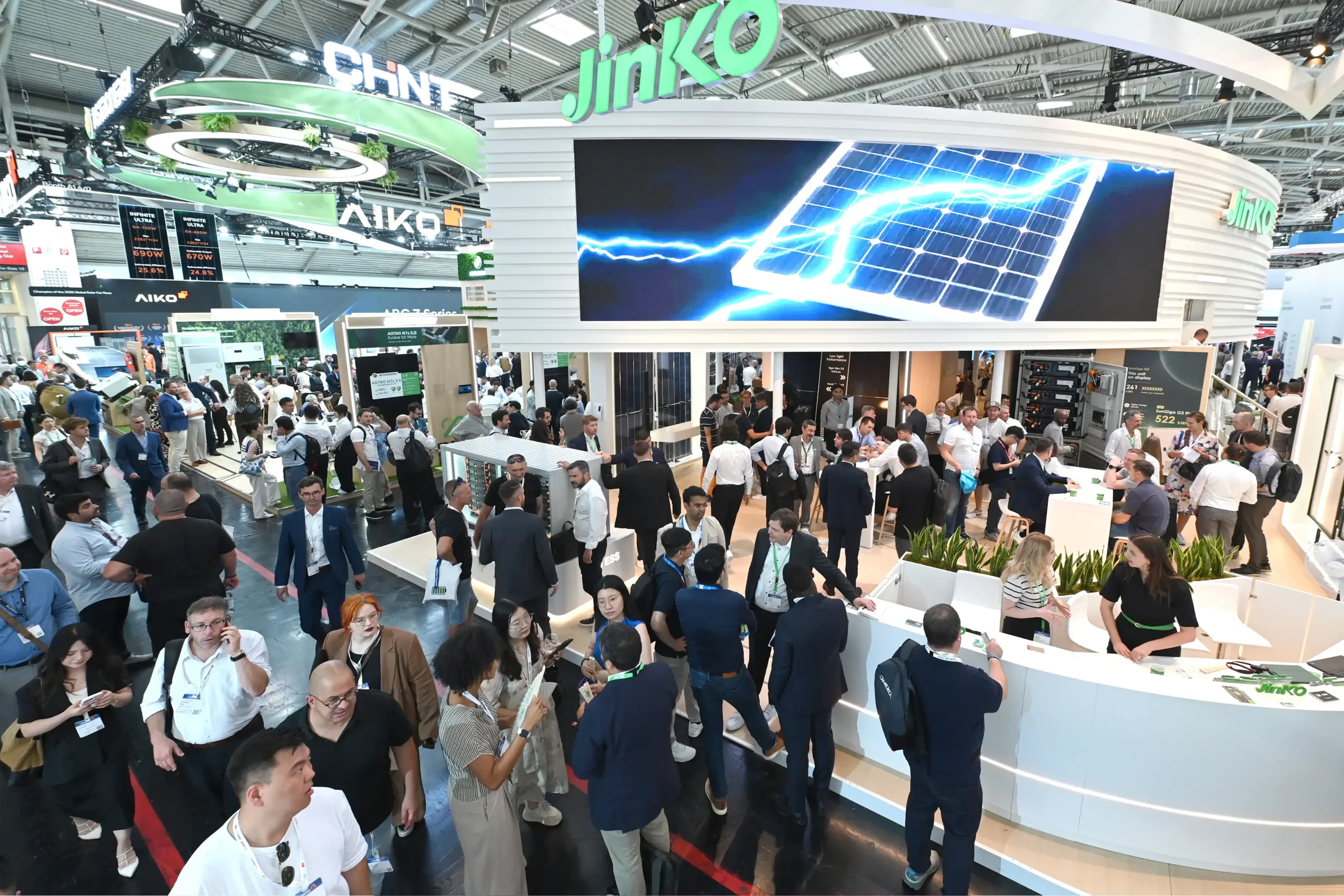
At the recent The smarter E Europe 2026, Europe’s largest alliance of exhibitions for the energy industry, 2,650 exhibitors offered around 105,000 visitors a glimpse into the components that can help make an integrated energy system successful. The Renewables 24/7 special exhibit, organised by Solar Promotion GmbH and Freiburg Wirtschaft Touristik und Messe GmbH & Co. KG, demonstrated how a round-the-clock renewable energy supply can work.
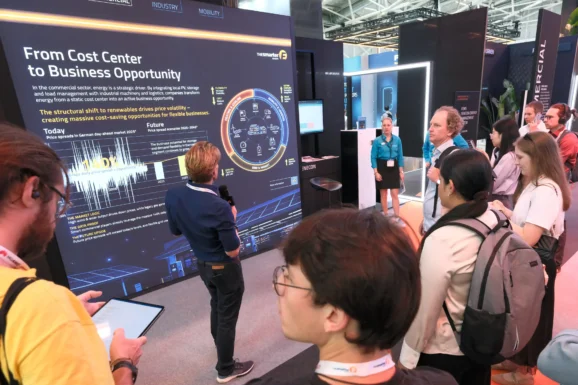
Delegates attend a presentation at the Renewables 24/7 special exhibit, exploring how flexibility, storage and smart energy management can support a fully renewable electricity system. Credit: Solar Promotion GmbH

Photovoltaics and battery storage: from niche to industry standard

According to Jaran Rystad, founder and CEO of the research and consulting firm Rystad Energy, speaking at The smarter E Europe, forecasts for photovoltaic expansion have consistently underestimated the pace of deployment, including those produced by his own company, although they were often regarded as overly optimistic when they were published. According to SolarPower Europe’s Global Market Outlook for Solar Power 2026–2030, a record 664 gigawatts (GW) of new photovoltaic capacity were installed worldwide in 2025, bringing global installed solar capacity above the three terawatt (TW) mark for the first time. The milestone carries symbolic significance: In 2025, solar power produced more electricity worldwide than wind power for the first time, becoming the largest single driver of global growth in energy generation, ahead of natural gas, oil and coal.
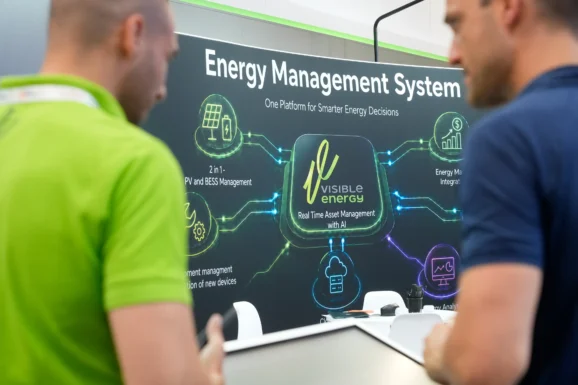
An energy management platform on display at The smarter E Europe 2026, illustrating how digital systems are being used to integrate solar power, battery storage and flexible electricity demand. Credit: Solar Promotion GmbH

China remained the world’s largest solar market, adding 382 GW of new capacity, equivalent to 57 per cent of global installations, although policy changes are expected to result in a temporary slowdown in 2026. Europe continued to be on course for growth: In 2025, the EU-27 once again installed more solar capacity than in the previous year, reaching approximately 67 GW. Solar power has become firmly established as a cornerstone of Europe’s electricity supply. In June 2025, photovoltaics temporarily covered more than 22 per cent of total electricity demand across the EU.

Europe’s battery storage market is expanding just as rapidly. SolarPower Europe’s European Battery Market Outlook 2026–2030 reports that 36 gigawatt hours (GWh) of new storage capacity were installed in 2025, a 48 per cent increase over the previous year, bringing Europe’s total installed storage capacity above 100 GWh for the first time. Utility-scale storage accounted for more than half of all new installations, also a first. This growth has been driven in no small part by the sharp decline in battery costs: Production costs for lithium-ion battery cells have fallen by around 85 per cent since 2010. By 2030, annual installations are expected to reach 138 GWh, almost four times the 2025 level. “We are entering the battery age,” said Markus Elsässer, CEO of Solar Promotion GmbH, at The smarter E Europe.

Together, these trends – driven by rapidly expanding solar output and growing storage capacity – are laying the foundation for a round-the-clock renewable energy supply. This vision was at the heart of the Renewables 24/7 special exhibit at the recent The smarter E Europe.

Economically viable, technically feasible: 24/7 renewable energy

Too expensive. Too unreliable. Technically impossible. These are among the most common misconceptions surrounding a fully renewable energy supply. The Renewables 24/7 special exhibit at The smarter E Europe 2026 addressed these misconceptions. The exhibit was based on the study Cost-Optimal Transformation of the German Energy System by 2045, prepared by the Fraunhofer Institute for Solar Energy Systems ISE. Both the study and the special exhibit demonstrate how an industrialised country such as Germany can achieve a completely climate-neutral energy system powered entirely by renewable energy in a way that is technically feasible, economically viable and socially manageable.
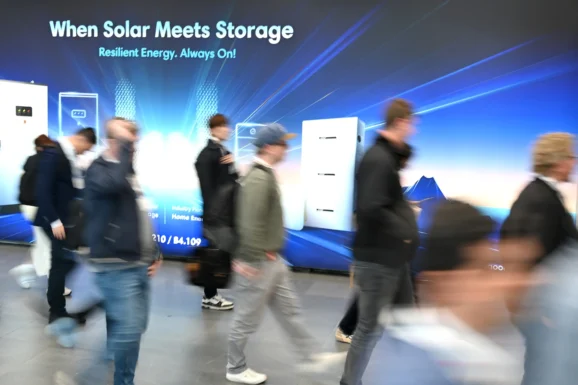
Visitors pass an exhibition highlighting the combination of solar generation and battery storage, technologies increasingly seen as central to round-the-clock renewable electricity. Credit: Solar Promotion GmbH

Through exhibits, expert presentations and practical examples, the special exhibit presented evidence challenging the assumption that extended periods of low wind and limited sunshine, often referred to as ‘dark doldrums’, represent an obstacle to a renewable energy system. Dr. Charlotte Senkspiel, one of the study’s lead authors at Fraunhofer ISE, explained: “The ‘dark doldrums’ account for only about one per cent of the year. Yes, we still need 100 gigawatts of dispatchable power generation for these periods, and seasonal hydrogen storage is the key to operating it.” The models used in the study and their visualisation at the special exhibit were based on the considerable expansion of storage capacity and increasing utilisation of flexibility. Examples include peak shaving in industry and commerce, demand-side flexibility across all consumption sectors and bidirectional charging of electric vehicles.

At Renewables 24/7, visitors saw to great effect how the individual technologies and applications underpinning the energy transition can efficiently work together as an integrated system. “Solar power, energy storage, e-mobility, power grids and digitalisation are not developing independently. They are converging into an integrated energy system,” said Markus Elsässer at the opening of the special exhibit.

A strong alliance of associations and industry backing the special exhibit

A broad coalition of leading industry associations supported the initiative. Supporters included the German Renewable Energy Federation (BEE), the German Association of Energy Market Innovators (bne), the German Solar Association (BSW-Solar), the German Solar Energy Society (DGS), the German Hydrogen Association (DWV), the Biogas Trade Association, VDMA (German Engineering Federation) Photovoltaics Equipment and VDMA Power Systems. It was also internationally backed by E-Mobility Europe, Energy Storage Europe (ESE), Smart Energy Europe (smartEn) and SolarPower Europe.
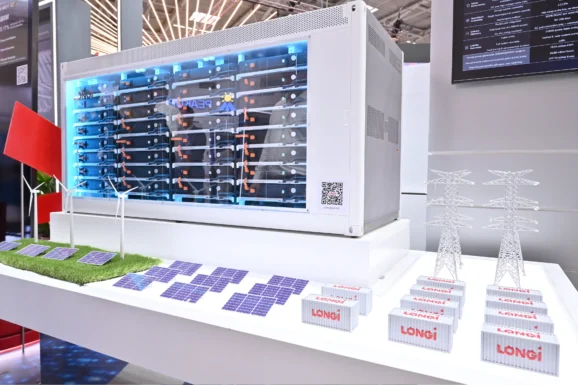
A utility-scale battery storage system exhibited at The smarter E Europe 2026, reflecting the rapid expansion of energy storage alongside solar power. Credit: Solar Promotion GmbH

Leading technology solution partners contributed to the special exhibit, presenting technical and commercial solutions. These included CATL, Energy3000, Fenecon, FoxESS, GE Vernova, Maxsolar, Octopus Energy and Siemens AG. Together, they showcased the technologies and solutions that can enable a fully renewable, round-the-clock energy supply.

Next steps: the solutions are here; policy must follow

The smarter E Europe 2026 and its Renewables 24/7 special exhibit demonstrated that the industry is already providing many of the technologies and products needed for a resilient, climate-neutral and cost-effective energy system. What is needed now is appropriate incentives from policymakers and institutions, as well as a consistent commitment to change. This is essential to address bottlenecks such as insufficient grid capacity and regulations that do not yet adequately support an integrated energy system.

.


.

MENA Power Sector Enters a Decisive Phase of Investment

MENA Power Sector Enters a Decisive Phase of Investment

Silhouettes of power pylons stand tall against a vibrant sunset in the countryside. by Devesh Kumar via Pexels

.

MENA power sector enters a decisive phase

.

04 August 2026

Population growth, urbanisation, gigaprojects and industrial demand are driving record investment in generation, transmission and smart grids. MEED

.


The Middle East and North Africa (Mena) power sector stands at a historic crossroads in 2026. Navigating a landscape of complex regional geopolitical tensions and shifting global dynamics, the region’s energy ecosystem is demonstrating remarkable resilience.

Far from slowing down, Mena nations are accelerating their energy transitions, proving that secure, sustainable infrastructure is the ultimate foundation for long-term economic stability.

Driven by visionary national strategies, the region is successfully transforming these macroeconomic headwinds into unprecedented commercial opportunities. Mena continues to break global records in low-cost utility-scale solar and wind deployment, while pioneering cross-border grid interconnections that fortify regional energy security.

.

Contract awards

Power project contracts worth $315.7bn have been awarded in the Mena region (across 14 countries) between 2016 and April 2026, with an annual average of $28.7bn.

Saudi Arabia holds the largest share in awarded value with just more than $135.2bn, followed by the UAE with $49.7bn.

Total contract values increased from approximately $12.8bn in 2016 to a peak of over $80bn in 2024, before moderating to around $66.9bn in 2025 and a projected $10.4bn in 2026. After an initial rise in 2017, awards declined in 2018-19, followed by a steady recovery from 2020 onwards, accelerating significantly in 2023 and reaching a historic high in 2024.

Sector-wise, generation projects consistently accounted for the majority share of investments ($215.2bn), while transmission projects with $100.5bn contributed a smaller but stable portion, with noticeable growth during peak investment years.

Power infrastructure now sits at the centre of economic transformation across the region

Installed capacity in the region continued to grow in 2026, driven by increasing power demand from the population and industrial growth. In absolute terms, Saudi Arabia was the leader in the Mena region, with an installed capacity of nearly 121.4GW in 2024, followed by Egypt, with nearly 63.5GW, and the UAE, with 45.5GW.

Although Saudi Arabia led in terms of total installed capacity, Morocco witnessed the largest increase in installed capacity between 2023 and 2024. With a 7.4% growth in electricity installed capacity, Morocco is driven by the National Energy Strategy that mandates 52% of total installed power capacity come from clean energy by 2030.

Download sample pages from MEED’s Mena Power Projects Market 2026 report here

.


.

Faster Energy Transition Core to National Security Importance

Faster Energy Transition Core to National Security Importance

A striking solar power tower illuminated under the clear blue sky in Morocco. by Pierre Matile via Pexels

.

Faster energy transition core to national security, says UN climate chief

.

By 

.

Simon Stiell highlighted that continuing reliance on fossil fuels is undermining peace and stability and that countries must accelerate efforts to switch to renewables, in a speech to the UN General Assembly

Countries need to come together to accelerate the global energy transition and end the world’s “addiction” to fossil fuels, UN climate chief Simon Stiell has said.

During the UN’s Accelerating the Global Energy Transition: Advancing Renewables and Mobilizing Investment dialogue in New York on 24 July, Stiell said climate change is increasing conflict and driving up food and energy prices – and that the move to renewables would help boost national security and resilience.

“A world addicted to coal, oil and gas is a world of economic uncertainty, unnecessary costs, and conflict… And while we keep burning fossil fuels, our planet will keep heating, undermining peace and stability,” he said.

Stiell said events in 2026 had made clear the need for clean energy and demonstrated its benefits.

“Conflict has taken an appalling human toll and choked global energy markets, pushing up prices for billions of people,” he said, emphasising that renewables “frontrunners” like Spain and Pakistan had been shielded from some of the worst effects of the fossil fuel cost crisis, “demonstrating that clean energy is secure energy”.

He added that conflict, economic downturns and climate-related shocks had “dealt a triple blow to food security”, leading to higher food prices around the world and the most vulnerable in society to “stare down the barrel… of desperate hunger”.

Governments ‘increasingly viewing climate as security issue’

Stiell said it was “no wonder” that governments increasingly view climate as a security issue, and that it was “imperative” to protect people, livelihoods and economies from “escalating climate disasters” by building resilience and accelerating the energy transition.

“Renewables are cheaper, more accessible, and faster to market. They can fortify the foundations of peace, boosting sustainable development – the best conflict prevention tool we have – while reducing emissions and supercharging economies.”

He stressed that the energy transition must “meet the demands of science”, and be faster and fairer so that “every nation benefits”, and that countries and communities historically dependent on fossil fuel revenues are supported.

He also noted that renewables, electrification and efficiency must be “progressed together in countries and industries”, and gave the example of UN secretary-general António Guterres’ call for major AI companies to power every data centre with renewables by 2030.

Global climate cooperation, and COP31 electrification target

Stiell drew attention to some of the goals countries had committed to at previous COP summits, including to accelerate the transition away from fossil fuels, and triple renewable energy capacity and double energy efficiency by 2030.

He said regional and global climate cooperation was key to delivering these and would involve “cross-border connections, power pools, and common standards”, as well as the convening power of the UN, which he said is “increasingly focused on supporting implementation”.

He also noted that Turkey, which is hosting this year’s COP in November, had announced its ‘action agenda’ targets, including the goal for global electrification to account for 35% of energy consumption by 2035.

“Electrification is a golden ticket to more prosperity and stability,” Stiell said.

Financing the energy transition

In his speech, Stiell also covered financing, noting that finance is “essential” for countries “to bank the vast benefits” of the energy transition and to build resilience.

He called on developed countries to honour their commitments to triple adaptation finance and deliver US$300bn per year by 2035, as part of aims to scale up to US$1.3 trillion a year.

He said multilateral development banks are “ideally placed to help” and must “step up” to help facilitate this, including through the offer of credit enhancement and guarantees which “deliver serious bang for buck in crowding in private capital, particularly in developing countries where perceived risk increases costs”.

Stiell added that countries need systemic support – not just project-by-project financing – including to strengthen grids, improve policies and regulation, and “build a pipeline of bankable projects”.

He concluded: “As the realities of fossil fuel dependency play out in real-time, it is increasingly clear: that faster energy transitions are core business for governments and core to national security strategies; that doubling-down on renewables and resilience is in every country’s interests; and that action now is the basis of long-term peace and security around the world.”

Faster Energy Transition Core to National Security Importance

Simon Stiell. Photo by the Global Environment Facility via Flickr under CC 2.0

Luke Barisonek is a student at Boston University pursuing a degree in international relations with a focus on environment and development. As part of the Boston University London Summer Internship Program, Luke is interning with Global Government Forum where he primarily works in the editorial department. Luke is active in Boston-based political organising and is a member of the Boston University Snowboard Team.

.


.


.


Inclusion is Sustainability: Addressing Environmental Issues

Inclusion is Sustainability: Addressing Environmental Issues

A vast landfill with urban skyline in Banten, Indonesia, highlighting environmental challenges. by Tom Fisk via Pexels

.

Inclusion is sustainability

.

We cannot neuter politics of access, justice and rights, and hope to fix environment or indeed development

.

Inclusion is sustainability

Illustration: Yogendra Anand/CSE

.

Published on Down To Earth

We stand at a cross-roads. Unsustainable growth is driving us towards climate catastrophe, while inequitable growth is fuelling increased poverty, increased marginalisation and increased anger. Our learning in India is that growth that is not affordable or, in other words, equitable, cannot be sustainable.

Consider air pollution. Delhi has become synonymous with toxic air. This is not for want of action. All coal plants have been shut; pet coke import (incidentally which the US exports because it is too toxic for local use) has been banned; and we are moving towards the cleanest fuels and vehicle technologies. But it is not good enough. Each winter, pollution returns with a vengeance. My colleagues estimate that air pollution in Delhi has fallen by 25 per cent over the past three years, as compared to the previous three; but levels still need to decline by 65 per cent to get what you can call, clean air. And this is when air pollution is a great equaliser. It does not differentiate between the rich and the poor; between the rural and urban populations. This is different from water pollution, where the rich can turn to bottled water. The middle-classes of the city may buy air purifiers, but they still breathe in the same airshed that contains toxins from the cars of the rich as well as the biomass-based stoves of the poor.

This is where the question of what we do next, becomes critical. We can continue to do what the rest of the world has done to combat pollution from each vehicle: improve the quality of fuel and even consider moving to electric vehicles. But these incremental actions would keep us spending and keep us behind the pollution crisis. The reason is simple: today, less than 20 per cent of my city drive in cars to work; roughly 25 per cent own cars. But these 25 per cent vehicle owners take 90 per cent of the road space. The question is, if the demand of just 20 per cent leads to huge congestion and pollution, where and how can the city find the road and air space for all?

This is where the environmentalism of the poor kicks in. Adding a few buses or trams or metros won’t work; we need to transform mobility so that it works both for the rich and the poor. This will mean combining affordability and convenience and safety.

Transformative action is also needed in case of energy. Today, many households in my world still use biomass to cook food. Women are exposed to toxic air pollutants. The problem is this pollution, which is killing poor people, is also contaminating the airshed of the rich and those owning SUVs. So, if we want clean air, we will first have to get the rich out of their polluting vehicles, but we will also have to ensure that the poor women get options to move out of dirty fuels. The opportunity is enormous. If we reinvent for transformative action, we can provide them viable, affordable options to leapfrog—from non-fossil dirty fuels, not to fossil, but to non-fossil clean fuels. This is where the world needs leadership so that finance for the energy transition is concessional and provides the opportunity to scale up the system for the poorest in the world.

The challenge of climate change reflects a similar tension. In 1990, my colleague Anil Agarwal and I argued in our publication Global Warming in an Unequal World that the world could not combat climate change without a fair and equitable agreement. Today, the same issue is on the table. If solutions cannot meet the needs of all—are equitable—they will not work.

Events in our world are spiraling out of control. Every year, we are told, is the hottest on record until the next year arrives and breaks that record. It is getting worse: from forest fires, to increasing frequency and intensity of storms, to blistering cold waves and scorching heat. The most inconvenient truth is that at current rates of emissions, the world will run out of the carbon budget—how much it can emit to keep temperature rise below 1.5°C—by 2030. Vast numbers of people still do not have access to basic energy; they need to grow and need energy for development. This is why we need cooperation so that future development can be low carbon for all.

It is clear that increasing numbers of disasters will make the poor, poorer. Their impoverishment and marginalisation will add to their desperation to seek alternative livelihoods. Their only choice will be to migrate—move to the city; move to another country. This will add to the already volatile situation, making our world insecure and violent. This is the cycle of destructive change that we must fight. Our globalised world is inter-connected and inter-dependent, we must recognise this. Sustainable development is not possible if it is not equitable. Growth has to be affordable and inclusive for it to be sustainable. But all this will not happen unless we articulate that the environmental challenge is not technocratic but political. We cannot neuter politics of access, justice and rights and hope to fix environment or indeed development.

.


.

Down To Earth subscription options

Can the World Still Achieve the SDGs by 2030?

Can the World Still Achieve the SDGs by 2030?

A vibrant scene of people raising hands to a large inflatable globe at a public event in Berlin. by skigh_tv via Pexels

.

Can world still achieve the Sustainable Development Goals?

.

Can world still achieve the Sustainable Development Goals?
A Saudi man looks at solar panels in Uyayna, north of Riyadh, Saudi Arabia, Apr. 10, 2018. (Reuters)

.

The international community is at a critical moment when it comes to the UN Sustainable Development Goals, which were endorsed in 2015 with the aim of eradicating poverty and protecting the planet via 17 interconnected goals and 169 targets.

Key progress has been made in areas such as access to education, healthcare, renewable energy and digital innovation. Nevertheless, the chances of achieving the overall goals by the target of 2030 are fading.

The international community is significantly off track on progress toward many goals for four reasons: conflicts, economic volatility, the impacts of climate change, and the increasing inequalities between the wealthy and poor.

Based on recent assessments, including the UN’s Sustainable Development Goals Report and the SDG Index, only about 35 percent of SDG targets are on track or showing some progress. Nearly half are going forward too slowly and about 18 percent are seeing outright reversals compared to 2015 baselines.

Most progress can be witnessed in socioeconomic areas, while the shortcomings are linked to environmental goals and systemic inequalities.

There are challenges but several countries and regions have shown that targeted policies and investments can produce meaningful results. For example, East and South Asia have shown the fastest overall progress since 2015. This is mainly driven by rapid advancements in poverty reduction, education and infrastructure.

When it comes to the Middle East, Saudi Arabia has emerged as a compelling example of national ambition being aligned with the SDGs through its Vision 2030. The Kingdom has made notable gains in renewable energy as it diversifies away from oil dependency.

Several countries have shown that targeted policies and investments can produce meaningful results.

Dr. Majid Rafizadeh

For example, its massive solar initiatives — including building one of the world’s largest solar farms — support both SDG 7 (Affordable and Clean Energy) and SDG 9 (Industry, Innovation and Infrastructure).

Saudi Arabia has also invested heavily in education and healthcare, improving both access and quality, which contributes to gains in SDG 3 (Good Health and Well-being) and SDG 4 (Quality Education). Reports state that Saudi Arabia has improved its SDG Index score by 8.1 percentage points, with particularly strong performance in areas like poverty reduction (SDG 1).

The UAE has similarly advanced thanks to its efforts in leveraging innovation hubs and green finance to address multiple goals simultaneously.

Africa has shown resilience amid many obstacles. For example, Ethiopia and Benin have recorded some of the strongest gains. This has largely been achieved through socioeconomic indicators like health and education access.

Rwanda has become a model for postconflict recovery and digital innovation, with strong progress in healthcare and gender equality. And Kenya has capitalized on its tech-savvy youth entrepreneurship and renewable energy investments.

In Latin America and the Caribbean, countries like Costa Rica, Chile and Uruguay continue to make progress, particularly in biodiversity protection and social policies. Brazil has pursued climate and social protection initiatives, reaching about 19 percent of its targets.

European nations, particularly the Nordic countries (Finland, Sweden and Denmark), are at the top of the overall SDG Index rankings. This is mainly due to their strong institutions, social welfare systems and green policies. However, even they face challenges, including regarding consumption patterns and international spillovers affecting poorer nations.

These countries reveal that progress is possible and that it has been made when countries align their national strategies with global goals and when these goals are supported by public investment and innovation.

But there are still many challenges to overcome. For instance, conflicts in Ukraine, the Middle East and parts of Africa have devastated infrastructure, displaced populations and reversed gains in fighting poverty and improving healthcare. Debt burdens in developing countries have widened financing gaps. Climate change is also exacerbating existing vulnerabilities through extreme weather.

There are still inequalities both within and between countries. Gender disparities persist. Environmental targets such as climate action (SDG 13) show the slowest progress globally.

To be realistic, comprehensively achieving all the SDGs by the deadline appears unlikely taking into account the current pace. Projections suggest that many countries, especially in sub-Saharan Africa and conflict zones, will fall short.

However, this should not discourage us. Even partial successes and accelerated action in the remaining time could transform millions of lives. This can be done by more governments integrating the SDGs into their national budgets and development plans.

Governments should prioritize expanding social protections, investing in green infrastructure and reforming education systems to promote digital and green skills.

Even partial successes and accelerated action in the remaining time could transform millions of lives.

Dr. Majid Rafizadeh

International organizations like the UN, World Bank and International Monetary Fund should enhance their financing mechanisms, debt relief and technical assistance for poor and vulnerable nations.

Finally, the private sector can play a key role through responsible investment. Companies involved in Saudi Arabia’s Vision 2030 and Kenya’s tech ecosystem exemplify this powerful potential.

While achieving all the SDGs by the 2030 deadline appears unlikely, the progress made so far in countries from Saudi Arabia and the UAE to Ethiopia, India and Costa Rica proves that persistence, determination and intelligent policies can deliver results. The international community can still salvage and amplify gains, but political will is urgently needed.

  • Dr. Majid Rafizadeh is a Harvard-educated Iranian-American political scientist. X: @Dr_Rafizadeh