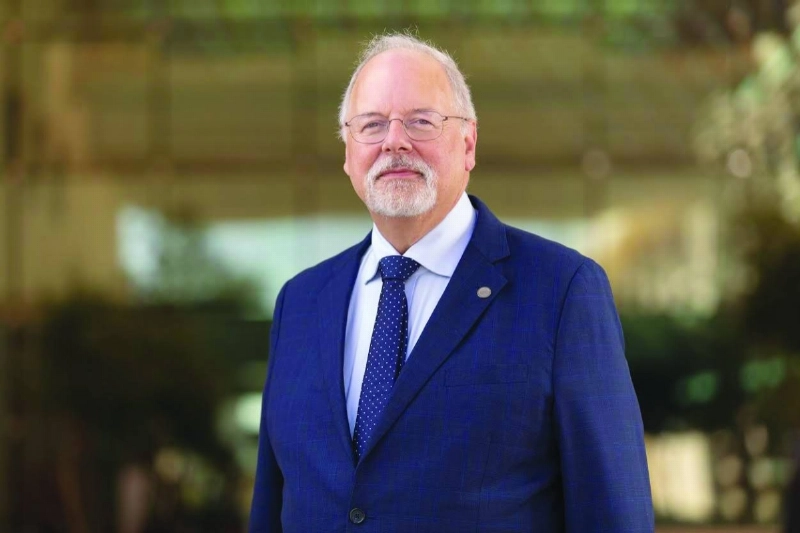
Emirates Central Cooling Systems Corporation (Empower) has signed a strategic Memorandum of Understanding aimed at strengthening international cooperation and accelerating the global adoption of district cooling systems.
The agreement was signed by Ahmad Bin Shafar, CEO of Empower and a member of the International District Energy Association Board of Directors, alongside representatives from several countries and international organisations.
The signing took place during the 117th International District Energy Association Conference and Exhibition 2026 in Ottawa, Canada.
The MoU positions district cooling as a practical solution for improving energy efficiency, strengthening energy security, supporting local economies and reducing carbon emissions.
It also seeks to expand the use of district cooling through greater knowledge exchange, innovation and the development of policies and regulatory frameworks that support deployment in cities worldwide.
The signatories committed to supporting the transition towards more sustainable and resilient energy systems and strengthening collaboration across the district energy sector.
The agreement aligns with the objectives of the 2015 Paris Climate Agreement and the climate and sustainability goals of the United Nations Framework Convention on Climate Change.
Empower said the MoU reinforces its role in international initiatives supporting the transition to a low-carbon economy through strategic partnerships and knowledge exchange.
It also strengthens the company’s position as a global district cooling provider and contributor to the development of sustainable urban energy systems.
Bin Shafar said the agreement reflected increasing international recognition of district cooling as an effective climate and energy solution.
“This agreement reflects a growing international commitment to strengthening cooperation and knowledge exchange to accelerate the development and wider adoption of district cooling systems as a practical and effective solution for advancing sustainability, improving energy efficiency and reducing carbon emissions,” he said.
“At Empower, we are proud to represent the UAE in this important initiative, which reflects the country’s leading position in supporting climate solutions and advancing the transition to a low-carbon economy.”
Bin Shafar added that district cooling and district energy would play an important role in creating more efficient, resilient and future-ready cities.
He said stronger international cooperation could help accelerate the development of sustainable urban energy systems while supporting economic growth and improving communities’ resilience to climate change.
Empower participated in the IDEA Conference and Exhibition 2026 as a Diamond Sponsor.
The event was held under the theme “Connecting Networks” from 23 to 26 June.
Empower’s participation included keynote sessions involving Bin Shafar and meetings with senior officials and industry experts.
The discussions focused on opportunities to strengthen international cooperation and share best practices across the district cooling industry.
Simone Liedtke
Based in Dubai since 2025, Simone is a seasoned features writer with nearly a decade of experience in technical writing. Previously penning stories for an engineering and a mining magazine in South Africa,… More by Simone Liedtke
Governments across the wealthy world are drafting national strategies for artificial intelligence, and nearly all of them approach sovereignty the same way: as something a country builds and buys.
Compute clusters, sovereign cloud, domestic energy, national champions, a venture fund to convert research into firms. The logic is coherent and, on its own terms, sound. Prosperity and security increasingly belong to nations that can build and govern AI rather than rent it.
The instinct to control the machine is not the error. The error is what the approach leaves out: the capacity to govern knowledge, which no amount of hardware supplies.
The strategies are written around an economic priority, and that priority is real – but it is a short-horizon reading of it. A country can attract the data centre and train the workforce and still find, a decade on, that the science it produces is analysed, owned and monetised elsewhere.
Knowledge governance is the capacity that protects the long return on exactly the economic bet these strategies are making. Leaving it out is not a competing vision of the economy; it is the part of the same vision that pays out later, and that the rush to stand up infrastructure now tends to discount.
Canada’s ‘AI for All’ strategy
Canada’s ‘AI for All’, launched in June 2026, is among the most sophisticated of these strategies, which is precisely why it shows the pattern cleanly.
It is candid about the country’s dependencies and serious about closing them.
It assigns universities four jobs, and all four point downstream: a literacy engine training a million students, colleges as applied-AI upskillers, institutions as nodes in workforce alliances aligned to industrial demand, and research universities as the origin point for AI-native companies fed by capital.
Each role is legitimate. None is the role on which sovereignty actually turns. Read together, they reduce the university to a pipeline – a supplier of talent and intellectual property to an economy that someone else governs.
This is not a Canadian failing. The OECD’s recent work on science and innovation describes member countries reorganising research policy around competitiveness, industrial strategy and national security, and within that shift valuing universities for two outputs only: the workers they train and the research they commercialise.
The pipeline view is becoming the default way the wealthy world understands what a university is for. What that view cannot see is the function on which sovereignty actually rests.
The function the strategies omit
Call it knowledge governance: the capacity to produce research, decide the terms on which it crosses borders, and capture the value it generates. It is the difference between a science system that controls its own knowledge cycle and one that merely feeds someone else’s.
A country that governs its science moves through the whole cycle – it collects the data, analyses it, publishes first, and captures the value. A country that cannot, becomes a supplier of raw material. It generates biodiversity records, genomic data, climate observations, and loses control over who analyses them, who publishes, and whether the findings ever serve local priorities.
As I argued in a technology profile on connectivity and digital sovereignty in the Global South, written for the International Science Council’s Centre for Science Futures, sovereign infrastructure determines whether institutions can conduct, analyse, publish and benefit from their own research, or whether they remain field stations generating data for processing elsewhere.
That was written about the Global South, but the mechanism is universal and it transfers directly to AI. Data is the bloodline of the system, and governance is decided less by who owns the hardware than by who controls the country’s data, identities and research environments – the platform that authenticates a researcher, the cloud that stores a dataset, the environment in which a collaboration takes place.
The study concluded that building a data centre on home soil does not secure digital sovereignty if a foreign entity runs it: the operator’s nationality becomes a jurisdictional hook, letting its home government compel access to the data inside whatever country it sits in.
A nation can own the compute and still cede the science if its universities authenticate, store and collaborate on platforms configured and operated elsewhere.
Owning the machine is not the same as governing what is done on it. This is the gap in AI national strategies, and it is a strange one: a document can detail a university’s place in alliances and standards bodies while saying nothing about the systems its laboratories actually run on.
That silence is where sovereignty is conceded – the identity platform, the cloud tenancy, the data environment chosen years ago for convenience and never revisited, each one a governance decision made by default in favour of whichever vendor arrived first.
Here a distinction matters. The argument is not that universities should run national AI policy; they will not, and claiming otherwise would overclaim. The steering of AI – what gets funded, deployed, regulated, sold – runs through firms, ministries and capital, and the university sits at the periphery of that steering, despite the research and trained people it supplies to all of it.
Nor is the claim that universities will train frontier models; the capital required for state-of-the-art clusters has largely priced them out, and the foundational models of 2026 are built in private labs, not faculties.
But knowledge governance is a different function from strategic direction, and it is the one the strategies have left unassigned. No firm holds it. No ministry can manufacture it.
It lives, latent and unfunded, in the institutions that produce the open, public-interest knowledge a country cannot buy back once it has been ceded – the methods, the datasets, the trained researchers, the science that was never anyone’s product.
The pipeline view does not just undervalue the university; it leaves the governance function homeless.
Why this begins abroad
And here is the part the AI strategies invert most completely. Having decided that sovereignty is built by accumulating infrastructure inside one’s own borders, they treat international engagement as the channel through which dependency arrives – foreign cloud, foreign models, foreign recruitment – and route whatever ambition remains through trade missions and national firms. The university as an international actor in its own right disappears.
But the capacity these strategies want cannot be built behind a border. AI is possible at all only because of an open global knowledge system, in which researchers share methods and solve problems that belong to no single nation.
Knowledge governance worth the name, therefore, does not begin with domestic control and reluctantly admit collaboration; it begins with collaboration and builds control on top of it. International engagement is not a risk to sovereign AI. It is the precondition.
The instruments already exist, and they are institutional and international at once. The hardest gap for most countries is compute itself – the frontier clusters are scarce, expensive and, as the US restrictions on advanced chips to China have made plain, subject to control by whoever holds the supply.
But a nation that cannot build its own cluster is not therefore shut out, because the networks are what make scarce compute reachable and keep the data that runs on it under local terms.
RedCLARA connects the national research and education networks of Latin America, linking their universities to GÉANT in Europe, Internet2 in the United States, and partner networks in Africa – the UbuntuNet Alliance and WACREN among them.
Through that infrastructure it provides federated identity, dedicated high-speed circuits between laboratories, and secure environments for large-scale data exchange. AfricaConnect ties the continent’s regional networks into the same global fabric.
The logic is identical in each case: institutions that could never individually afford intercontinental cables or computing clusters pool their demand, build jointly, and meet dominant providers from greater collective strength – owning capacity rather than renting it.
Europe’s digital sovereignty
These networks are how nationally funded supercomputers are reached and allocated across institutions that could never each own one, and how the datasets those machines run on stay under terms a country sets rather than rents. They are the layer that makes sovereign compute usable, and the reason a country short on compute is not thereby short on sovereignty.
The Global North understands this perfectly when its own autonomy is at stake.
GÉANT, the body that operates Europe’s pan-continental research and education network, defines one of its strategic pillars as maintaining control over intercontinental connectivity in support of European digital sovereignty, and European policy analysts treat research-network infrastructure as a deliberate instrument for reducing dependence on US and Chinese suppliers.
Europe has gone further than rhetoric: EuroHPC pools national money into shared supercomputers, and the European Open Science Cloud builds the federated data layer to match. Most national AI strategies have not followed, even as their own universities sit as nodes in the same federated system and could be resourced to make it carry sovereign AI.
The point holds with most force where resources are scarce. For a wealthy country, these networks amplify a system that already works.
For an under-resourced one, they are the precondition for engaging the global system at all – a university without the capital to build its own compute can still work at the frontier as a node in a shared network, and cannot if it stands outside one.
That a university cannot afford a frontier cluster is the case for federation, not against it: pooled demand is how institutions reach compute none of them could buy alone, and the network is what keeps their data under local terms while they reach it.
So the instruction reverses depending on where you stand. The wealthy country is told international engagement is a dependency to manage; the under-resourced one finds it is the only road to the capacity in question.
For these countries the strategies are not merely incomplete but backwards: the collaboration they treat as a vulnerability is the single route to the sovereignty they say they want, because there is no domestic substitute for it to fall back on.
The harder truth
More collaboration is not automatically better.
The same OECD work that records the securitisation of science also records its cost: international collaboration has lost momentum after three decades of growth, and a chilling effect now pushes institutions to avoid flagged partnerships on thin guidance and researchers to steer clear of important but high-risk fields.
A blanket application of research security measures, the OECD warns, threatens the quality, productivity and integrity of the national research system. Sovereignty pursued through walls has well-documented failure modes.
The remedy is to build the instrument well, not to set it down.
The security-first case deserves a straight answer. That case runs as follows: open standards are how sensitive work bleeds to adversaries, so walls are a necessary quarantine. The answer is that federation governs one dimension of the problem and not the whole of it.
Interoperability and control are not opposites. Federated infrastructure is what makes selective control possible – data held in local custody rather than on a foreign vendor’s servers, access governed institution by institution, sensitive environments segmented from open ones on shared foundations.
It does not, on its own, address the parts of research security that have nothing to do with where data sits: researcher vetting, dual-use fields with direct military application, intellectual property that leaves through a person rather than a server. Those need their own instruments, and federation is no substitute for them.
But on the dimension it does govern, the logic holds: a country that runs its science on systems it does not control has no quarantine to offer; it has already exported the thing it means to protect. The choice is not between openness and security. It is between governing the terms of exposure and not knowing what they are.
That distinction sets the two kinds of sovereignty apart. One breaks interoperability and isolates. The other leaves the shared foundations intact and governs what is built on them – global connectivity on locally governed terms, which is the footing sovereign AI actually requires. The remedy is not less internationalisation but internationalisation built for equity rather than extraction.
That is the version of sovereignty these strategies keep missing. They locate it in infrastructure they can announce and capital they can attract, and treat universities as suppliers and international engagement as a threat to manage.
Buying technology is the visible move. The decisive work is institutional and, paradoxically, external: universities capable enough, connected enough and trusted enough to operate at the frontier on terms they help set.
Sovereignty in a domain with little respect for borders is not won by building higher ones. It is won by science systems that can collaborate globally while governing locally – a capacity that does not begin at home, and that lives, in every country now drafting one of these strategies, in the institutions those strategies have reduced to a pipeline.
Carlos Vargas is the founder of Societas Partnerships, a higher education advisory firm based in Panama City, and the author of a technology profile on connectivity and digital sovereignty in the Global South written for the International Science Council’s Centre for Science Futures. He previously spent 14 years in senior internationalisation roles at the University of Toronto, Carleton University and the University of Calgary in Canada.
Two hands exchanging a small globe for unity and ecological awareness. by Mikhail Nilov via Pexels. In any case, the SDGs showed us where to go, but now what? Part of the answer is here.
Organizer
German Institute of Development and Sustainability (IDOS), Stockholm Environment Institute (SEI), Southern Voice, Monash University
Five years before the 2030 Agenda’s deadline, only 35% of the goals are on track to be reached by 2030 or show at least moderate progress. While the global community is falling short in implementing the Sustainable Development Goals (SDGs) – facing multiple crises, a deteriorating geopolitical environment and deep structural deficiencies – support for ambitious sustainability transformations is declining in key countries. Against this challenging backdrop, it can be considered a success that UN member states were able to adopt the Pact for the Future with a significant majority. In this Pact, UN member states committed to “turbocharge” implementation of the 2030 Agenda and to begin planning, at the 2027 SDG Summit, how to advance sustainable development beyond 2030 “as a priority and at the centre of our work”.
With the end of the 2030 Agenda for Sustainable Development approaching in 2030, the future of the SDGs “until and beyond 2030”, as the Pact for the Future states, is a core topic of the Hamburg Sustainability Conference (HSC), a global conference aiming to push solutions and alliances for sustainability. When the HSC 2026 takes place, slightly more than a year will remain until the SDG Summit in September 2027. Discussions across policy circles, academia, and civil society are already starting to draw lessons from the past ten years of SDG implementation and to explore potential paths for what should follow the SDGs. Debates are at this stage emerging in a rather ad hoc and uncoordinated manner, including among actors supportive of a universal and integrated agenda, actors promoting more technocratic approaches – and actors actively dismissing the idea of a global sustainability agenda altogether. It is therefore crucial to use the HSC as a platform to bring together high-level actors from different regions and income groups with the potential to serve as norm entrepreneurs representing governments, international organisations, business, civil society and academia.
The session will bring key global actors together to enable early conversations, build momentum for the 2027 SDG Summit, and reflect on narratives and partnerships for an inclusive, effective future global development framework.
Thematic focus
Next steps in the preparations for a global sustainability framework beyond 2030
The session brings together approx. 35 high-level participants representing governments, international organisations, business, civil society and academia that have the potential to act as supporters of a beyond-2030 global sustainability framework. The strengthening of Global South perspectives in international sustainable development debates is a key aim of the session. The session explores the narratives and partnerships needed to advance a sustainable futures agenda until and beyond 2030. It seeks to generate new and channel existing momentum among key like-minded actors – as “fellow travellers” – in support of a successful preparatory process for the SDG Summit in September 2027. The session is informed by the following outcomes:
The results of a mapping exercise conducted by IDOS, drawing on a fact-finding roundtable in spring 2026, complemented by interviews, literature review and online research, to map the interests and strategies of key countries;
Southern Voice survey on the beyond-2030 framework, exploring priorities and insights from the Global South;
A series of regional roundtables in Africa, Asia and Latin America led by Southern Voice on the future of development cooperation.
Building on this preparatory work, which will be shared ahead of the HSC, the session aims to conclude with concrete steps for strategic action to support a trust-based, inclusive, and effective policy process towards the 2027 SDG Summit.
The co-organisers of this session are committed to connecting this convening with their key initiatives and using their networks to organise follow-up activities to ensure an inclusive, action-oriented and science-based beyond-2030 discussion with a view to key events in 2027: HSC 2027, the UN High-Level Political Forum (July 2027) and the SDG Summit (September 2027).
Guiding questions
The following guiding questions will structure the conversation:
Narrative: What fundamentally different narratives could generate political will, especially among governments sceptical of multilateral sustainability commitments, and incentivise them to engage seriously in negotiating a beyond-2030 framework?
Partnerships: Who needs to be at the table – and who is currently missing – to make a 2027 negotiation mandate politically achievable and substantively ambitious? What partnerships are needed to support an ambitious beyond-2030 framework within the UN and beyond?
Objectives
Develop a common understanding of the narratives and partnerships needed for an ambitious global sustainability framework beyond 2030.
Initiate a mapping exercise to identify potential allies and fellow travellers from different sectors and regions.
Identify concrete actions to create momentum for an ambitious follow-up agenda.
Outputs
Drawing on these inputs, the session aims to identify key narratives for a post-2030 agenda, map like-minded partners, and initiate coordinated action towards the 2027 SDG Summit. Follow-up activities will support an inclusive, action-oriented and science-based process aligned with key milestones, including the UN High-Level Political Forum, HSC 2027 and the SDG Summit.
Hinweis
Während unserer Veranstaltungen werden z.T. Foto- und/oder Filmaufnahmen gemacht, die für Zwecke der Veranstaltungsberichterstattung und allgemeinen Öffentlichkeitsarbeit in verschiedenen Medien veröffentlicht werden. Sie haben jederzeit das Recht, die Foto- oder Videograf*innen darauf hinzuweisen, dass Sie nicht aufgenommen werden möchten. / During our events photos and/or videos may be taken which may be published in various media for the purposes of documentation and PR activities. You have the right at any time to point out to the photographer or videographer that you do not want to be photographed or filmed.
.
.
Event information
Date / Time
30.06.2026 / 13:30 – 15:20
Location
Hamburg Sustainability Conference
Adolphsplatz 1
Hamburg
Room Accelerator II
Content goes Contact Dr. Axel Berger Stellvertretender Direktor (interim) E-mail Axel.Berger@idos-research.de Theme Special Beyond 2030 – The future of global Sustainability here
This modern architectural passageway in Doha, Qatar, showcases unique designs and vivid colours. by Natalya Rostun via Pexels. CMU-Q Grads stay behind and go through it to build their own future and contribute to building Qatar’s Future
.
‘95% of CMU-Q grads stay behind to build Qatar’s knowledge economy’
Carnegie Mellon University in Qatar (CMU-Q) dean Michael Trick
.
The country’s push towards a knowledge-based economy is gaining measurable ground, with nearly 95% of the university’s recent graduates choosing to remain and work in Qatar, according to Carnegie Mellon University in Qatar (CMU-Q) dean Michael Trick.
Trick told Gulf Times that building such an economy requires a full ecosystem rather than isolated components, and that Education City, Qatar’s universities, and CMU-Q itself collectively function as a talent pipeline for that transition.
“We now have two decades of graduates from CMU-Q, most of whom stay in Qatar and contribute to the knowledge economy. When we attend conferences, summits, and industry events within Qatar, we are proud to see so many of our alumni attending, presenting, networking, and leading the conversations,” Trick said.
He said the primary remaining gap is not structural but time-related, noting that a transformation of this scale cannot happen overnight.
Asked about the sectors most ripe for disruption in the next five years, Trick said any discussion on disruption must start with artificial intelligence (AI), which he described as capable of fundamentally transforming industries through the optimisation of core business processes.
He said Qatar is already seeing innovation-led disruption across education, energy, food security, and sports. “In the area of sports and large-scale sporting events, Qatar has the potential to lead globally through technological innovation,” Trick noted.
On whether Qatar is producing enough homegrown entrepreneurial talent, Trick distinguished two models for meeting workforce demand. The first, he explained, involves paying foreign firms a premium to set up a temporary presence — a model that was essential when Qatar’s educational system could not yet keep up with demand. The second model, which he described as more organic, is education-led.
“Through significant investments in higher education, Qatar attracts exceptional minds, both Qatari and international. Our students are exceptionally gifted, and often the top students in their schools and home countries,” he said.
Trick said international students who come to study in Qatar often choose to stay after graduating, drawn by four years of growing attachment to the country. “They want to stay, and they hope to make a lasting economic impact,” he said.
He added: “This second model takes longer, but it is a more organic approach: introduce brilliant young people to a country that values the development of human capital, foster their connection to Qatar, encourage their entrepreneurial aspirations, and allow them to build their futures here.”
MIT Scientists Develop Method to Transform CO₂ Efficiently, thus affecting notably worldwide concrete block production as seen here stacked on a pallet at a construction site in Eastern Europe by SHOX ART via Pexels
.
MIT Scientists Develop Method to Transform CO₂ into a Construction Ally, Boosting Cement Strength by 13% in 24 Hours for More Sustainable Infrastructure
MIT researchers reveal how CO2 can strengthen cement, reduce emissions, and drive sustainable advances in civil construction.
A study conducted by scientists at MIT, in Massachusetts, USA, revealed a mechanism capable of increasing the strength of cement by 13% in the first 24 hours of curing through controlled incorporation of CO2. In addition to improving the mechanical performance of the material, the technique allows for stable carbon storage within the structure, which can help reduce the environmental footprint of civil construction.
The discovery, published by MIT News on June 11, 2026, helps explain why certain carbon dioxide-activated concrete formulations show superior results compared to conventional materials. The study also opens new perspectives for the production of more sustainable materials without compromising structural safety.
How MIT scientists discovered the effect of CO2 on cement
The scientists at MIT focused their investigation on the initial hours of cement curing, a period that defines much of the mechanical properties of concrete.
To monitor chemical reactions in real-time, the team used confocal Raman microscopy, a laser-based technique that allows for the identification of microscopic compounds during the hardening process.
The researchers observed that CO2 quickly reacts with the calcium released by the clinker, forming microscopic particles of calcium carbonate. This behavior temporarily alters the traditional hydration of the material and creates a more homogeneous microstructure.
Why civil construction seeks alternatives to reduce emissions
The civil construction industry is among the largest sources of industrial carbon dioxide emissions worldwide.
A significant part of this environmental impact is linked to the production of cement, which requires high temperatures in industrial kilns and causes the chemical decomposition of limestone during clinker manufacturing.
For this reason, there is growing interest in technologies capable of reducing emissions without compromising the quality of structures.
Among the main strategies currently being studied are:
Carbon capture and storage;
Low-carbon concrete production;
Use of supplementary materials to clinker;
Expansion of the use of renewable energies;
Development of more durable concretes.
In this scenario, the use of CO2 during curing emerges as a promising alternative.
The transitional gel that strengthens the material’s structure
One of the most interesting points identified by researchers was the formation of an intermediate phase informally known by some experts as “ghost gel”.
During the initial reaction, part of the calcium is temporarily retained by the CO2. This allows the silicates present in the cement to form a more distributed amorphous silica network within the matrix.
Although it is transitional, this structure plays an important role in organizing the compounds that emerge later.
When hydration returns to conventional behavior, the products responsible for strength find a more homogeneous base to develop.
Cement with CO2 achieves a 13% gain in just 24 hours
The tests conducted by the team showed significant results on the first day of curing.
According to the published data, samples containing approximately 1% of CO2 relative to the weight of the cement showed an average increase of 13% in compressive strength after just 24 hours.
This initial gain can bring important advantages for precast factories and construction systems that rely on fast production cycles.
Among the possible benefits are:
Shorter demolding time;
Higher industrial productivity;
Reduction of operational bottlenecks;
Better utilization of production lines;
Possibility of optimizing material consumption.
How CO2 is stored inside the cement
Besides the mechanical gain, the study shows that part of the carbon dioxide used during the process stops circulating in the atmosphere.
This occurs because the CO2 is converted into calcium carbonate, a stable mineral compound that remains incorporated into the concrete throughout its useful life.
In practice, the gas becomes part of the material’s structure. This process is known as carbon mineralization and has sparked growing interest among companies and researchers involved in sustainable construction.
The ability to store carbon permanently is considered one of the most relevant advantages of the technology.
Necessary precautions for applying the technology on a large scale
Despite the positive results, the scientists themselves warn that the effect is not unlimited.
According to the research, excessive amounts of CO2 can negatively interfere with the cement hydration, generate undesirable compounds, or affect the material’s durability.
Therefore, factors such as dosage, exposure time, and curing conditions need to be carefully controlled.
The success of the technology depends on the combination of chemical knowledge, adequate industrial processes, and constant technical monitoring.
Complementary solutions for low-carbon construction
Experts emphasize that no single technology will be able to eliminate the sector’s emissions.
The most efficient path involves combining different strategies to reduce the carbon intensity of construction.
Among the solutions that can work in conjunction with the use of CO2 are:
Reduction of clinker content in cement;
Use of pozzolans and limestone filler;
Utilization of industrial slags;
Electrification of kilns;
Use of renewable energy;
Industrial carbon capture systems;
High-performance and more durable concretes.
The integration of these initiatives can accelerate the transition to more sustainable infrastructure.
Impacts of the discovery on standards, certifications, and new projects
The MIT research may also influence future regulations in the sector.
With a more detailed understanding of the interaction between CO2 and cement, it becomes easier to establish technical criteria for dosage, curing, and performance evaluation.
Another important aspect involves environmental certifications. For carbon storage to be reliably accounted for, it will be necessary to create standardized methods of measurement, traceability, and verification.
This process could expand the adoption of the technology in public and private projects in the coming years.
What this innovation could represent for the future of infrastructure
The discovery by scientists at MIT demonstrates that carbon dioxide can cease to be just an environmental challenge and become part of the solution. By increasing the initial strength of cement by 13% in just 24 hours and permanently storing carbon, the technology combines structural performance and sustainability in a single proposal.
Although there are still challenges related to standardization and large-scale application, the results reinforce the potential of CO2 as a tool to transform civil construction and contribute to global decarbonization goals. The combination of scientific innovation and industrial efficiency can pave the way for a new generation of construction materials that are more resistant, durable, and environmentally responsible.
We use cookies on our website to give you the most relevant experience by remembering your preferences and repeat visits. By clicking “Accept”, you consent to the use of ALL the cookies.
This website uses cookies to improve your experience while you navigate through the website. Out of these cookies, the cookies that are categorized as necessary are stored on your browser as they are essential for the working of basic functionalities of the website. We also use third-party cookies that help us analyze and understand how you use this website. These cookies will be stored in your browser only with your consent. You also have the option to opt-out of these cookies. But opting out of some of these cookies may have an effect on your browsing experience.
Necessary cookies are absolutely essential for the website to function properly. This category only includes cookies that ensures basic functionalities and security features of the website. These cookies do not store any personal information.
Any cookies that may not be particularly necessary for the website to function and is used specifically to collect user personal data via analytics, ads, other embedded contents are termed as non-necessary cookies. It is mandatory to procure user consent prior to running these cookies on your website.