
Stunning view of Dubai’s modern skyscrapers under a clear blue sky. by Joerg Hartmann via Pexels
.
“Green Wall” as an Investment: Numbers vs. Marketing
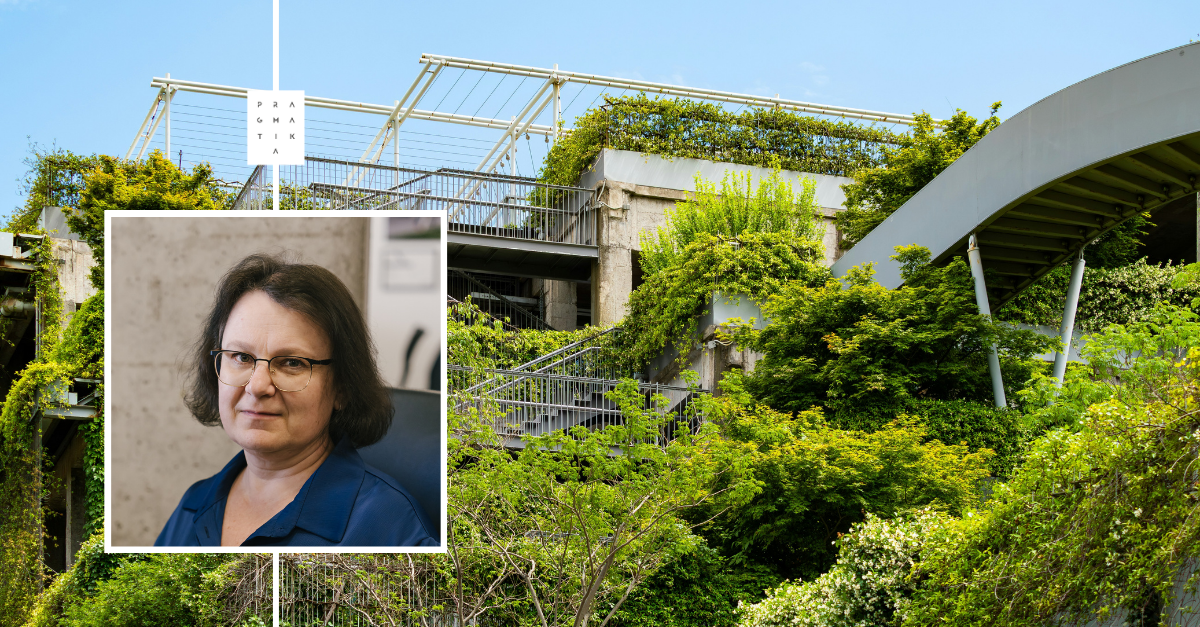
No visualization in a metropolis attracts as much as a facade covered with plants. Vertical gardening has become the visual language of sustainable development: it appears in every second concept of a new quarter, in every third presentation for an investor. The problem is that between the render and the real operation there is a chasm that the industry rarely shows to the client.
I am an architect-general planner, and my job is to evaluate solutions not at the moment of completion of the facility, but over the horizon of decades. From this perspective, vertical gardening is worth examining for some myths, each of which has its own digital reflection.
Myth 1: It’s cheaper than traditional landscaping
No. A systematic review of the cost-effectiveness of green walls (World Construction Symposium) shows that the life-cycle cost of a living wall can be more than ten times that of a green facade on cables or mesh, and the maintenance of a living wall is on average twelve times more expensive than simple facade greening. The classic study by Perini and Rosasco, which remains one of the basic studies on the subject, states bluntly that for some systems, the benefits—energy savings, increased property value—simply do not cover the costs of installation and maintenance over the life cycle.
A prime example is the Bosco Verticale in Milan, the most cited vertical gardening project in the world. It is not a wall, but a balcony garden of trees and shrubs, and it requires a team of professional climbers-gardeners who descend the facade on ropes to prune and inspect the plants.

Bosco Verticale is a residential complex consisting of two towers, 110 and 76 meters high. The two skyscrapers were built in the Porta Nuova district of Milan between 2009 and 2014. The authors of the project are Italian architects Stefano Boeri, Gianandrea Barreca and Giovanni La Varra.
It is estimated that residents pay an additional seven euros per square meter of housing each year just for the care of the plants – this is a separate item of home maintenance, comparable to full-fledged cleaning or security.
Myth 2: Plant it once, and it grows on its own
Living systems require continuous management of irrigation, nutrition, and drainage. Bosco Verticale uses about 3,5–5,7 thousand cubic meters of water per year for irrigation, and this is in a project with centralized humidity sensors and automated irrigation — that is, in a system designed as competently as possible.
A counterexample is the Qiyi City Forest Garden complex in Chengdu. Eight towers with balcony gardens were to become a “vertical forest” for 826 apartments. The developer planted the plants in advance, but did not lay down a system for constant care and drainage.

Qiyi City Forest Garden in Chengdu
When the apartments were not immediately occupied, the plants on the abandoned balconies grew out of control, water stagnated in the pots, and the building became a mosquito breeding ground, which is why most of the owners at that time refused to move in at all. This is not a story about a “bad idea” – it is a story about landscaping designed without answering the question “who will take care of it in five years and how?”
In European cases, we see the same pattern: companies that install green walls admit that the cause of degradation of living facades is almost always not the climate or plants, but management. Maintenance contracts cost an average of about 10% of the cost of the wall itself each year, and this is where customers often try to save first.
Myth 3: It significantly cools the city
The effect is there, but it is greatly exaggerated compared to how it is presented in marketing materials. A study in temperate European climates showed that green walls reduce air temperature by at most 1–1,2°C. This is significantly different from the indicators in tropical or subtropical climates, where, due to higher humidity and more intense transpiration, cooling reaches 2–5°C, and in some modular systems with a substrate – even 10–14°C.
In other words: a technology that works great in Singapore or Barcelona gives many times weaker results in the climate of Kyiv or Lviv. This is not a reason to abandon landscaping altogether – it is a reason not to rely on vertical systems as a tool to combat the urban heat island where ordinary trees and shading are more climatically effective.
Myth 4: Plants thrive equally in different zones
Even in the mild climate of Madrid, the creator of the most famous “green wall” in Europe – the CaixaForum facade – selected almost 300 species of plants specifically for contrasting seasons: hot summer and cold winter. This is a design at the level of botanical research, not decorative landscaping. In a climate with sharp temperature drops, spring frosts after thaws and unstable humidity – which is exactly the characteristic of the climate of most of Ukraine – the selection of species and the system of root zone protection become a determining factor in the survival of the system.
What does this mean for projects in Ukraine?
Vertical gardening is not a universal solution, but a highly specialized tool with high operational requirements. It is justified where there is a customer who is ready to finance professional care for years in advance, a climate zone that does not destroy the system with frost and humidity drops, or a careful selection of plants adapted to this zone, and a realistic understanding of the effect of such gardening.

Photo: Daniel Funes Fuentes/Unsplash
In our projects at AIMM, we treat vertical gardening as an engineering system with an operating budget, not as a final touch to the presentation. If the customer is not ready to lay the cost of maintenance for decades to come, it is more honest to talk about traditional gardening right away – it is less spectacular on the render, but it really lives longer than until the first winter without watering.
Sustainability is not measured by how impressive a solution looks on opening day, but by whether it continues to work five years later without extraordinary effort. By this criterion, most vertical gardens fail the test long before the first plants appear, so every solution must be balanced and harmonious.
.
.
Discover more from MENA-Forum
Subscribe to get the latest posts sent to your email.
You must be logged in to post a comment.